Search Our Site
Leerburg 2008 Catalog Request a Catalog Download Catalog Table of Contents Dog Training Videos New Releases DVD DVD Box Specials FREE Streaming Video Dog Training Equipment Dog Training Equipment Dog Training Books K9 Healthcare Products Web Forum Discussion Discussion Forum How to Register Dog Training eBooks Dog Training Podcasts Dog Training Articles Articles Question & Answers Leerburg Kennel Our Kennel Current Litters Customer Testimonials Stud Dogs Adult Dogs for Sale Our Kaiserhaus Malinois Dog Training Categories Dog Training Dog Obedience Training Aggression Problems Dominance Problems Dog Fight Problems Puppy Training HouseTraining Problems Feeding Dogs Breeding Dogs Electric Collar Training Schutzhund Training Police K9 Training Leerburg's Top DVDs Your Puppy 8 Weeks DVD Basic Dog Obedience DVD Electric Collar Training DVD Dominant Dogs DVD Raising a Working Pup DVD Bite Training Puppies DVD All 120 Dog Training DVDs How to Order View Shopping Cart Foreign Orders Shipping Charges See Our Horses Request a Catalog Contact Us

Introducing a New Dog into a Home with Other Dogs

Without having Dog Fights

Listen to a Podcast of this article
Read this article as a FREE eBook

Dogs waiting at the door

INTRODUCING DOGS INTO A HOME WITH OTHER DOGS

Bringing a new dog into a home is always an exciting time. It's like adding a new family member or guest to the household. While much has been written on bringing puppies into the home - very little has been written about bringing new adult dogs into the home. This article should help you make some decisions that will ease the transition.

Pet owners often underestimate the kinds of problems that can occur if mistakes are made.

This can be a difficult if not dangerous situation if it's not handled correctly. You only need to go to Q&A section on my web site and read the hundreds of emails I have on dog fights.

Many people think they can just bring a new dog home and let the dogs work things out themselves. For the lucky ones this works out OK, but more often than not people find themselves in the middle of a dog fight and wonder what went wrong.

Dogs are pack animals and humans are primates. These two groups interact differently.

The average pet owner does not have a clue about how strong the genetic pack instinct is that floats just under the fur of their lovable family pet. The addition of a second or third dog into the home often triggers a genetic pack drive or RANK DRIVE. Many people are shocked and confused when they see the level of aggression that their sweet family dog is capable of.
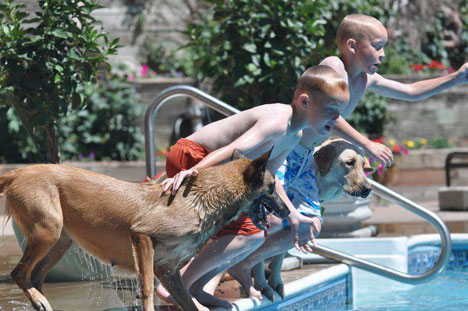
There is usually more than one thing going on that result in these problems. To name just a few: a house dog is often territorial; there can be rank or dominance problem between the new dogs; or there can be inter-male or inter-female issues that result in aggression.

Yesterday, I had a lady write me who has a serious problem. She owned 30 house dogs. People like her are called "dog collectors." She takes in strays and if you can believe it, she keeps the majority of them in her home.

The woman realized that she has an obsessive compulsive disorder.

As obvious as it is, this lady has created a huge dog pack and has witnessed some really awesome dog fights. The fact is the genetic instincts that control her 30 dog pack are the exact same instincts that start to flow in a home which only has 3 dogs.


Establishing Pack Structure with the Family Pet


$40.00+s&h
Establishing Pack Structure with the Family Pet DVD


THREE DOGS ARE A DOG PACK!!!

Here are some of the issues that develop when people create dog packs:

Dogs become much more territorial (just like wolf packs).

Three dogs will develop a RANKING ORDER which includes a pack leader. Every dog in a pack knows exactly what its rank is within their dog pack. When dogs don’t have a strong human pack leader, one of the three dogs will ALWAYS step to the line and become the leader.

When a new dog is added to a home every dog in that house has to re-establish its personal rank within the new family pack. Re-establishing rank is where dog fights come from.

By the way the worst dog fights are inter-female dog fights (females are fierce).

When fights begin in a larger pack (3 or more dogs), most of the time all the dogs will gang up on the weakest dog.

Once a dog has been attacked it is often traumatized for life. These dogs will always be leery of meeting new dogs. In fact, once a dog has been attacked it will often become dog aggressive and automatically want to fight any new dogs that it sees.

A dog can love you and not respect you. Love and respect are two totally different things.

Most dogs don’t want to be the pack leaders. When it’s forced on them they get stressed and nervous.


When dogs have strong human pack leaders this does not happen. The human pack leader makes it crystal clear that this aggressive behavior is unacceptable and will not be tolerated.

Human pack leader shows his dog or dogs that he will protect them FROM OTHER DOGS. This is a very important issue that the average dog owner doesn’t realize, but I guarantee you your dog does.

Our goal in introducing a new dog into a family which already has other dogs comes down to "bringing another member into the family pack in a manner that is seamless and nonviolent."

When it's done correctly the first few weeks of your relationship with the new dog set the stage for the rest of your dogs life. The minute a dog meets you he starts to evaluate you as a leader. If you know this it's easy to set yourself up as a pack leader. In my DVD ESTABLISHIING PACK STRUCTURE WITH THE FAMILY DOG I explain in detail how to do this.

My DVD lays out the steps I have used over the past 30 plus years when I bring new dogs into my home. With this said, I caution everyone about going too fast and skipping steps. You have nothing to lose in letting this process take some time and doing it right. With this said you have a lot to lose if you screw up and end up with a dog fight.

The most important part of this process is to get and use dog crates. We have a dog crate for every dog in our house. Just because your current dogs don’t use crates is not a good enough reason to not use them in this process.

We put the new dog in a dog crate in our home where the other dogs can go up and smell the newcomer. If our house dogs growl at the new dog, we immediately step right in and give a strong correction.

Your job as THE PACK LEADER IS TO SHOW YOUR DOGS THAT YOU WILL NOT TOLERATE AGGRESSION TOWARD THIS NEW PACK MEMBER.


Theory of Corrections

in Dog Training

Theory of Corrections in Dog Training eBook

eBook


Pack leaders decide when there will be a fight and by your stopping aggression you are reminding them who the leader is. If you want to learn about corrections you can read the article I wrote titled The Theory of Corrections in Dog Training.

We put prong collars or REMOTE COLLARS or dominant dog collars on our house dogs when we have determined it's time to allow the dog out of the crate in the house. The new dog always has a leash on in the house. This does not come off until the dog is obedience trained to the point where we are 100% sure that we can call him away from a serious distraction (IE a house guest, food, a toy or away from the crate where the other dog is)

If the new dog growls at us or the other dog during this process we either put him back in the crate (and the crate training begins again) or we have the tools in place to give an appropriate correction.


Dominant Dog Collar

Dominant Dog Collar


If you have a rank problem between you and your dog then you are going to have to deal with that before you introduce this new dog. If need be you may want to get my DVD DEALING WITH DOMINANT AND AGGRESSIVE DOGS.

There is no reason to rush the introduction of a new dog into your home. It can take weeks or even months for that matter. We have 4 house dogs. We have 4 crates in our basement one in my office and one on the main floor of the house. While our dogs can be together when we are present, we never leave them together when we are gone. In fact, we only leave one dog out of the crate when we are gone.

During the day we rotate our dogs through the house, through their dog crates and through the outside dog yard.

During the period that you are introducing an adult dog into your home you will have times when your existing dogs are in their crates and the new dog is on a leash in the house. This is the time that you establish your relationship with this new dog. This is done through grooming, walks, play, and obedience training and pack structure training.

Establishing a relationship means that you are subtly teaching the dog that you are the pack leader. This is accomplished by controlling every aspect of this dogs life. I have written extensively on this process and covered it in both the pack structure and dominant dog DVD.

Even if you don’t have a dominant dog you should still read the article I wrote titled Dealing with the Dominant Dog.

I also recommend the article I wrote titled THE GROUND WORK TO BECOMEING A PACK LEADER. This is part of the protocol we use in our home to introduce new dogs and puppies.


Ground Work to Becoming a Pack Leader

The Ground Work to Becoming a Pack Leader

eBook


Now back to introducing the dogs.

During the first weeks the only time our dogs are around one another is when one is in a crate and the others are loose. We know when they are beginning to accept one another when they begin to ignore one another. Your goal here is to show the existing house dogs that this new dog is now part of your pack.

Once that happens you can start to think about how to introduce the dogs outside of the crates.

We always handle introductions with both dogs on leash with a dominant dog collar. It's best not to do this inside the house.

I would like to make the point here that for this work I prefer a dominant dog collar over a prong collar. Many times a prong collar correction can over stimulate a dog and result in redirected aggression. This means a stressed dog attacking either the handler or the other dog.


Prong Collars

Prong Collar


I explain it to new handlers like this - a prong can put more drive into a dog and a dominant dog collar takes drive out of a dog. During the introduction we want to take drive out of a dog.

We handle the introduction by taking the dogs for walks together. If there is even the slightest possibility of a fight we will muzzle the dogs (more on that later)

The bottom line is to error on the side of caution and safety. Dogs use their body language to communicate so take a little time and learn a little bit about dogs body language.

1- Is a dog standing stiff legged, tail held high? This is a sign that the dog is either dominant or assertive. This could be a dog that is going to pounce or explode on the other dog.

2- Does the dog hang back behind you? Not wanting to make contact? This is a sign that the dog is looking at you for protection from a nervous situation (dogs always look to their pack leader for protection) If you push this point here and try and force contact you may put the dog in "FIGHT OR FLIGHT" and end up with a dog fight.

3- Does the dog wag his tail and down down in the front when you bring the other dog out. THis is an invitation to play and a good sign.

4- Does the dog look relaxes with a gentle tail wag. This is not a dog that is stressed. So things may proceed OK on the walk.


Your first walks should be away from your home and the route you take should not be the normal route you have walked your house dogs for the past 3 years. They consider that route their personal territory and you run the risk of territorial aggression.

During the introductory walks always keep the leash loose. If the dogs pull they need a firm POP correction. A tight leash can causes frustration in the dogs and this could trigger re-directed aggression.

DO NOT GO TO DOG PARKS !! - Dog parks are a perfect place to find yourself in a dog fight. I wrote an article on why dog parks are a bad idea. I suggest that you read it.

If things go well on these walks then that’s great, but again there is no hurry. You have the rest of your dogs' lives to get things settled. One mistake at this stage could lead to a fight from which some dogs never mentally recover.

When the walks have gone well we will introduce them on either side of a chain link fence. The leash is dropped and dragging on the ground. One dog goes inside the yard by itself and the second dog is on a leash outside the yard.

They can sniff through the fence like they did through the dog crate, but here they feel less restricted. They certainly cannot get into a real fight. I demonstrate this process in my DVD - DEALING WITH A DOMINANT DOG.

That DVD has excellent examples of dogs being aggressive through fences. The DVD also demonstrates when a smaller woman needs to consider a remote collar to be able to handle a large dog.

By the way it is critical that you get a ID NAME TAG for your new dog as soon as you get the dog. If by chance the dog would get away from you and not come when called, you would have a way for people to identify you as the owner when the catch him. With this said - we would never leave a new dog alone in a fenced back yard. That's a terrible idea and a perfect way to loose your new dog.

When the walks and fence are going well there comes a time to allow your dogs to meet face to face when you are not holding the leashes. Allow them to sniff one another. Talk to them in a firm, commanding, neutral voice.

Keep the meeting short. Then take them for a walk together. If there is any growling they always get a VERY STRONG VERBAL NO!!

Be prepared to use the dominant dog collar the way it is intended to be used (lift the dogs front feet off the ground by the leash). When dog fights begin they are often right out of the blue and lighting fast.

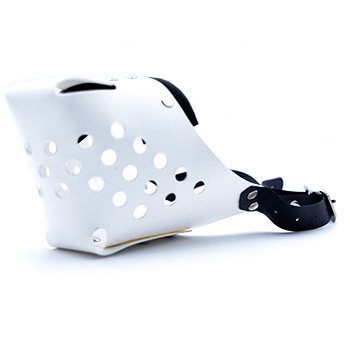
In extreme cases where you are not sure of what may happen, both dogs should have a muzzle on. We offer inexpensive plastic Jafco muzzles which work just fine. We also offer excellent wire basket muzzles. That way if there is a fight the dogs will not get injured and you can step in and break the fight up without getting bitten.
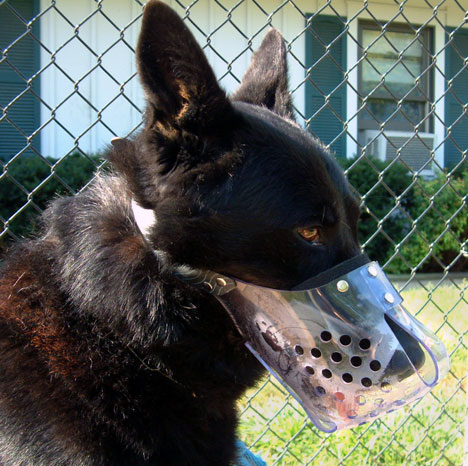
If you screw up and a dog fight starts - NEVER STEP IN AND TRY TO BREAK UP THE FIGHT by grabbing both collars. Not unless you want a quick trip to the emergency room. There is a protocol to follow in breaking up dog fights. I have written an excellent article on how to do this.

How to Break Up a Dog Fight

How to Break Up a Dog Fight eBook

eBook


DOG FIGHTS are very dangerous events. Read that article. But with that said, know your physical limitations and always err on the side of safety.

When I introduce 2 adult dogs I will allow sniffing but no dominant posturing – it’s called "T-ing” off. In other words, the dominant dog will put its head over the top shoulder of the other dog and press down.

When the meetings in the back yard are working, then you can try allowing the dogs to be loose together in your home.

We make them wear a drag line and we keep complete control. In other words we don’t allow them to run around like crazy dogs. We make them all do a “down stay” so they are looking and listening to US and not thinking about being stupid with one another.

FOOD and TOYS

One of the most common causes of dog fights in the home are fights over food and toys.

We feed the dogs in dog crates or in different rooms. Pick up any uneaten food after 15 minutes. You will be surprised at how fast your dog will clean his food bowl when he understands that you always take the food away after 15 minutes.

Never allow the dogs to be together with toys. Toys are triggers for dog fights. So NO TOYS left laying around!! Dogs need to learn that all of the toys are your toys and you occasionally allow your dog to play with YOUR TOYS but you always take them back after play time. We sell some great dog toys on our web site - we only sell toys that we use with our dogs and we want toys that are going to last. Check them out

HOUSE RULES:

When you get a new dog is is always a good idea to sit down with family members and make a written list of your house rules.

Everyone in the family needs to agree to follow these rules. Consistency is the most important part of dog training. If one family member chooses to ignore the family rules the entire process can break down.

Here are some sample rules:

1 - Determine who will feed the dog - when and where?

2 - determine who will exercise the dog - where when and what kind?

3 - Determine who will be the primary trainer (even though others may handle the dog during and after training there should only be one trainer) This is covered in my Basic Dog Obedience DVD

4 - Who does the house training ?

5 - What are the rules on furniture? I.E. only up if invited up and not on the beds

It becomes very clear who is the pack leader (ME!!)

Again, if there are questions use a muzzle.

Never allow dogs on the furniture or on your bed. That's just asking for dominance problems. You will have enough pack juices flowing without allowing things to happen that increase rank issues.

In the DVD I did titled Remote Collar Training for the Pet Owner I show how to teach a dog to ignore other dogs by using a remote collar.


Remote Collar Training for the Pet Owner


$40.00+s&h
Remote Collar Training DVD


Do not attempt to use a remote collar for dog aggression unless you have studied the information in that DVD. If you do it wrong you will instigate a dog fight that you may not be able to deal with.

Keep one last thing in mind. There are some dogs that no matter what you do they will never reliably accept another dog. Keep an open mind about this. If you like both dogs and are not willing to re-home one of them then you simply use two dog crates and keep them separated. Frankly it's not that big of a deal.

What blows my mind are the people who write and tell me they are going to kill one of their dogs because they can’t stop the fighting. That’s crazy. Just keep them separated.

Also those people who will tell you to just put the dogs together and let them work it out are people who are drop dead stupid. They have not seen the damage from a serious fight. You can tell them to go look at the dog bite pictures on this web site.


Electronic Collars

Eletric Collars


DOG PARKS

With all of this said you can see why I am not a fan of the "DOG PARKS" I have even written an article on why dog parks are a bad idea.

I caution people not to bring their dogs to these places. It is not a matter of if your dog will be attacked; it’s only a matter of when will it happen.

It's survival of the fittest in dog parks.

The same can be said for some doggy day care places.

If they use crates and introduce dogs slowly then it's a well run establishment. If they just toss dogs in a big room and stand back and watch, then don't do business with them.

In closing I want to make the point that just because you made mistakes in how you introduced your dogs does not mean that you cannot start from scratch again. It may work, it may not work. There is nothing lost in trying.


Dog Parks

Dog Parks eBook

eBook


Dog Pack


In extreme cases where you are not sure of what may happen, both dogs should have a muzzle on. We offer inexpensive plastic Jafco muzzles which work just fine. We also offer excellent wire basket muzzles. That way if there is a fight the dogs will not get injured and you can step in and break up the fight

Wire Basket Muzzle

A Leerburg Wire Basket Muzzle - the dogs can drink with this muzzle on.

Dog Pack

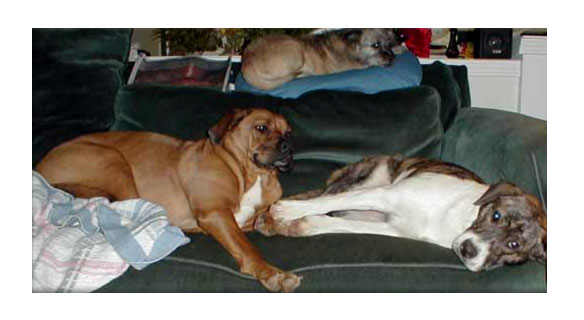
This photo represents a huge problem. Allowing dogs to lie on furniture is only asking for dog fights and dominance issues. In this case these dogs almost killed the little dog on the back of the couch before the owner made the necessary changes to stop the dog fights he was having.


If you have come to this page more than likely you have issues with aggressive dogs. A number of pages on my web site (including this one) contain emails about dog fights. I have placed my personal comments under many of these emails.

In addition we offer training resources. I have produced DVD titled:

DEALING WITH DOMINANT AND AGGRESSIVE DOGS This DVD demonstrates how to break up a dog fight if you are alone.

Dealing with
Dominant
& Aggressive Dogs


$49.00+s&h
Dealing with Dominant and Aggressive Dogs DVD


I have done a 71 Minutes podcast titled "Breaking Up a Dog Fights without Getting Hurt"

DOWNLOAD - Dog Fight Podcast in MP3 format


$1.00+s&h

71 Minute Audio CD - Breaking Up Dog Fights Without Getting Hurt


$8.00+s&h

Dog fights are violent, loud, and dangerous events. I get emails every day on dog fights. As I wrote this description I got 2 emails. In one email the family had two dogs . Their female GSD had just killed their Dachshund. In the second email this family's dog had just been in a fight with a neighbor's dog and did $1,400 damage.

In the mid 1990's I wrote an article on How to Break Up A Dog Fight - that article is still on my web site. This 52 Minute CD is an update of that article. The information in the podcast and on the CD has more details on making the decision of even trying to step in to break up a fight, it discusses many methods used to break up fights and it tells how to break up a fight when you are alone. There is an also extensive section on preventing dog fights.

Thc CD will play in any CD player.


Listen to a Podcast of this article


Emails From People Having Problems with New Dogs

My dog attacked our new puppy and broke it's leg.

Hi Mr. Frawley,

I, like the hundreds of others who have e-mailed you, have an aggressive dog. We found her when she was ~1 yr. old. She is now 3. She never showed any signs of aggression until she encountered one of my sisters dogs. This dog really gave her a run for her money the weekend they were together. I was stupid to think I could put these two females in a yard together and expect them to get along. To this day I regret that mistake. We just recently brought a new puppy home and again I expected them to get along without any problems and again I was wrong. Our older dog attacked the puppy several times, drawing blood each time, but the third time she bite the puppy so hard it broke his leg. All the attacks seemed to be food related. What bothers me is she gives no warning sign, she just attacks. The last time she attacked the puppy there was no food involved. I had just gotten out of bed and let the puppy out of his crate to go outside and he walked over to her and woke her up. Within a nano second she had him pinned on the ground and was growling. Her aggression towards other dogs seems to be getting worse. She used to just pin the dogs but not bite. I have broken up all of these fights the wrong way and after reading your articles have seen how very lucky I am for not being bitten. I ,like many, have had several vets tell me to put her to sleep, but through reading your answers to others questions am beginning to think this is my problem not hers. Am I right in thinking that? or does she have weak nerves. She has never shown any type of aggression towards humans, but fear she might since she is so aggressive towards dogs. Will her dog aggression eventually turn into human aggression? I am afraid that when my husband and I have kids she will be aggressive towards a toddler who finds the bone she is eating interesting. Is that a possibility? What can I do to correct the inappropriate behavior? She knows what I expect of her, but when she attacks nothing I say will get her attention. I am incredibly stressed about how to handle this situation and appreciate your bluntness to these matters. Is this correctable or are the vets right in putting her down. Thank you for you time!

Alexis

Ed's Comment

This is not herding problems it's rank and pack structure problems. This pup will now be dog aggressive for the rest of its life. This problem was 100% preventable. While this is a very common problem it's very sad.


My German Shepherd ate the head off our Beagle Pup:

Ed

I had an awful experience today. I found my 1 year old german shepherd female eating the head off of my husbands 7 week old beagle puppy. She never acted mean toward any of my other dogs, was actually kind of submissive. What would cause her to do this. My husband had told me a few days ago she was biting at the puppies through the fence but I just thought she was trying to play with them. I found where she had dug under the fence and I guess the pup stuck it's head out and she drug it out from under the fence.
I know she wasn't hungry she has a feeder in her kennel where I put her at night.
She eats Professional Kennel Choice dog food. The main ingredient is meat meal.
I raised this dog from a pup. Her mother is a good dog and has never tried to hurt any animal. She just has this habit of running by the other dogs and snapping at them.

Which is a herding instinct I guess. This is what I gather from her actions.
Any suggestions of why the young G.S. did this?


Thanks,
Louise

Ed's Answer to German Shepherd that killed the Beagle:

I recommend that you visit my web site and read a training article I recently wrote titled THE THEORY OF CORRECTIONS IN DOG TRAINING.

The reason I wrote this article was to help people understand how to motivate their dogs in training. Most people either use the wrong kind of correction or over correct dogs in training. I am not a fan of “force training” (although I definitely believe that every dog needs to go through a correction phase). By exploring corrections in training you will become a better dog trainer.

I strongly recommend two DVD's to you:

Basic Dog Obedience

Dealing with Dominant and Aggressive Dogs.

Also a prong collar and a dominant dog collar.

You need to step to the line and learn pack behavior, pack structure and understand it.

You owe it to the Beagle puppy to fix this problem.


Prong Collars

Prong Collar


How to
Fit a Prong Collar

How to Fit a Prong Collar eBook

eBook


QUESTION ON INTRODUCING DOGS:

Hi,

I have 3 Cocker Spaniel puppies all from the same liter. They are 5 months old. One is female and the other 2 are male. The one male is getting to be very aggressive when treats are handed out or when chew treats are handed out. He will go to one of the other puppies (more than likely the female) and sit and watch her and growl at her until she either gets up and walks away and leaves her chew/treat or she will jump up at him and they will start to fight. I haven't started obedience training on them yet, but I do plan on doing this. Is there anything that I can do to help stop what he is doing until I can get them trained? Please help and let me know if you have any questions.

Thanks,

Tessa

ANSWER:

What you are doing in raising 3 littermates or three dogs of the same age is a terrible idea. You have not even begun to see the problems you are going to have.

Keep reading my web site.

Read the articles on Q&A on Dominance, dogs fights, and the Article on Dealing with a Dominant Dog, You can read about this on my web site in the list of training articles. Read the article I wrote on why it’s a terrible idea to try and raise two pups at the same time (and you are trying 3).

Find a home for one of the males or keep all of them separated with dog crates or dog kennels.

To Top


QUESTION ON INTRODUCING DOGS:

Good Afternoon: Is it ok for a 2 1/2 year old dog be dominant over a new puppy as long as they both view their human owners as "the pack leader"?

I have a 2 1/2 year old male Pit bull Bull mastiff mix (we've had him since a puppy) and we just rescued a 5 month old full breed female Pit bull. The older dog is not aggressive and very accepting of other dogs but I would characterize him as more "dominant". I don't believe he's dominant over us (my husband and I) I just think he know's he the pack leader among other dogs.

Anyway, the new puppy is here and he is not hurting her or anything of that sort. He is sharing his stuff and everything. He just continues to show his dominance towards her. Tries to pin her down and lay on top of her. She loves it. I assume she thinks he is playing with her. Is that ok? Can't they/we live harmoniously w/ one submissive dog and one dominant one? What do you see as our fate based on what I've told you?

Thank You.

Angela

ANSWER:

This is 100% wrong.

Read the article I wrote on How to Introduce a New Dog Into a Home with Existing Dogs.

Read the article I wrote titled DEALING WITH A DOMINANT DOG.

We would never consider doing what you are doing. We do not allow an adult dog like this to interact in any way with a puppy. Not for months and months and then only under supervision.

If you cannot deal with controlling your dogs with dog crates and training then find a new home for this puppy.

To Top


Introducing a New Dog into a Home with Existing Dogs

Introducing a New Dog into a Home with Existing Dogs eBook

eBook


QUESTION ON INTRODUCING DOGS:

Ten days ago, I adopted a 1 year old, recently spayed and vaccinated female chihuahua.

She was given to the shelter for being bad with children.

The shelter staff told me that they could not get near her for a week, that she was nervous, afraid, etc.

She was sweet and friendly to my husband, my 10 year old neutered male chihuahua and myself- at the shelter.

So, she sat on my lap for the 2 1/2 hour ride home- I wanted her in a crate in the back seat with my other dog, but she struggled against going in it. I didn't have a muzzle and I knew she was nervous, so I figured we could bond on the ride (big mistake number 1?). I didn't want to get bitten and destroy our relationship from the beginning.

My husband pet her every time she nudged him. I ignored that because it's dominant. (I have years of past dog experience from working as shelter staff and a veterinary technician) I told her "No" for play biting, gave her water and a couple of treats.

Anyway, her doggie brain figured "Hey, this guy pets me on command and that other dog is in the back seat. This woman here is my leader and I'm next in command!"

I say this, because she ran into our apartment, peed on the kitchen floor, then the living room rug, then on the bed. (Urine marking!) I made her get out of the bedroom and never let her back in there again. I also gave her a firm "No!" and took her outside...

Then she grabbed a rawhide bone from the floor, snarled and lunged at my other dog, and growled at my husband.

I got her in the crate. I decided that this dog is dominant aggressive and territorial aggressive.

Now I'M going through the door first. I'M giving her the toys and treats, not leaving them on the floor. She's riding in a carrier in the car in the same spot as my other dog, I'M feeding her- after she lays down on command, etc. She recognizes me as her leader. She didn't want to get in the carrier, so I muzzled her and physically made her go in -NOT abusively, just firm.

Now, she goes in it- no problem.

BUT, (and sorry for the long history, I thought it would help you to get the whole picture)

she is trying to attack my husband every time he comes near me. (Only when he approaches me or touches me- not when they're alone) She is trying to scare my other dog out of the room and lunges and growls at him. He is SO submissive and just creeps away. He never puts up a fight and I do NOT interfere with the "pack order". I pet HER first, give her the treats first, let her go out the door after me, before my older dog, etc.

I need her to know that I will NOT allow aggression towards my husband and my other dog.

For the last week, I have kept her on a leash. When she growls at my other dog or my husband, I snap the leash and give her a firm "no!". It takes about three snaps and corrections, then she calms down. Then I tell her "good", pet her and maybe give her treats.

My husband is starting to get very irritated by her attacking him. I started having doubts about my training method, thinking that maybe if I'm correcting her and saying "no" she will associate it with my husband and attack him more.

I decided that I could use a little help and got a trainer to come to my home for a private consultation today. He told me that 95% of aggression is fear aggression. I could swear that this dog is dominant and territorial! He tried using a clicker and I said I don't like those things, so he used his voice instead and kept giving her treats and saying "yes". He also said her name, and if she looked at him, he talked all squeaky and high pitched for a "minimum of 30 seconds".

He wants me to throw treats at her every time my husband is around. I see the positive connection there, but how do I let her know that I won't tolerate the aggression?! He says I shouldn't say "no" to my dog...

and that I shouldn't give leash corrections and that this will make her fear and aggression greater. Well, she ended up trying to attack this trainer three times, and I wasted my money. Next time I would be smarter and ask if they have experience with aggression.

All that guy did was confuse me and make my dog nuts. She highly disrespected him. She has never, ever behaved that way with me and I just met her 10 days ago.

What do YOU think? I know how you feel about those food bribery trainers and I trust your opinion more. Am I doing this the right way? Any modifications I need to make to be more effective? Is what I'm doing going to stop this dog from being possessive over me? If she is guarding me, does it mean that she really doesn't respect me as the pack leader because she feels the need to protect me? Or is she just afraid that someone will harm or take away the best thing in her life?

She was given many vaccinations and a spay surgery all in the same week, as well as being under enormous stress in the shelter. If this is vaccinosis induced aggression, will it get better?

Any tips? Any and all advice will be greatly appreciated! I'm not in the mood for silly food-bribery and squeaky talk- which is why I'm asking YOU! (Although, I won't physically hurt her either)

Thanks for reading so much!
Stacey

ANSWER:

I recommend that you go to my web site and read the article I wrote on my philosophy of dog training. I think you will get some good ideas there.

Your problems are more of an owner problem than a dog problem.

I suggest that you read the article I wrote on how to introduce a new dog into a home with existing dogs. The work in this article is compounded when you have a weak nerved dog.

Bottom line is you should be doing this work for a month or two before you even consider doing what you are doing now.

You will probably find that you have not had the full picture on the steps of training a dog. Your dog must go through training steps before it can be considered fully trained.

You will read why I am not a fan of taking an untrained dog to obedience classes. No professional dog trainer would ever take his dog to an obedience class with 15 or 20 untrained dogs and try and train it there. It's crazy. The dogs cannot concentrate with the distractions.

I think if you read the testimonials on my DVD you will see that my customers feel the same way.

If you make the decision to learn to train - get a prong collar. You can read about it on my web site. There is an article I wrote (with a number of excellent photos) on how to fit a prong collar, you can also read about the different types of prongs.

To Top


Ed Frawley's Philosophy on Dog Training

Ed Frawley's Philosophy on Dog Training eBook

eBook


QUESTION ON INTRODUCING DOGS:

Question #1

Recently we have had to take in a brittney spaniel that is about 6 years old because of my brother in law's recent move that didn't allow him to take his animals. I already have 2 german short hair adult dogs that are 3 and 8 years old and a 1 year old mini mini schnauzer. They have already been around each other a long time ago while hunting, but not since then. The first couple of days were fine. They were around each other all day long and it wasn't until yesterday did they get into a fight. Everything is back to normal today so far. What suggestions do you have for my situation?

Question #2

My 3 dogs are spoiled and I know it, but they are use to being in the house and sleeping on the couches in the front room only. I read in one article that is not a good thing when you are introducing a new dog into the house. How would I go about getting my dogs that are already allowed to get on the furniture to stop? Also do you have any other helpful tips as I work my way through this process of introduction?

ANSWER:

I recommend that you go to my web site and read the article I wrote on my Philosophy of Dog Training. I think you will get some good ideas there.

Your problems have just begun.

Read the article I wrote on how to Introduce a New Dog into a Home with Other Dogs. You will see where you made mistake.

Three dogs is a dog pack – it's not three dogs. A HUGE DIFFERNCE

Read the article I wrote on Dealing With Dominant Dogs.

You may want to read the article I wrote on GROUND WORK BEFORE OBEDIENCE TRAINING.

Bottom line is get dog crates and use them – train these dogs -

To Top


QUESTION ON INTRODUCING DOGS:

We recently brought an 8 week old beagle in the house where we have 2 other dogs…

I’ve had a pit bull mix since she was a puppy and she’s now 6 years old….a couple of years ago, we brought a min-pin in the house and after an initial period of the pit bull being standoffish with the min-pin, they are now best friends…they love each other.

The puppy was brought into the house approximately 3 weeks ago and she has been somewhat accepted by the other dogs, after that initial standoffish period, but something happened yesterday that terrified me and I’m not sure what to make of it…

I was home with all 3 dogs, we were all sleeping on the couch in the living room and the phone repair main knocked on the door. I think it startled all of us and I jumped up to put the older 2 dogs in a bedroom, because they are not stranger friendly. Before I could get them in the room, the puppy let out a howl and the pit bull went over and it all happened so fast, that I couldn’t tell if the pit was trying to console the puppy or trying to attack her.

I got the pit and the min-pin in the bedroom and went to see about the puppy, who by that time was screaming….the look on the dogs face was of pure terror. I’ve never seen a dog behave that way, she was terrified of me for a long time

Do you think the pit was trying to attack her or was this just from being startled from sleep and scared of all the commotion?

ANSWER:

This is 100% an owner problem. Not a dog problem.

The Pit was attacking the pup – its called redirected aggression.

I recommend that you go to my web site and read the article I wrote on my philosophy of dog training. I think you will get some good ideas there.

Read the article I wrote on how to introduce a new dog into a home with existing digs. Three dogs is a DOG PACK – it changes and elevates pack and rank behavior. Allowing dogs on furniture in this environment is a CRAZY thing to do.

I recommend that you read the article I wrote titled Dealing with the Dominant Dog and the second article I wrote titled The Groundwork to becoming a Pack Leader.

I also recommend my 4 hour Basic Dog Obedience DVD and a dominant dog collar. Read the write up and look at the photos of how to size them on my web site. I recommend that you visit my web site and read a training article I recently wrote titled THE THEORY OF CORRECTIONS IN DOG TRAINING.

To Top


COMMENT:

I am impressed with your website & have purchased your video. I have another question not on your site - We have a 9 yr old Shih Tzu, who has always been a submissive house/lap dog. We just got a Labrador puppy, now 11 weeks old (we brought her home at 8 weeks). Our older dog is scared to death of the puppy & we don't know how to get the 2 dogs together. The older dog shakes & is scared to go near the puppy. So far they have been separated via the crate or gates. Thanks.

Debora

To Top


QUESTION ON INTRODUCING DOGS:

Mr. Frawley,

First off, thank you very much for all the excellent information on your website. I have question for you. I apologize for not reading through EVERY Q&A or discussion board before troubling you, but I only discovered your site about 48 hrs ago and my girlfriend and I are scheduled to adopt a puppy from a local rescue group by this weekend, so I was hoping for a quick response. (I've soaked up as much as I could from the website in that time and have just ordered your video, Your Puppy 8 Weeks to 8 Months.)

A bit more background before I get to the actual question (bear with me!). We currently own a 5yr old lab/hound mix. She's mostly good, but she does have some separation anxiety and other issues. She was my dog before I met my girlfriend. The three of us have some issues to work on but I don't want to trouble you with the old dog right, my question is with the new dog. In the past, I have been the "primary caregiver", feeding the dog, taking her on walks most of the time, just generally paying more attention to her. But our new dog (a ~6 mo. old Rottie/GS/? mix) isn't fully housebroken and I work full-time, so my girlfriend will be much more involved with the new dog, especially with house breaking and initial training.
My question has to do with your instructions on laying the "groundwork," where you write: "We don’t allow family members or friends to pet our dogs. We make it very clear to the dog that I am the center of its universe. New owners make a lot of mistakes by allowing others to play with their dogs or pet their dogs to soon after they get them." I don't have quotes from other things I recall reading, but you make it clear that you bond with the dog, establish yourself as alpha etc. for at least the first few weeks. So here's (finally) my question: is it possible for my girlfriend and I to both work with the puppy? Do you really recommend that one of us (and I guess it would have to be me) keep their distance. If so, what can I do with the dog? I should mention that there will be times each week when my girlfriend is away and I'll have to feed and walk the dog, regardless of what might be ideal.

Any clarification you could offer would be appreciated. Once again, I'm sorry if this information is present elsewhere in your site and I just haven't stumbled upon it yet. I will continue to work my way through the site as I wait for a response.

Thank you very much in advance,

Mike

ANSWER:

In our home we have our own dogs. I am friendly with Cindy's dogs but I don’t GUSH over them. I may pat their head and say hi but that’s all and if I have to let them outside when she is gone I do but I don’t play with them. It's clear to them that I am a higher rank but she is their best friend. You have two dogs and should do the same.

Read these articles I have written:

How to introduce a new dog into a home with existing dogs.

You may want to read the article I wrote titled The Ground Work to Becoming a Pack Leader. This is the protocol we use in our home when we raise a puppy for ourselves. It is also the part of the protocol we use to solving behavioral problems such as dominance and/or house breaking problems.

I recommend that you visit my web site and read a training article I recently wrote titled THE THEORY OF CORRECTIONS IN DOG TRAINING.

The reason I wrote this article was to help people understand how to motivate their dogs in training. Most people either use the wrong kind of correction or over correct dogs in training. I am not a fan of “force training” (although I most definitely believe that every dog needs to go through a correction phase). By exploring corrections in training you will become a better dog trainer.

The fact is you have way more to learn than your dogs. I would recommend that you get the 4 hour Basic Obedience DVD. Study it – make your girlfriend study it.

Good luck

To Top


Basic Dog Obedience


$40.00+s&h
Basic Dog Obedience DVD


LAB AGGRESSIVE TO NEW PUPPY

Hi Ed,

I wanted to see what you recommend about my current situation. We have a 4.5 year old female black Lab and an 11 week old female teacup yorkie puppy. Two Mondays ago, Bailey (the lab) bit our puppy (Bella). She had been growling at her, whenever Bella would teeth on Bailey’s paws/ get close to her toys/ get close to her food, but 2 Mondays ago, she bit her on the head. We immediately took Bella to the emergency vet. She had 2 gashes that they glued together (one on the top of her head and the other on her neck). She went back in for her first puppy exam/check up the following Saturday, and she was recovering extremely well and seemed happy as can be.

Two weekends ago we started to reintroduce them to each other and Bailey seemed to be warming up. Last Thursday, however, it happened again. We took Bella back to the vet and both of her corneas are scratched. They gave me some strong antibiotic drops and we hope they will do the trick. Bella has been pretty shaken up since the attack, but she has started to come out of her shell a little bit. The vet said that we need to keep them completely separated and that a trainer wouldn’t help the situation, but I just have to believe that there is something that we can do to make it better and to help Bailey adjust!

We have been trying to reassure Bailey that she is the alpha dog (taking her out first, feeding her first, giving her the best toys), but she just seems really annoyed with Bella and the fact that Bella really wants to play with her. Here is a basic overview of Bailey…I wanted to give you as much information as possible:

I purchased Bailey as a puppy, and gave her to Paul (my husband) for a present. Paul and Bailey are inseparable. Paul thinks that Bailey hung the moon and vice versa. Bailey has been pretty much an only dog for her whole life. She has lived with other dogs before, but they were roommates’ dogs and she never had to share/compete for attention. She became very close with those dogs and was really depressed when they moved out. She hasn’t lived with another dog in over 2 years. She also does well with both of our parents dogs when we go visit them in Corpus.

Everyone describes Bailey as sweet, gentle, and extremely well mannered. She is fabulous with children, and plays very well with other dogs that she knows. She has free reign of the house during the day and is very good. She spends the morning looking outside the front window on her bed, which we have propped up on an ottoman (so she can see outside). She spends the afternoons on our bed. She is not allowed on the furniture, and she asks permission to get on the bed. We let her sleep with us about once every 2 weeks. She mostly sleeps on her bed, which we move to our bedroom at night and put it down on the floor, next to our bed.

Her dad takes her fetching at the park every night. 90% of the time she is fetching and the other time she will socialize with the other dogs. She plays well with her friends, but she is mostly interested in fetching with Paul. She goes after other dogs at the park when she thinks they are going to steal her ball. She occasionally goes after dogs that come over to play with Paul when they are fetching. If she has had her daily exercise, then she is very calm when she gets home. If she hasn’t, then she is begging for attention and lets you know that she wants to go fetching. Paul used to take her running nearly every day for 3.5 years. She LOVES it. He then got sick and wasn’t able to take her anymore…so that’s when they started fetching every day. He had surgery and is just now to the point where he will soon be ready to start running with her again.

She loves belly rubs and loves playing with cats. She chases squirrels all the time, but I think she honestly wants to play with them. She enjoys a routine. Everyday I come home during lunch to let her out and play with her. She travels extremely well, and has NEVER gone to the bathroom inside the house. Last year, she had a spell of getting into the trash, but when Paul and I got married and moved in together (and got a trash can with a lid) she has stopped doing that. She is in no other way destructive.

She has always been attracted to cute little things, and that is why I thought she would be okay with a yorkie. Bella isn’t competition as far as fetching time or spending time with Paul. Bailey is Paul’s dog and Bella is mine. That said, Bailey is VERY attached to me as well.

We are crate training Bella and she stays in her crate during the day. At lunch, I come home for an hour and let her out, but then she goes back into her crate. She is teething on everything, and she always goes after Bailey’s paws. I close her muzzle and say “no bite” when she does. Bella’s teeth and just now starting to erupt, so I fear that we are in for a long teething stage. After the second attack Bella has been acting out more. I don’t know if she is just a puppy testing her limits (who is now 3 weeks older) or if this is a result from the attacks. Whenever I try to take something out of her mouth (like a sock), she goes crazy! Over the past 3 or 4 days she has started biting and growling at me when I try to correct her or make her do something that she doesn’t want to do. She bit me 3 times over the sock yesterday morning and again last night when I tried to put in her eye drops. Both times I would say “no!”. When she would do it again, I roll her on her stomach, pin her down and growl…half the time she starts licking my nose and the other half she growls back. When she growls back, I put her in a time out in her crate.

I really don’t want Bella to become a skiddish, snappy dog. If she ever snaps at Bailey, that would be the end of her, and one day, when we have kids, I don’t want her to bit and snap at them. I am definitely worried about Bella’s socializing. She has the cutest personality and I love her so much…I really want what is best for her. I really want what is best for both of them.

I started taking Bailey to doggie daycare so that she can socialize with other dogs and realize that she is a dog and not a human. I think she has always been spoiled, so I am hoping that putting her with other dogs will teach her how to SHARE and learn to enjoy Bella. She has only been once so far, and, when she came home, she was in the best mood and even acted like she wanted to play with Bella. I didn’t let her…but I thought it was progress.

I love both of these dogs so much and just don’t know what to do. I apologize for this LONG email, but I wanted to tell you everything. Bailey is so great, I just want her to become comfortable and to accept Bella, and I want Bella to be safe, feel safe, and feel loved.

I would greatly appreciate any advice.
Thanks,
Erin

ANSWER:

This is more of a handler mistake than a dog problem.

Read the article I wrote on how to introduce a new dog into a home with existing dogs. You will see where your mistakes began. In fact I am going to include your email on that page so others can see what happens when they do this.

If you don’t do the things in this article you will have a dead puppy.

You should read the article I wrote on GROUND WORK TO BECOMING A PACK LEADER. This is how we raise pups in our home.

I would recommend you purchase the video I produced titled Your Puppy 8 Weeks to 8 Months. I have owned and trained German Shepherds for 40 years. In the past 25 years I have bred over 350 litters of working bloodline German Shepherds. I give this video to all of my puppy customers and never get questions on how to raise a pup. Read the description of the tape on my web site. Dog training is not rocket science its simple common sense ideas on how to handle and train a dog.

You should also consider my 4 hour DVD on Basic Dog Obedience - The fact is you have way more to learn than your dog. I always recommend the handlers start studying this DVD right away even though you wont train a lot of the work until the pup is 4 to 6 months old.

You have to consider the DVD I recently finished titled DEALING WITH DOMINANT AND AGGRESSIVE DOGS . Your lab cannot exhibit this aggression and sending it to doggie day care if the absolute wrong thing to do. (NO MATTER WHAT THE PERSON WHO OWNS IT SAYS)

I have a saying that I tell people – it goes like this” Everyone has an opinion on how to train a dog – just ask you barber, your mailman and your neighbor” The problem is very few people have the experience to back up their opinions. This results in a lot of bad information being passed out so people like yourself need to figure out who has the experience to warrant being listened to.

For your puppy's sake I hope you step to the line and educate yourself here. If you need more reasons – go to the following web page and read the hundred of emails from people.


Your Puppy
8 Weeks to 8 Months


$35.00+s&h
you puppy 8 weeks to 8 months


QUESTION ON INTRODUCING DOGS:

I have been studying your site and in the last month have rescued dog#2 a german shepard mix male who is 1 yr old and also have a lab mix rescue who is 1 yr 5 months and a female. They seem to fight constantly no blood drawn but seem to really get into it they have now been trained this can only happen outside and get along great around food and treats. How much fighting playing is too much
I don't watch them constantly outside since we have a fenced double yard and they are both crated when no one is home inside in the same room...... Any insight you can provide will greatly be appreciated


Thanks in advance..........

ANSWER:

We would never introduce dogs like this. You can read the article I wrote on how to introduce a new dog into a home with other dogs. You can find the list of 300 or so training articles I have written. This email will be added to that article.

You should separate these dogs, then obedience train them.

There are two of my training DVD's you should consider :

Basic Dog Obedience

Dealing with Dominant and Aggressive Dogs

Should you choose to ignore this information I recommend that you read the article I wrote on how to break up a dog fight without getting hurt.

You are always going to be exposed to people who offer advice on how to fix your dog's behavioral issues.

The problem is that most of these people don’t have the experience to offer sound advice. This results in a lot of bad information being passed out on how to deal with behavioral problems.

Pet owners like yourself need to figure out who has the experience to warrant being listened to.

Dog training is not my hobby, it’s a way of life. I have been training dogs for over 45 years. I have bred over 350 litters of working bloodline German Shepherds, I was a police K9 handler on a drug task force for 10 years and I have produced over 120 videos on dog training. Many of them directed towards professional dog trainers.

If my web site were printed out it would be over 10,000 pages. It is the largest dog training web site on the Internet. I have written 300 training article which are included on my site, I also have a dog training web discussion board which has 97,000 posts and growing every day. The board has 8,400 plus registered members and there is always over 100 people on the board at any time of the day.

Learn to use my web site search function.

Good luck


Josie the rescue dog aggressive to new puppy:

Mr. Frawley:

I have just spent a few hours reading articles on your site with regard to dominant dogs, and have a few questions. I'm hoping you might be able to steer me in the right direction, before my situation gets out of hand. Here's some background: Five years ago I adopted a one-year-old Yorkie terrier mix who I found running through a busy intersection. At the time, I called the pound and they took her for three days to locate her owners. No owners were found, and so I adopted her; her name is Josie. She and I had an immediate bond, but she had obviously been abused in the past and so had some issues when it came to people she had not met before. (She is very sensitive to the word "no.") I worked with her to socialize her around other people and other dogs, and she did okay through the years. No fights, but some close calls with other dogs; she is definitely a dominant dog. She growls at me on occasion, and I correct her with a sharp, low "no." When she's corrected, she cowers and then starts wagging her tail for me to pet her, which I try to ignore.

More often, she will growl at my boyfriend, who I have been with for two years. She is not obedient on walks, but does listen to us when we ask her to "wait" before crossing the street. With other dogs, she is definitely dominant and demands that they submit to her with growls or nips. I learned that I have broken several dominant dog rules that I read your Web site, because she sleeps in our bed, lays on us on the couch and pretty much has the run of the house. (I didn't know these were inappropriate actions.) I'd like to learn how to do "the right thing" when it comes to training her, NOW, because we just brought a new puppy (golden retriever) into the home, and although I'm not pregnant, I do want to have a child someday and I'm afraid that Josie might snap at a child. (We also have two cats that Josie herds around the house like sheep, and when they try to come into the bedroom at night she growls and snaps at them.)

The puppy, named Nora, is 10 weeks old. We are crate training her. She is in the crate all night, for feedings and when we are not at home. When we introduced Nora to Josie, we had Nora in the crate and let Josie sniff her. We gradually let them meet. For several days, Josie seemed frightened of the puppy and would not go near her. Josie also refused to play with any toy that the puppy played with. This lasted for about a week. When they would interact, Josie would growl at the puppy or at times snap. I thought this was OK because we wanted Josie to know that she was the dominant dog, but now I'm beginning to worry. Yesterday, Josie snapped at the puppy's head - did not break skin - but the puppy yelped.

I don't really know where to start when trying to correct this behavior. If Josie is to stop sleeping in our bed, how do I get her to do that? What about the couch? What do we do about the puppy? Any information you can provide will be much appreciated, and I'm interested in purchasing a video or two if you might point out some that would be appropriate.

What are your thoughts about getting Josie into an obedience class?

Thanks very much for your time,
Rebecca


ANSWER:


I give you credit for trying to correct your mistakes.

I recommend that you go to my web site and read the article I wrote on my philosophy of dog training. I think you will get some good ideas there.

Josie is not trained – that’s the first step to take. Get a prong collar and my Basic Dog Obedience DVD.

This is only part of the solution. It is a necessary part but only a piece of the puzzle. If you don’t do it you will fail.

I wrote an article about how to introduce a new puppy into a home with other dogs. I recommend you read it. We would never do what you are doing – allowing them to be together so soon. You are asking for disaster.

I would also recommend that you get the DVD I recently finished (it was a 5 year project) titled DEALING WITH DOMINANT AND AGGRESSIVE DOGS.

This DVD is 3 ½ hours long and does not cost a lot of money. If you go to the web page you can read the outline of what I included.

These two DVD's offer 7 ½ hours of instruction directly related to your problem.


QUESTION on Introducing Dogs:

Hello,

I have a pug puppy,(phoebe) she is 5 months old, and an older Dachshund (11 years old) The pug is constantly biting and jumping and chewing on the dachshund. I assume to be the dominant dog. The Dachshund (woody) does not fight back, but for the most part takes it. How do I get this to stop?

Also the puppy constantly tries to take food out of Woody's mouth when eating. I also assume this is to be dominant (Phoebe is definitely the dominant of the two) If I didn't watch them eat, Phoebe would eat all of Woody's food

Any suggestions would be helpful!
Thank you,
Claudia

ANSWER:

Get a dog crate and put the puppy in it. It is YOUR JOB as pack leader to protect the older dog from the bullying of the puppy. Read my article on Introducing Dogs into Homes with Existing Dogs.


QUESTION on Socializing New Pup:

Hi Mr. Frawley,

My family and I are getting a new puppy a female GSD in a couple of months and I've been reading up and doing research, I even bought your video "Your Puppy 8 weeks....". Anyway I told my neighbor about it because she had a real hard time with the previous owners of our home and their barking dog, their bedroom window is right next to our backyard. She thought it would be a good idea to socialize my new pup to her two indoor dogs so that when they are outside there wouldn't be a big problem, but when I dog sat for them once one of her dogs growled at me and tried to bite me and I really don't know if I want my new pup around her. I certainly don't want my new pup to have a bad experience. Do you think that we should as long as the dogs are all on leashes. Or should I just politely say "no thank you" and try to bark train my pup when she gets older? I really don't want to get into it with her over this, we've had a great relationship so far but I know she has a pretty hot temper and hates barking dogs. My puppy will be inside most of the time anyway until I go back to work in a couple of years so should I even worry right now or should i try and be as proactive as possible? What do you suggest?

Tracey

ANSWER:

This is 100% a terrible idea. It’s a great way to screw up your dog if it were to get attacked and there is a good chance it would because your pup is not part of their pack.

This woman falls into this category: ” Everyone has an opinion on how to train a dog – just ask you barber, your mailman and your neighbor” The problem is very few people have the experience to back up their opinions. This results in a lot of bad information being passed out So people like yourself need to figure out who has the experience to warrant being listening to.

You would be better advised to spend the time training your dog with the methods in my tapes (not sure if you also got Basic Dog Obedience - if not get it – you have a lot more to learn than your dog does – no disrespect meant here – it's just the truth)

If barking becomes a problem you can (and should) keep you dog in the house in a dog crate at night. If it's going to be an outside dog then get a Tri Tronic Bark Limiter (it works the same day that it goes on).

I hope this helps.


QUESTION:

Ed,

I have been training dogs for a good while and really enjoy helping people make their dogs good citizens. I have a 72 year old lady that has rescued a 6 yr. Great Dane. We have been training for 5 weeks now and things are going better than I ever thought it would. She truly loves this dog. The problem is the Great Dane is a bundle of nerves due to trauma with it's previous owners. The dog is a female and really sociable with people but you bring another dog into the mix she goes to hell in a hand basket. The lady has a daughter that has a lab/pit mix in which is a male. Our goal with the training is to be able to put these dogs together. I have been getting the dogs closer and closer during training sessions and it has improved for the most part. The Great Danes nerves are just all over the place. This past Saturday I had them both on a down stay and about a foot apart for about 5 min. and feeling like we had accomplish our goal and all at once both dogs went after each other we did it all over again (so they would not win). I am like you and do not like weak nerves but I have to help this lady due to her love for the dog. I am thinking of putting the dogs together muzzled and letting them work it out on their on. I have never seen female and male be this aggressive toward each other. The main problem is the mother/daughter has tip toed around this for 8 months and I believe has compounded the problem. Do you agree with my thinking on the muzzling of the dogs? Thanks for such a great web site and supporting the greatest breed ever. (German Shepherd)

Ed's Answer

I wrote an article on how to introduce a new dog into a home with other dogs. Also in an ebook.

With this said, dogs don't live in the past they live in the present. This means she has to be a strong pack leader. At 72 the best way for that to handle is if she learns to train with a remote collar. I did a training DVD on this.

When she has learned this then muzzles and dog crates are in order. Remember this may not work. Just because the people want this, does not mean its going to happen.  It's a pack and rank issue and I don't see a 72 year old women becoming a strong pack leader.


QUESTION:

I just found your website today and wanted to inquire about introducing our son's adopted 3 year old golden retriever to our 2 dogs... 11 year old (part lab)and 8 year old llasa apso ..

They are very easy going and get along with the neighbor's 2 poodles, and with every human they meet...

Our son and his wife brought their retriever here earlier today and we told him to bring her to the fence then I would leave our 2 outside on the other side of the fence....And I would stand there and speak to their retriever in a friendly way so they would know I accepted her, etc.

Our part lab barked like crazy and the little one did the same thus triggering the retriever to react and bark...They went at the fence barking and showing teeth ..which is unusual ...soooo needless to say we decided to wait for another day to introduce them again....

The retriever's former owners always left her with their parents when they went away and they have a schnauzer that she got along with fine....

I will be helping watch the dog at times so I want the 3 to get along and be a good pack!!!

HELP!!!

AND THANK YOU,
Gloria

ANSWER:

Introducing new dogs (no matter how friendly you think they are) through a fence is never a good idea, as it can elicit territorial aggression. You already had a taste of that.

I don’t know how long your son has had his Golden, but I would suggest our Basic Obedience DVD even if the dog has had some previous training.

You will probably find that you have not had the full picture on the training steps for training your dog. A dog must go through training steps before it can be considered fully trained.

When you read the description of the DVD on the web site you will find out why we are not fans of taking an untrained dog to obedience classes. No professional dog trainer would ever take his dog to an obedience class with 15 or 20 untrained dogs and try and train it there. Dogs cannot learn when faced with this kind of distraction.

If you read the testimonials on the DVD you will see that our customers feel the same way.

I also recommend that you read the recently written article titled THE THEORY OF CORRECTIONS IN DOG TRAINING.


Tri Tronics®
Bark Limiter

TriTronics Bark Limiter


QUESTION:

I have a 3 year old female GSD. In the beginning I was doing schutzhund training with her, but due to an illness Ii had to stop, finances and time made it impossible to continue. She follows all commands and is a sweetheart at heart. She has lived with me and my daughters, who are 13 and 17. Two years ago my daughter's father bought her a male 10 week old chinese crested, also from a breeder. My GSD took to him right away and they were good with each other she was taught to play, as I call it "easy" with him. I have never had a problem between the two of them,  my vet was sure to check on each time we had a visit. When we are at work and school they are free in the house and never no problem until now. My GSD bit the little guy in his face and got his eye did damage to cornea. I know about toys, bones, etc. being around but it was never an issue she used to let him smell a bone have a lick and he would leave it, and she would toss a ball at him to play. Neither one of them has ever been food aggressive either, until now. I don`t know what happened. Why would she suddenly turn on him? I recently moved can that be stressful  to cause this problem? One evening I noticed she went up to him out of nowhere and went for his face. When I gave the command no she stopped, looked at me and sulked away. I have been separating them when we go out now and she does not like that, she broke door trimming to get into room or she will start going through my desk or garbage tearing things up, things she has never done before. I don`t know what to do. I have been spending extra time with her at park doing some tracking etc. thinking this is what she needs, but nothing works. I`m at lost as to what to do. Can you give me your opinion on this or any suggestions?

Thank You,
Catherine

ANSWER:

Catherine,

Hate to say this but this is an owner mistake and not a dog problem.

Under no circumstances would we ever do what you have done. If your older dog is house trained and can be left loose in the home then that’s OK but the young dog should NEVER be loose when you are gone. But then you already found out why I say that.

Bottom line is who knows what happened? I will guarantee that it had something to do with pack structure and rank and the older this male gets the more problems you will now have with it and your female.

So unless you are willing to get a crate and use it religiously you should re-home one of these dogs or prepare for additional vet bills.

If you want to read more about your mistakes you can read the free eBook on my web site about HOW TO INTRODUCE A NEW DOG INTO A HOME WITH OTHER DOGS. My web site has a large number of FREE eBooks that I have written. Go to the main directory for eBooks.


QUESTION:

Today we brought a new dog in to our house hold already containing two adult Greyhounds. The dog we brought in is an adopted  female rottie/lab mix 11 mo old.
We started by having the dogs meet on neutral ground in a park (all on long leashes.) Of course the greyhounds were curious and gentle. After a few sniffs. The new dog growled and turned aggressive. A firm no stopped the aggression right away. We al