



Who Pets Your Puppy or Dog?


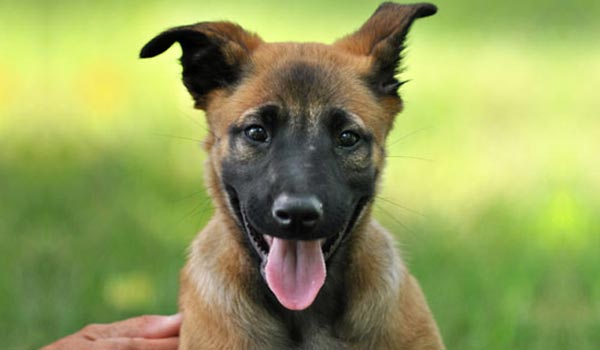
Reasons for Not Allowing People to Touch Your Dog
In Your Puppy 8 Weeks to 8 Months and Basic Dog Obedience, I advise people to not allow strangers to touch their dog. This has generated a lot of questions so I decided to write this article to expand on the reasons and exceptions for this policy.
To understand this, you must first understand what I expect from a relationship with my dogs. I want a dog that sees me as the center of its universe. I want my dog to focus on me and I want it to ignore other humans and animals.
I don't want a dog to look at other people as “petting machines” or “treat dispensers”. In other words, I don't want my dog running up to every Tom, Dick, and Harry and expecting to engage with them. I want my dog to accept people as fixtures in the environment. I want my dog to be aloof to strangers but at the same time, I don't want my dog to be suspicious or aggressive to strangers (unless I tell them to be that way).
We carry this concept into our home where we have several dogs that are trained by a different family member.
We expect our personal dogs to completely accept other members of the family as pack members.
The Family and Your Dog
- Family members don't train or play with another family member's personal dog.
- Family members can greet another member's dogs with a pat on the head when they come home but they don't gush over them.
- Family members can even feed the dogs, but they simply put the food down. They don't try and take food or bones away from a dog of another family member.
- Each member of the family can take all the dogs outside to pee and poop. But we don't PLAY with or engage each other's dogs when we do this. It's treated in a sterile exercise. In other words, go outside, do your business, and come back inside. No games or play while outside.
- The PLAY and training comes from the person who is the leader or handler of the specific dog.
When we walk our puppies and people try and pet our dogs, we politely but firmly ask them not to touch our dog. If questioned, we simply tell them the dog is being trained as a service dog. As long as you are not trying to disguise a dog as a service dog and take it places where normal pets don't belong, there is nothing legally wrong with this.
Train Your Dog to Ignore Strangers
If I have a puppy or a dog that is leery of people, I train the dog that every time it gets into a situation that makes it nervous, I feed it very high-value food treats. In dog training terms I "engage the dog." This means I connect both mentally and physically with the dog by making myself more interesting than the environmental things that make the dog uncomfortable. The training for this is covered in detail in the first 45 minutes of my DVD titled The Power of Training Dogs with Food).
The basic concept is that every time I see my puppy or dog act a little nervous, I redirect the puppy back to me, using an excited tone of voice and jackpotting rewards until I see the dog is totally focused in on me.
Pretty soon, the dog will see something that makes him a little uncomfortable and he will look to me for a high-value food treat. For more information, read my articles on motivation and marker training.
Anyone with a dog can practice this work when they are on a walk. If you see another dog coming on a walk with his owner, or a person on a bike coming, or even someone who is out for a walk, you simply stop and engage your dog and start to reward with high-value treats. It doesn't take long for the dog to learn that his owner is a lot more interesting than strangers.
Service Dogs
The question often comes up about service dogs. I am asked "Isn't this philosophy counter-productive to service dogs?"
The answer is "No, it does not have to be."
Potential service dogs can (and in my opinion) should be raised with the NO PETTING POLICY. The difference is that the handler can train the dog that it is allowed to go to strangers when the handler gives it a command to go get petted. This can be done with marker training.
The handler also has to be able to stop the dog and RECALL the dog from being petted. This work can be started at a very young age when the pup is going through groundwork.
Problems with the No Petting Policy
The biggest problem I have seen with this no petting policy is with family members who have not bought into the marker program.
There is no easy answer to this one. In my opinion, this is a serious problem that can only be solved by you and your family.
I can tell you this, if you work this out and follow these concepts, you will have a dog that accepts you as a pack leader. Your dog will also get along better with your family because it clearly understands its rank within your family pack.
This brings up another important subject that confuse a lot of new owners. They think they need to make their dog look at their children as a higher rank in the family pack than the dog. This is not the case. How can a 3-year-old or 2-year-old child be of a higher rank than an adult German Shepherd? The answer is they can't.
When dogs are raised like we raise them, they learn who their pack leader is. Becoming a pack leader is a natural part of our pack structure program. It's during the establishment of pack structure that we teach the dog that one of our pack leader rules is "ignore small children" and another is "don't be aggressive to anyone unless we tell you to."
Dogs that are raised like this are easier to train because they don't get mixed or conflicting signals as a result of being trained by more than one person in the family. A dog should have one trainer. It can have more than one handler, but it should only have one trainer.
New dog owners need to understand that training and handling are two different things. Family members handle a trained dog when they take the dog outside or for walks, but this is not training.
For dog training to be clear, it must be presented to the dog in a BLACK AND WHITE method that is easy to understand. Allowing two people to train the same dog adds a lot of GREY into the process and this just adds confusion. Confusion leads to behavioral problems.
If you have a puppy and you don't already have my DVD Your Puppy 8 Weeks to 8 Months, I recommend that you consider it.
I also recommend that you get my DVD titled Basic Dog Obedience. I tell people to get them both at the same time because you have more to learn than your dog. Even though your dog is only 8 weeks old and the information in the Basic Dog Obedience DVD may not be used for several months, the time to start to educating yourself is now, not the night before you start distraction training.
Don't be like the school teacher who does a lesson plan for class the night before she has to teach. It's not the best way.
If you really are serious about training, I suggest you enroll in our self-study online dog training courses. We have a Basic Dog Obedience course that you can go over, again and again, to really drill in the concepts.
Thanks for listening and good luck with your dog.


Most Popular Articles
-
01
-
02
-
03
-
04
-
05
Related Products
-
 $34.99 - $44.99
 -

$65.00$29.99 -
 $60.00

Ask Leerburg.