



Save a Puppy's Life


Note: Leerburg formerly bred working bloodline German Shepherds until deciding to shift its focus towards producing dog training videos and courses alongside providing quality dog training equipment. This article was written when our breeding program was still active. While Leerburg no longer breeds working GSDs, we believe this article may still provide valuable information for those interested in starting their own breeding program.
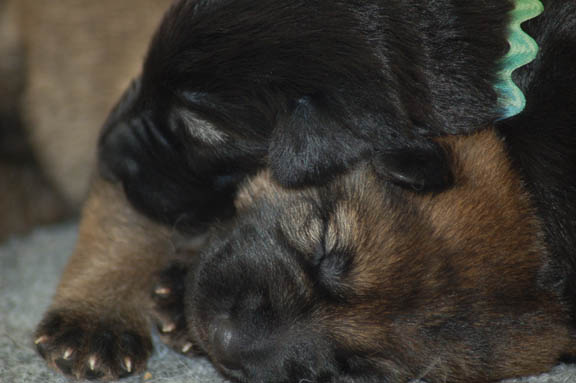
In January of 1990, I had two large litters of pups (21 total puppies) at my kennel facility in Wisconsin. On January 14th, they started to die. Before the nightmare was over, I lost 6 puppies and had spent $2,400.00 on veterinary bills. This article is about the changes I made in my breeding program to ensure that something like this never happens again. I really think other breeders can benefit from what I have learned from this terrible experience.
The story began on December 29, 1989. I had a bitch shipped into my kennel from the East Coast. She brought with her a new strain of parvo. Even though this bitch never came in contact with my four whelping rooms, my puppies still got sick.
Up until then, I had been a lucky breeder. In 33 years, I had never had a sick dog or puppy. When these pups started to get sick, they were 6 and 7 weeks old. I will never forget one little female that caught my eye. I was going to keep her back for breeding. There was something special about her. She was one of the last to get sick and it took 4 days for her to die. Some of the puppies died in 24 hours. This little girl fought for 96 hours. She got sicker and sicker, and I did not know what else to do. Every 2 to 3 hours, we checked on her and did what the vets asked. In my life, I have never seen such sad eyes on a dog. She would look at me and there was no question that she was really hurting. It was terrible. I cried when she died.
When it was over and the shock wore off, I swore I would educate myself so that if something like this ever happened again, I would be better prepared.
I started by calling breeder friends of mine all over the United States. In the end, I came up with a number of changes to my puppy program. Most of these ideas came from Fidelco Guide Dogs in Hartford, Connecticut. Jodi Potter ran Fidelco's breeding program and has for many years. Fidelco breeds about 10 litters per year. It is an extremely professional dog kennel. They do things right.
I had just built my new kennel facility in the summer of 1989. I thought I had done a good job. We put a Swedish hot water heat system in the floor. The interior walls dividing the kennel runs were glass blocks. The whelping room walls are covered in fiberglass and each whelping room has its own floor drain. They can be disinfected and hosed separately.
After much discussion with Jodi, I decided that I should add an air transfer system to my whelping rooms. We already had 2 windows in the whelping area but she felt that we were not doing a good enough job getting rid of the humidity that was generated from as much hosing as we did. Warm humid air needs to be exhausted quickly in rooms with small puppies.
We installed a Quiet Vent exhaust air system. The unit sells for around $300.00 and the installation was about the same. The Quiet Vent is a 15-inch square box that acts like a large bathroom exhaust fan. We installed a 4-inch exhaust pipe near the ceiling in every room we wanted to vent the air from. The Quiet Vent draws air from these rooms and exhausts it outside.
The beauty of the system is that it has a 24-hour run clock. You simply punch buttons on this clock to tell the fan when to turn on and off throughout the day and night. It is extremely simple to operate.
For the previous 15 years, the protocol for medical treatment for my litters had been the same. I had wormed my puppies twice. Once at 5 weeks and once again at 7 weeks. We also gave 2 DHL and parvo shots at the same time.
**Since the original writing of this article we have changed our protocol A LOT. The updated version will be listed below as of 2007**
Protocol for Puppies
When this article was originally written, we were vaccinating our litters, feeding commercial kibble (we recommend a raw diet now), and giving them medications whether they needed them or not. We truly believed we were doing the best thing for them by 'protecting' them with medicine and vaccinations.
Our views on rearing have made a HUGE change, to promoting health through appropriate food, exercise, no vaccines, and a chemical-free environment.
Since adopting this philosophy in 2003, we are seeing our litter sizes increase and the health and vigor of the dogs and puppies increase. We just don't have sick dogs anymore!
Preventative Care
Having a healthy bitch and a spotlessly clean kennel is the first step to having a healthy litter.
We begin by making sure our females are on an appropriate raw diet before they are even in season. We run a fecal to make sure the bitch is worm free.
We have also found that an athletic, physically fit female has less trouble getting pregnant and easier deliveries. We try to put all our females on an individual exercise program based on their age and condition before breeding.
We avoid any chemicals at all on or around our dogs. This includes flea and tick treatments, strong cleaning chemicals, vaccinations, or lawn preparations.
De-worming Puppies
When we deworm puppies, please note we then repeat in 2 weeks. Nemex does not kill worm eggs, so we need to treat in 2-week intervals.
- After Pups are Born: We weigh and monitor each pup twice a day for 2 weeks. If we have access to a stool sample, we run a stool analysis. We used to routinely deworm at 14 days old, but now we just monitor the health and well-being of the mom and puppies. I prefer to wait until at least 4 weeks for first de-worming. (And then only if needed.)
- At 3 Weeks: We run a fecal and deworm with Nemex if necessary. If negative, we do nothing.
- At 4 Weeks: We run a follow-up fecal. If we see coccidia, we begin treatment with Albon. Deworm if necessary (if last week's fecal was negative).
- At 5 Weeks: Run a fecal exam.
- At 6 Weeks: Run another fecal exam.
- At 7 1/2 Weeks: Puppies are tattooed and selection-tested.
We deworm our pups 3 times and use different de-wormers. By sticking with one brand of de-wormer in your kennel, the worms can become resistant to that particular product. I found this with Strongid-T in my kennel. When this happens, you will have to worm once a week.
Vaccinations
If you want to vaccinate your puppy we strongly recommend that you read the article I wrote on vaccinosis if your vet recommends vaccinations.
As you can see, we now do very little to interfere with the growth and development of our puppies. If someone gets sick, we use our experience and knowledge to treat the puppy appropriately. We don't give medications to pups "just in case".
We are trying to develop healthy adult dogs. By boosting their immune systems naturally and providing the right elements for them to thrive, we feel we are truly helping our canine friends and partners live the lives they are meant to.
Coccidiosis and Giardia
Puppies are susceptible to two major types of intestinal parasites other than worms. These are coccidia and giardia. Both can cause diarrhea. A puppy can die from dehydration related to Coccidiosis or Giardia within 24 hours of getting diarrhea.
Coccidiosis symptoms are:
- Mucus stools
- Diarrhea
- Vomiting
- Loss of appetite and weight loss
- Lethargy
- Bloody stool
Coccidiosis is diagnosed by identifying the oocyst (eggs) in fresh stools. It's important to understand that coccidia can be found in the stools of normal dogs. They just flare up at times of stress (i.e., when pups are weaned, shipped, or kept in unclean environments).
Once a dog is diagnosed with coccidiosis, there are a couple of options for treatment. Dogs can be treated with coccidiostats. The drug I use in my kennel is Albon (Sulfadimethoxine). Vets can also offer Trimethoprim-sulfa (TMP-SMZ). Your vet may recommend 5 days of treatment. Kennels would want to consider 10 to 14 days of treatment.
The important thing to keep in mind about these drugs is that they do not kill the coccidia that your dog already has, they just stop coccidia from reproducing. The dogs must rely on their immune system to clear the parasite after treatment.
People ask what coccidia is and how their dogs become infected. Coccidiosis is an infection of the intestinal tract by one-celled protozoa. Coccidia spend a portion of their life living in the intestines of the infected dogs. The disease is transmitted to other dogs when uninfected dogs eat the stool of an infected dog. This can happen in any number of ways: eating stool, licking feet after walking in stool, etc.
Picking up stools is part of a preventive program. This can be difficult with litters that live in small areas. Coccidia eggs can live in the environment for two years - so disinfecting your kennel is imperative.
Steam cleaning is by far the best way to disinfect a kennel. If you can remove the dogs from the kennel, the ONLY OTHER WAY to kill coccidia is to use a 10% ammonia solution (I do not believe that bleach will do it). However, ammonia cannot be used when the dogs are present. This is important.
We have a small steam cleaner that is the best investment I ever made. The whelping rooms need to be steam cleaned from the ceiling to the floor every week. The food bowls need to be sterilized every day.
You will notice an immediate increase in energy level after 3 days of preventive treatment with Albon.
I will guarantee any breeder that if they adopt this regimen in their kennel facility, they are going to produce healthier puppies. This program deals with internal parasites, it does not cover nutrition. Feeding a quality diet is as important as properly medicating the litter.
Taking the Puppies Outside
If the pups have had good weight gain, we try and get them into outside exercise yards as soon as possible. Larger yards keep the puppies busy. They seem to be less inclined to eat other puppies' stools. In the summer, we get them out at about 4 weeks. In the winter, we need to work around the weather. If possible, we start putting them out for short periods during the day around 5 weeks.
By 6 1/2 weeks, they are outside all the time. We have excellent insulated dog houses with a lot of dry straw available. There are not many germs that can easily reproduce in the cold weather we have in Wisconsin so we try and get the pups outside. We will use the plastic heating pads in the dog house . I would never recommend using a human heating pad. The pups can chew them and this could kill the pup.
Treatment for Sick Puppies
When a pup gets sick, there are two things to do: treat the symptoms and try and find out why the dog got sick. This section deals with treating the symptoms.
You and your vet are going to have to determine what caused the sickness. It could be Parvo, it could be Giardia, it could be Coccidiosis, or it could be a list of other things that your dogs were unlucky enough to get.
Cleanliness and Sanitization
The key to healthy pups starts with running a spotlessly clean kennel facility. Use bleach to clean and you cannot clean enough. We have 5 to 7 spray bottles with bleach water sitting around our kitchen and whelping rooms. They get a lot of use.
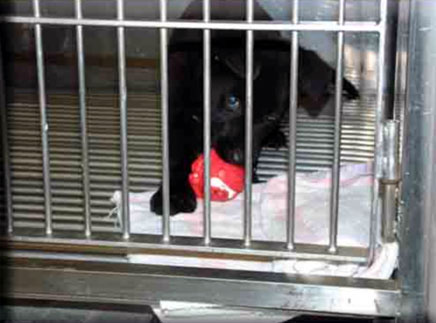
When you suspect a sick pup, put it in a dog crate by itself. It may scream for a while. Cover the crate with a blanket so the pup cannot see what's going on around the crate. This will often calm the pup.
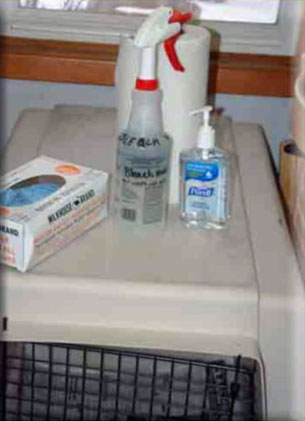
Keep this crate sanitized. Have a spray bottle of bleach and water sitting on top of the crate. Have newspapers in the crate and change them every time the pup pees or poops. When you take the paper out, spray the crate with bleach water and wipe it down. Do this EVERY TIME YOU take the dog out of the crate.
Wear rubber gloves when you touch the other pups. Every time you touch a sick pup, WASH YOUR HANDS. We have the hand sanitizer on top of the crate. The pups get fresh clean towels to lay on at least twice a day, that's if they look clean. If they look dirty, they are changed more often.
When you come to your pups in the morning, always shower and wear fresh clean clothes. Take care of the healthy pups first and then deal with the sick ones.
If you are unlucky and have sick pups, the first thing to do is to talk to your vet. Take the pup's temp so you can tell the vet. Take a stool sample to the vet. Ask for a standard fecal test and a Parvo test.
Dehydration in Puppies
Learn to recognize a dehydrated pup. Their skin is not as elastic as a healthy pup, their noses get dry, their eyes look sad, and they don't have the bounce of a healthy pup.
When a pup gets dehydrated, it can die in 24 hours. Your job is to make sure that does not happen. Switch the dog from water to Pedialyte. The water bowls and food bowls need to be washed every day. Pedialyte is not cheap but throw it out every morning and use fresh.
Sometimes pups will not drink water or Pedialyte but they will drink chicken broth. We will offer this just like water. We also fill ice cube trays with chicken broth. Sick pups will often lick frozen ice cubes, or frozen broth cubes. Try them both.
When a pup will not even drink, we will fill a 35 CC syringe with Pedialyte and try squirting it in the side of the pup's mouth (not down the back of his throat or it could inhale it and develop lung problems).
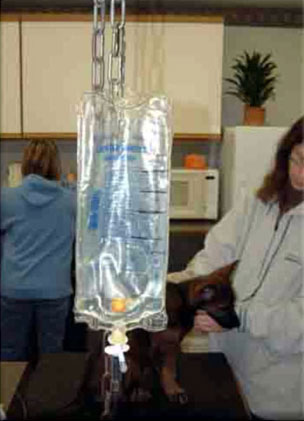
If the pups throw up or have diarrhea and don't drink enough fluids to compensate for the loss, they become dehydrated. When that happens, we put IV fluids (lactated ringers) under the skin with an IV set and a one-inch size 18 needle.
Giving IV ringers sub-q is a 2 or 3-person job, depending on how wild the pup is. We warm the bag of fluids to body temp by putting it in a plastic tub of hot water. You would never want to put cold fluid in a sick pup. With a 6-week-old German Shepherd pup, we put 100 to 150 CC in the pup's side or back. It goes just under the skin, not in the muscle. They look like a camel for a while until the body absorbs the fluid.
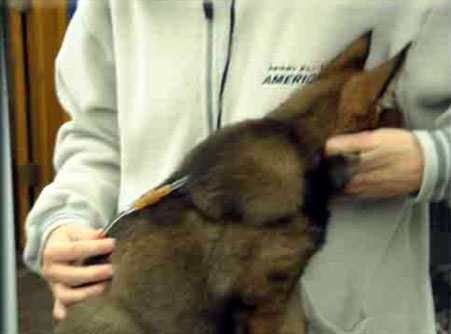
This is done once a day in most pups. When a pup will not eat or drink I will give it fluids twice a day. For a better idea of how to give Sub-Q fluids properly, please ask your vet or healthcare professional.
Feeding a Sick Puppy
Always watch what your pup eats. Never put food down and walk away. Stay and watch them eat. The first thing a sick puppy does is go off his feed. If you watch them eat, you will spot this.
When the pups will eat their normal food, we immediately go to Hills brand I/D or A/D for the very sick dogs. This is a bland food that sick pups can keep down. We will warm the A/D and add Pedialyte to get it to a warm thick soupy state. Then use a 35 CC syringe to force-feed a pup.
The way to force-feed a pup is to pull the side lip away from the teeth and make a little pouch between the teeth and the gums. Fill that pouch with food and the pup will have to swallow it.
Do not squirt the food down the throat. This could end up with the pup inhaling the food into the lungs. When that happens, they will get pneumonia and die.
You have to learn to do this properly so the pup is swallowing the food. We will try and get 50 to 70 CC of food in a sick pup two or three times a day. A pup can go for a day without food and this is not a bad thing if they have diarrhea. But after a day without eating, the breeder needs to think about feeding.
There is a fine line between force-feeding pups and giving them so much that they are going to throw up. With experience, you will learn to see it in their eyes. It's better to only give a little food 6 times a day and have it stay down than to give a lot and have the pup vomit.
If they puke everything you give them, you are going to have to back off the force-feeding and go with more sub-q fluids. Again, there is some experience required to determine how long a pup can go on sub-q fluids and not eat. You will reach a point where the body starts to shut down and the dog will not absorb the fluids put under the skin. When that happens, the dog needs to go to the vet and have an IV put in the blood vessel.
Extra Tips for Hydration and Feeding Your Sick Puppy
- We can sometimes get a sick pup that will not drink from a bowl to take Pedialyte from a syringe when it is squirted into the mouth like we do when we force-feed.
- The pups will eat warm food better than cold food.
- The pups that will not eat from a bowl will sometimes eat food from your hand if you talk soothingly to them while you try and feed them.
- It's not uncommon for a pup to not want to take food from the person that has been sticking needles in their back for the sub-q fluids. So have a second person try and feed them by hand. The food that comes from the hand should not be cold.
- A pup may not want to eat the food that it has been force-fed. Keep an open mind about what you feed. We feed an all-natural diet but will feed a kibble if that's what it takes to get them eating again. We use "Chicken Soup for the Puppy Lovers Soul". A goofy name, but we add warm water and let it sit for 10 minutes then offer it to the pups. They will often eat it. It is important to make sure that you have soaked the kibble with water. We do not need to use moisture from the pup's body to soften the kibble.
We will also mix the canned version of “Chicken Soup for the Puppy Lovers Soul” with the kibble to see if the pups will eat it.
Vets and Breeders
If you are a breeder, you can determine the quality of your vet by how willing he is to show you how to work with a sick litter or a sick pup. If the vet that will not show you how to deal with sick pups, you are better off finding another vet. A breeder is not in the same category of a pet owner and vets need to realize this. The smart ones will. Short-sighted ones will watch you walk away and wonder why.
I may be wrong, but I don't think an employee of my vet will offer the same TLC to my puppies. I know that I am willing to get up in the middle of the night (more than once) to do what is necessary to help my pups. I also know that vet employees cannot do this. I also believe that our pups are less stressed in our kennel than they would be in a vet's kennel.
As I said earlier in this article, it does not take long to spend $2,500.00 on a sick litter of pups that has to go to the vet. You can reduce the expense by doing this work yourself. Of course, if you have a full-time job to go to and no one to help, it's time you reconsider breeding as a hobby.
Worst-Case Scenario
If you ever have a pup with blood in their diarrhea, get it to your vet and on IVs as soon as possible. Don't try and treat it yourself. You are only courting disaster if you do. If you have a pup that has not eaten in 2 days and it's not absorbing the sub-q fluids, take it to the vet.
Conclusion
I have produced the Whelping Puppies DVD to show how to whelp pups and raise them to 8 weeks of age. In this video, I also explain the things we talk about in this article. Take it from someone who has produced over 300 litters, it is better to know the problems you could possibly be facing rather than playing catchup when it happens. Maintaining a spotless facility is a must. You'll realize that constantly cleaning your kennels is much better than having to deal with a litter of sick pups.
This article is dedicated to the 6 puppies that died at my kennel in January 1990. They deserved better than they got. You cannot save every pup, but I think I could have saved a couple of those pups had I known then what I know now.


Most Popular Articles
-
01
-
02
-
03
-
04
-
05
Related Products
-
 $65.00
 -
 $16.99
 -
$219.99 - $349.99
$199.99 - $309.99 -

$65.00$19.99

Ask Leerburg.