



The Power of Training Dogs with Markers (Clickers)


The two most important concepts a new dog trainer needs to learn is:
- Engagement: when a dog wants to be with you and wants what you have
- Generalization: when a dog understands the meaning of a command regardless of location, distraction, etc.
What is Engagement?
In dog training terms, engagement simply means your dog wants to be with you and wants what you have whether it be a toy, a treat, or handler praise.
If dog trainers don't have engagement, how are they suppose to get a dog to pay attention? How can they train their dog to do anything if the dog doesn't want to be with them? If a dog doesn't want what the trainer has, how does the trainer motivate a dog to perform a behavior or follow a command?
Without engagement, the only way anyone can get a dog to do something is to FORCE that dog to do what you want it to do. That's exactly what dog trainers like myself did 20, 30, or 40 years ago. I started training dogs in the late 1950s. It wasn't pretty but we didn't know any better.
I've learned a lot more now and have since evolved my training techniques. This article and the DVDs I have produced are going to teach you how to get a dog engaged with you.
Generalization
When a dog understands the meaning of a command regardless of location and distraction, that means they have generalized the command.
When a dog understands the meaning of a command regardless of location and distraction, that means they have generalized the command.
An example of a dog that has not yet generalized a command is often seen when a dog owner learns that they can teach their dog a behavior in their kitchen but the minute their dog is taken out of the kitchen, it seems to forget everything it's learned. That's because the dog has not generalized the command.
A dog has not generalized a SIT command when it will SIT in the kitchen or SIT in the garage but will not SIT when friends come over. A dog has not generalized the DOWN command when it will down on its rug in your living room but will not down in your yard when a neighbor is walking his dog past your house.
Why Use Marker Training?
I have been training dogs since the 1950s. It's taken a long time and learning many failed training methods to settle into a system of dog training that consistently produces dogs that are engaged with me and dogs that generalize the work I am trying to teach them. The DVDs that Leerburg produces support this system of training dogs.
We call this system marker training. It has evolved into mainstream dog training here in America since the early 1990s. Like many trainers, I was slow to embrace the concepts of marker training. I had been training dogs for 30 years when marker training first started. I spent the 1990s telling people it was stupid. Well, the only stupid one was me because I never took the time to really study the training system and learned how to apply it to the areas of dog training I had an interest in.
Today, I tell people that marker training is the most effective training system I have seen in my 50+ years of training dogs. It's a black and white method of communication that is based on positive reinforcement.
Marker training provides the dog trainer a language that allows him to communicate with his dog. You relay these three messages to your dog whenever you use marker training:
- With a mark, you are praising the dog "the instant" they do something favorable.
- The mark also provides a motivational method of encouraging the dog to continue what they are currently doing.
- By withholding a mark, you are telling the dog (without any punishment) that you don't like what they are doing.
If you stop and think about it, when you can do these three things and do them in a fashion that keeps your dog motivated and engaged with his handler, then you can teach that dog to do almost anything.
Marker training (which is sometimes called "Clicker Training") can start with 8-week-old puppies or 8-year-old dominant aggressive dogs. The beauty of the system is that it's non-confrontational, which is why it works so well with dominant or aggressive animals, animals with absolutely no training, or animals that need to be retrained. Here at Leerburg, we have trained our horses and our parrot with markers. The fact is marker training works on most types of animals and birds.
Marker training is the same thing as clicker training. The only difference is that with markers, we use a verbal marker and with clicker training, a small mechanical clicker is used to communicate with the dog.
It's embarrassing to say this but back in the late 1990s, I was one of a group of people who trash-talked clicker training. This was based on my being too closed-minded on the subject and a lack of understanding of the principles of the marker system. That wasn't the first time I stuck my foot in my mouth and it will most certainly not be the last.
The problem I had with clicker training back then was that clicker purists don't believe in correcting a dog. In fact, they don't think corrections have a place in dog training. I totally disagree with this line of thinking and because of that, I refused to investigate what the marker system was all about. I knew from experience that there are times when a pack leader must correct his dog. Many of the dogs I trained were high-drive, tough dogs that were intended to do handler protection work. In that context, there are also precise places and times in a training program where a dog must be corrected for disobedience. We will discuss this in detail later in this article.
With this said, many of the people who brought clicker training to the world of dog training came from training sea mammals and birds. You can't correct a killer whale or a parrot when they disobey. It just doesn't work. These people thought they could apply the same exact training principles to dogs, and they convinced a lot of new dog trainers that they were right. Well, in my opinion, they were wrong.
When I began to see marker-trained dogs that were energetic well-trained animals who loved working with their handlers, I started to explore exactly what marker training was all about. That's when I realized how foolish I had been to look down on such a great training system.
Michael Ellis was the person who opened my eyes to the fact that markers and corrections can coexist together as part of a training program. Since the 1990s, Michael has travelled around the country giving 40-45 weekend seminars a year on his system of using markers in training. He recently opened a school in San Francisco for dog trainers.
Dog handlers who master the marker training become the most successful dog trainers.
What I learned is that the power of this system lies in understanding the details of the program. Dog handlers who master the system become the most successful dog trainers. The truth in this statement can be seen in videos of old dog competitions from back in the 1980s and 1990s. Handlers who won competitions back then would not stand a chance of winning today. The reason for this is that today's top competitors train with markers.
I have produced two DVDs and courses based on marker training. There are a number of others that will follow:
- The Power of Training Dogs with Markers (DVD || Course)
- The Power of Training Dogs with Food with Michael Ellis (DVD || Course)
The Power of Training Dogs with Markers DVD goes into a great deal of detail on exactly what marker training is. It explains why it works and why trainers must become masters of the system to get the most out of marker training. You will come to learn that the power of markers comes from correct timing in applying its concepts. You will also learn when trainers make mistakes in timing which ends up confusing their dogs.
The Power of Training Dogs with Food with Michael Ellis DVD is about how to organize a training program around marker training. Trainers can understand the system of marker training but if they don't know how to apply it and set up a structured training program based on markers, they will not get the most out of the system. Michael is an expert at teaching people how to do exactly this. He coaches top competitors in the sport of Schutzhund, Mondio Ring, and French Ring. In 2009, Michael and two people from his club won the Mondio Ring 1, Mondio Ring 2, and Mondio Ring 3 American Championships. In my opinion, Mondio Ring is the most difficult dog sport there is.
If you have trained dogs for years and think you're pretty good at it but you don't work with the marker system, I suggest you take a few days and study this article and these two DVDs. You will find a whole new world of K9 communication. If you are passionate about dog training like I am, marker training will re-ignite a fire in your belly.
On the other hand, if you do what I first did, which was tell everyone how stupid you think it is, then 10 years from now you will probably wake up one morning and admit that you missed the boat.
What Is Marker Training?
In technical terms, marker training is operant conditioning. Operant conditioning has been around for years. It is how dolphins are trained at SeaWorld.
Operant conditioning forms an association between a behavior and a consequence.
I can see new dog trainers reading this and shaking their heads thinking "Duh, isn't that pretty obvious and what all dog training is about?"
My answer to that is "YES" but let's go into a little more detail.
When a dog exhibits a behavior we like, we give them a high-value reward. That reward is either a high-value food treat or a high-value toy that the dog really loves. In marker training, if a dog does not perform a behavior, the consequence is "No Reward". This is called a negative reinforcer. When a dog gets a negative reinforcer, it must then repeat the exercises if it wants to get the high-value reward.
In old-school dog training, the consequence of a negative behavior was a correction.
No matter what anyone ever tells you, dogs do things for themselves. Dogs don't do things to make you feel good. They do things to make themselves feel good. They do things because they are motivated towards feeling comfortable in addition to doing things that eliminate feeling discomfort. This is a profound concept and one that pet owners often miss. Pet owners or new dog trainers are often led to believe that dogs will eventually do things to make their owners feel good. The reality is that this is seldom, if ever, the case.
So the key to operant conditioning is to teach a dog that when he performs a behavior that we like, he gets a reward that makes him feel good. The reward gives him a level of comfort. This reward can either be in the form of food, a toy he loves, or playing a game with the handler that he enjoys. In all my years of dog training, I have only known one dog that would work strictly for handler praise.
In the marker training system, there are only two consequences to a behavior that we are trying to train. There is either a reward or no reward. Which consequence happens depends on the behavior the dog exhibits to a stimulus. A stimulus can be a command or a cue (or lure) from the handler.
For dogs to associate a behavior with a reward or punishment, the reward or punishment must come immediately after the behavior. We tell people the consequence should come within a 1/2 second of the behavior. If a reward comes 5 seconds after a behavior, the dog has no idea why he is getting a reward. If a new dog owner comes home and finds a pile of dog poop in his kitchen and he proceeds to rub the dog's nose in it, that dog still doesn't have a clue why he is getting punished.
Now if the same dog has been on a leash in the kitchen and peed on the floor and the handler had scolded him the instant he saw the dog pee, the dog would associate the scolding with peeing because it came within 1/2 second of the behavior.
In training, it is not always possible to reward within a 1/2 second. In fact, no matter how hard you try, you cannot consistently reward a dog within a 1/2 second. To get around this, we bridge (or connect) the time frame between the behavior and the consequence that follows. This bridge allows us to extend the 1/2 second rule of consequences. That bridge is a word. We will call it a Marker. I like to use the word YES. Other people use other words. Many people use the sound from a clicker. You can use any word or sound you are comfortable with so long as you are consistent.
The marker is basically a way of telling your dog, “Hold on a second. I like what you just did and I am going to give you a high-value reward.”
There are positive and negative markers. The word for a negative Marker is "NO" or "NOPE." It is important to mention that a negative marker is not a correction. It is simply a way of communicating to the animal that he just made a mistake and if he expects to get that high-value reward, he needs to redo the behavior correctly.
Through repetition, the dog learns that every time he hears the positive marker, he gets a reward. Every time he hears the negative marker, he does not get a reward and he has to repeat the behavior or exercise.
Dogs that are trained with markers become problem-solvers. They have learned (through the concept of negative reinforcement) that when one behavior doesn't work, they need to try something else, and if that doesn't work, they just keep trying because if they try long enough, they have a good chance of figuring out what you want and getting a high-value reward.
The system allows trainers to reinforce correct behavior with "pinpoint accuracy" from a distance. It also allows dogs to make mistakes and then learn from their mistakes. The beauty of the system is that it also allows us to pinpoint the exact moment a dog makes a mistake, without correcting the dog in the process.
This is radically different from old-school dog training where dogs are corrected for doing something wrong. I remember the day when we would take an untrained dog and march down the street with the dog on a leash. We would do a quick left turn, right turn, or about turn as we said "HEEL" and give the dog a correction for not staying by our side. When I stop and think about it, how unjust was this to my dogs? It was a terrible way to train. It created dogs that were afraid to try and think on their feet because if they made a mistake, they would get a correction.
Training with markers is a simple concept to understand. It only takes a few minutes to explain why it works but it can take years to master. The journey is exciting and well worth the trip. Along the way, you will find that your dogs are a lot smarter than you once thought.
Those days are long gone with marker trainers.
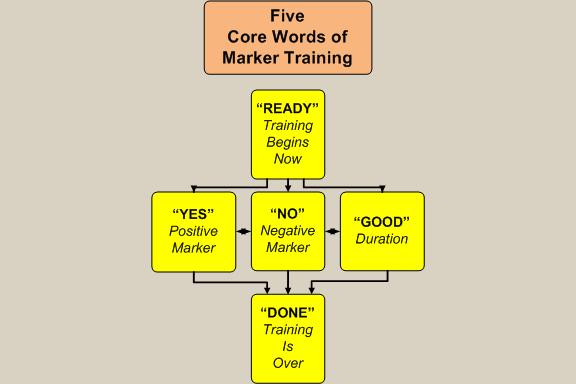
The 5 Magic Words of Marker Training
1. "Ready"
READY or ARE YOU READY? is a word that tells our dog that we are about to start a training session. When you ask your dog if he is ready, you always have something on you to reward the dog with when he engages with you or starts to offer behaviors.
As your dog gains experience, you should never start training unless the dog demonstrates he is ready to play when you take him out. This is engagement. Getting engagement from a dog is a learned skill.
If he won't play, then handlers need to put the dog away and think about what they need to do to get the dog engaged the next time they bring him out.
The relationship between you and your dog is more important than training. So if your dog isn't engaged with you, if he doesn't feel like playing today, then you should not try and teach him behaviors or exercises. Put him away or take him for a walk.
If you are having problems with engagement, I highly recommend you get our Training Dogs with Food DVD (or course). We have an entire chapter that teaches how to get engagement and a second chapter on how to socialize a dog to environmental stressors.
An interesting thing that seems to happen when dogs are trained to understand engagement is they view their handler as their own personal treat dispenser. In their eyes, they simply have to do this silly little exercise to make you give them a high-value treat or a toy.
2. "Yes"
YES is the word we use as a positive marker. It's the word we use to bridge the time frame between a favorable behavior and us delivering a reward. Once the dog has been introduced to the concept of YES (we call this 'charging the mark'), they quickly learn that every time you say YES, they know they are going to get the reward. With experience, they learn that this can take 3 or 4 seconds if you are not right next to them when you say YES.
It is important that trainers understand that YES is not verbal praise. Trainers new to markers commonly misunderstand the difference between a marker word and praise. They need to learn that they can mark the moment with a YES and then praise the dog with GOOD BOY.
When a trainer who gets excited says "YES, YES, YES, YOU'RE A GOOD BOY", they only confuse the dog because in effect, they are marking three moments in time. We will talk more about this later.
YES is also a word that is used as a release command when the dog does something correctly. This means YES not only tells the dog that what he just did was correct, it also tells the dog that he can stop doing what he is doing and he is now free to interact with you to get his food reward, to play tug, or to chase a toy, etc.
3. "Good"
GOOD is a word that means "I like what you are doing, and I want you to continue to do what you are doing."
In other words, GOOD is the word we use to add duration to a command. A perfect example would be to use GOOD when we are teaching the dog to stay in the down position. When we teach duration for the down, we would not mark with a YES because that mark is a release. If we used YES instead, that would mean we just gave the dog permission to get up and get his reward.
So new trainers need to understand that GOOD is not a release command. When we say GOOD, the dog needs to understand that he should continue doing what he is doing and that he will get a reward at some point in the future.
Unlike YES, when we first start training the duration marker, we can say GOOD a number of times in a row. We can say GOOD GOOD GOOD as many times as we need to get the dog to continue to do what he is doing.
4. "Nope" or "No"
NOPE is a word that is used as a negative marker. It means, “You just made a mistake and you have to do the exercise all over again.” It does not mean we are mad. It does not mean that he is going to get a correction. It only means that he needs to repeat what we expected him to do if he really wants the high-value reward.
If the reward is high enough in value to the dog, it doesn't take a dog long to figure out that NOPE means "DO IT AGAIN."
5. "Done" or "Break"
DONE or BREAK (as in "take a break") is the word that tells the dog that our training session is finished for now. The session can be finished for 5 minutes or it can mean we are done for the day.
When we say DONE, the food or toys are put away. When the handler says DONE or BREAK and shows his dog his empty hands, it doesn't take long for the dog to know that this training session is over.
With time this becomes very clear to our dog.
The beauty of marker training is that we can clearly tell a dog by using READY that we are going to start training and with DONE we are finished with training. It becomes very clear to the dog when we expect him to work.
Dogs are Masters at Reading Body Language
Dogs are far more intuitive than we humans. They are always watching us and they instinctually recognize situations and read us like a book. They know when we are happy and they know when to leave us alone. They base ALL of their life's decisions on what reinforces their level of comfort and what satisfies their pack instincts.
New dog trainers mistakenly think their dogs listen to them all the time. They think the dog automatically knows when commands are given. The fact is that dogs may listen but they don't naturally pick up on our every word. In fact, trained dogs don't understand much of what we say. But they are very intuitive about reading and recognizing specific situations or pictures (of our body language). They are so good at this that we think they know what we are saying when in fact, they don't have a clue.
A perfect example of this is a dog that learns to sit in your kitchen. The dog can perform the sit exercise 200 times in the kitchen and you may think he has that concept of the SIT command down pat. Then you take him into your garage and say SIT and he looks at you like you are a man on the moon speaking Swahili. He acts like you have two heads and he has never heard the word SIT before.
A better example is when the dog has always been given the SIT command when you are standing in front of him in the kitchen. Simply turning your back and saying SIT results in a blank stare. Sometimes when you are kneeling down or sitting on the floor, you can say SIT and still get no result.
That is because the dog does not understand the concept of SIT. He doesn't know what you are asking him to do. You may think he knows the word SIT but what he really knows is that when he sees the picture of you standing in front of him in the kitchen, he should SIT.
So when you see a dog do this, you need to know that your dog has not yet grasped the concept of the verbal SIT command.
Marker training is going to teach you how to communicate with your dog so they can understand your commands in a way that the dog enjoys.
Active vs. Reactive Dogs
Marker training turns a dog into what we call an "Active Dog" vs. a "Reactive Dog".
This means the system creates a dog that actively tries to problem-solve. These dogs try to engage their handlers by trying to do things that make their handlers play with them or give them a food or toy reward.
Active dogs try to make things happen. They know they can do things that cause their owner to engage them. In essence, they themselves become engaged with their handlers by bouncing around and trying to do things that result in their handler giving them a reward. As I have said earlier in this article, trainers need to learn how to teach engagement to their dog. Many new trainers simply think they have the wrong dog and their dogs won't act like this. These people are wrong. They simply need to learn how to provide an environment that makes the dog want to engage the handler.
This is compared to a reactive dog that waits to be shown what the handler wants. Reactive dogs are afraid to try new things for fear they will be corrected for making mistakes.
Every time you take your dog out, you are teaching the dog something. You may not know what it is but our dogs are constantly watching and evaluating us. An active dog is trying to figure out how to interact with you in a way that benefits him. A reactive dog is trying not to step on land mines that may result in a correction. Marker training is the perfect method to produce an active dog.
We can use a ball reward to demonstrate the difference between active and reactive dogs.
An active dog will go out on the training field and engage his owner. He will focus on the owner and offer behaviors that he thinks may cause his owner to produce the ball. This is a dog that bounces around and willingly gives eye contact, lays down, sits up, and goes into the heel position without being asked to do any of those things. He does this until the owner produces the ball and asks him to do something he has been trained to do.
A reactive dog is a dog that goes to the training field and waits for the owner to ask him to do something. He doesn't offer any behaviors. He will perform a behavior and accept the ball as a reward but he isn't going to try and second guess what his owner wants him to do. In other words, he reacts only to what the handler asks.
Reactive dogs have learned that if they try and figure out what their handlers want and they make a mistake, they get corrected. So they quit trying. They back off and take the safe approach which is "wait until he tells me what he wants because I don't need another correction."
Charging the Mark
When we talk about "charging the mark", we are talking about the introductory training session where we teach our dog that YES means it is getting a high-value treat.
We start this system with food instead of toys. Many high-drive dogs can't focus in the presence of a toy. They go into a zone where they can't think. This doesn't happen with food so we set the foundation of markers with food before introducing toy rewards.
Charging the mark can be done anywhere, in your kitchen, your basement, or your backyard. The goal of "charging the mark" is to teach the dog to associate hearing YES with knowing he is going to get a high-value reward.
When we start "charge the mark" training, the dog does not have to do anything to get marked. We simply say YES or click the clicker and give the dog a food treat. He doesn't have to sit, he doesn't have to come to us, he doesn't have to do anything. We just say YES and feed the dog. Do this again and again so that they associate the word YES with a reward.
With that said, there are a few things you have to look out for when charging the mark. It is important that the word YES is never said at the same instant you move your arm to reach for the food treat. For marker training to work, there must be a short lapse in time between saying the word YES and moving the arm to produce the food reward. If you move your arm at the same time as saying YES, your dog will start thinking that your arm movement is what gets him the treat and not the YES.
You will know your dog is getting it when you say YES and the dog looks at you like HEY, GIVE ME THAT TREAT! Most dogs pick up the concept of a charged YES or charged CLICK within the first training session. If you go out and say YES to a dog 30 to 50 times in a row, he is going to connect the dots.
What Kinds of Food Rewards Should I Use?
What is a High-Value Treat?
The first goal for the handler in marker training is to figure out what their dog considers a high-value food reward. Different dogs have different ideas of what treats they like the best. To get the most out of marker training, handlers need to determine what trips their dog's trigger.
I will guarantee you that going to Walmart and buying a bag of biscuits is not going to cut it.
Treats should be large enough to motivate your dog to want another one and small enough that the dog does not take minutes to eat.
I used to say that 2 or 3 treats should fit on a quarter. I have since learned that there is such a thing as too small of a training treat for some dogs. If a dog eats a treat so quickly that it seems like he is inhaling the food and he then loses focus and checks out, then the handler may want to increase the size of the food treat. In other words, a slightly larger treat may be all you need to keep your dog engaged. We demonstrate this exact situation in The Power of Training Dogs with Food.
The concept of using treats is not to "feed the dog" but rather to offer a reward that has a high enough value that it keeps the dog engaged. When treats are too big, they slow down the training because we have to wait for the dogs to chew them up. We need to reduce the size or change the treat if this happens. I also have a classic example of this in The Power of Training Dogs with Food.
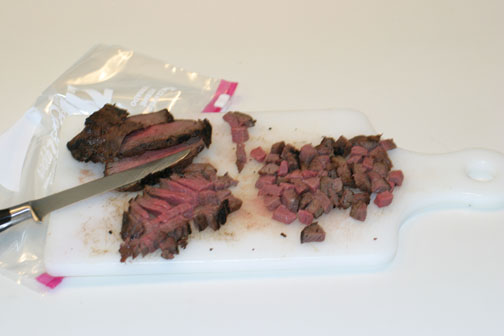
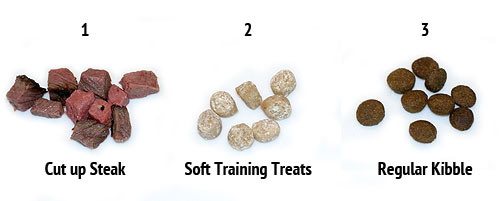
The best treats are soft and don't break up into pieces that fall on the floor. When the handler picks a reward that the dog loves, it will stay engaged. This leaves the dog wanting more so his drive stays high. You can see the size I cut the venison steak above. These pieces are very small treats. This is where to start the training and then see if you need to modify the size for your specific dog.
We sell a lot of all-natural dog treats here at Leerburg. More and more companies have become aware of the fact that people want quality treats for their dogs. In our case, if our dogs don't like them we don't sell them. I like Bocce's Bakery Training Bites and Chewy Tricky Trainers. They both come in different flavors, they are soft, and they are the right size for our dogs.
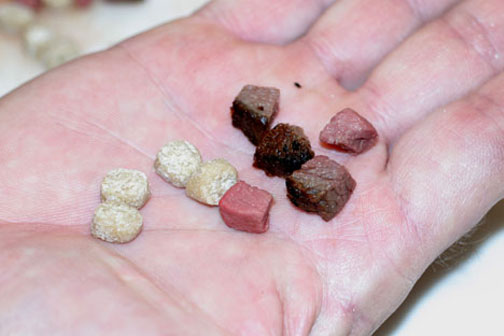
Trainers may want to take the time to establish and prioritize a list of dog treats that their dogs really love. You may find that your dog becomes too distracted by the highest value treat. Some dogs can lose focus (just like some dogs lose focus in the face of a tug reward) and they can't think. If that happens, you need to drop down to a lesser value treat in training.
When you move your training into an area where there are a lot of distractions, you can go back to the highest value treat because the distractions will offset one another. This is just one example of how trainers need to constantly think about what they are doing in their work and be willing to adjust to fit the circumstances.
There isn't anything wrong with using different levels of treats in a training session. You can use a higher value treat reward for a quick and excellent effort and a lower value reward for so-so effort.
Ask Your Dog What Treat He Likes
You can figure out what treat your dog prefers most with this simple exercise.
Leash your dog to a table leg or something secure. Let him smell a treat by holding it out close to his nose but don't let him have it. Allow him to watch you lay it on the ground just out of his reach.
Do this with two treats and then release the dog. See which one he eats first. Then repeat the exercise several times and reverse the position of the treats. This will tell you if the dog indeed likes one treat over the other. Try adding a third treat to the protocol. With work, you will be able to assign values to respective rewards.
By knowing which treat is his favorite, you can use this information in later training. Some training requires the highest-level motivation than others and some things only need the level 3 treat.
Food Rewards vs. Toy or Tug Rewards
Just as there are times when a food reward is the correct type of reward, there are times a toy or tug is a better choice. Knowing when to employ both will make you a better trainer.
Many dogs with high prey drive become overstimulated when they know a toy is the reward. They actually go into too much drive. These dogs have so much drive for a toy that their brain shuts down and they can't focus when they see their handler with a toy.
New trainers mistakenly think the more drive, the better. However, this is often not the case.
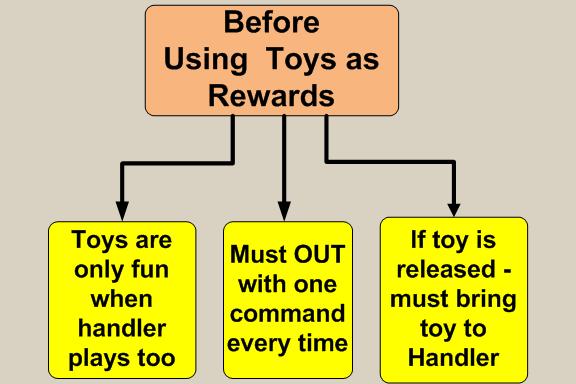
Before a toy can be used for a reward, the trainer needs to teach the dog these three foundational concepts in training with toys:
- The toy is fun only when playing with the handler. We want to be the one rewarding the dog with the toy. In other words, “The toy is ours and we are allowing you to play with it.” Doing this helps the dog stay engaged with you. Rather than relying on himself to have fun with the toy, he is relying on you to make it fun. This increases the reward value of the toy.
- The dog must drop the toy when told to OUT. If you have to 'argue' or struggle with your dog to get him to release the toy, the dog starts thinking about the 'argument' that is going to happen. Rather than connecting the dots that the toy is the reward, he starts to think about how he can keep the toy from you. The toy essentially has no value in this type of situation.
- The dog must bring the toy back to the handler when it is released. If a trainer does not have this established, then the dog thinks it is free game to jerk the toy out of his handler's hand.
The training to do these three things along with how to play tug with your dog are covered in my The Power of Playing Tug with Your Dog (DVD || course).
Using toys is an excellent way to increase your dog's speed in an exercise. You will see many trainers start a training session with food as a reward and then switching to a toy reward for quicker results. Toys are also used to teach a dog stimulus control.
Don't Confuse Your Dog - Only Say "YES" One Time
The reason you should only say YES one time is because dogs see life as a series of pictures or snapshots. Remember how intuitive our dogs are. They know exactly what they were doing at the exact moment good things happen to them.
So when they look into your eyes and you mark that moment by saying YES followed by a high-value food treat, they quickly figure out the trigger to get you to give them another treat is to look into your eyes.
But when trainers get excited and say YES 4 or 5 times in a row, they confuse their dog. The dog doesn't know if they got rewarded for looking in your eyes or if the reward came from lowering their head to look at your hand or for something else.
"YES" Is Not Praise
Often, new trainers mistakenly look at the YES as praise. This is absolutely wrong. Once the dog understands the system, the mark will often become secondary praise but that will only happen if the trainer establishes the foundation of the mark correctly by only saying YES once and always with good timing.
So it is vitally important to understand the essence of marker training is to start by charging the mark.
A couple of points to mention here is that when the YES mark has been properly established, it will eventually become a secondary reinforcement for the dog. This means the dog will eventually develop a level of satisfaction from you simply saying the word "YES," but at the same time, you must never get to the point where you expect the mark to be the only reward. Every time you ever mark a behavior with YES, you must always offer a reward for that behavior.
Not Giving a Mark is Valuable Information to Your Dog
Don't underestimate your dog's understanding of your silence. When you don't offer any mark (by being silent), you are simply telling the dog to that it has not yet performed the behavior you want. It is simply a non-stressful way to tell your dog he needs to "keep trying".
Your Voice is a Powerful Training Tool - Learn to use it!
One of the most powerful training tools a dog trainer has is their voice. Trainers who learn to use their voice in a positive way make better dog trainers and have dogs that learn quicker. This is especially true in marker training.
Building Drive with "Are You Ready?"
If you are working with a low- to medium-drive dog, you may have to take your dog through a short drive-building phase before you get too far into marker training. This is done by teaching the dog that when you say "ARE YOU READY" he is going to have a little party with you.
There is nothing wrong with saying (in a very exciting tone of voice) "ARE YOU READY" every time you charge the mark. Make a game of it. If you get excited, your dog will get excited.
To accomplish this, simply say "ARE YOU READY" and back away from your dog. Moving away from a dog peaks its desire to follow you. At this phase, you can say "ARE YOU READY " more than one time.
When the dog turns to follow, mark YES the instant he turns. That's the moment he chooses to engage with you so you mark the moment. Then reward the dog and praise him like crazy. Get the dog excited. Make him like the game. Teach him that engaging you when you say ARE YOUR READY makes fun things happen.
This drive-building phase can be done during the “charge the mark” session. It can be done 5 or 10 times in a row. After that, allow the dog to rest.
By "charging the mark", we are teaching a dog that the YES mark means he is going to get a reward. We can also teach the dog that by engaging with us, he has trained us to give him a nice reward.
Verbal Praise After the Reward
In the marker system, while we only say YES one time followed by a reward, we can add encouraging verbal praise during the delivery of the reward and/or after the reward. In fact, some trainers have to praise after the reward to improve engagement.
New trainers need to learn how to make a game of this work. They need to sound happy when they ask their dog if he is ready. They need to sound excited when they mark. They need to praise sincerely and lavishly after the mark. The more animated and excited the trainer sounds, the more interested the dog will be. This is a learned skill that new trainers often have a difficult time with.
When new dog owners first start this work, they get overwhelmed with everything they have to remember. They have to pick a behavior to Mark, they Mark the behavior, they reach for their reward, they offer a food reward and then they just LEAVE IT AT THAT. They act like they just gave the dog a reward and that was good enough. Well for a lot of dogs, that's not good enough. It may be OK for high-drive dogs but it's often not good enough for medium- to low-drive dogs.
Low- to medium-drive dogs get often get distracted and stop trying. When handlers make mistakes during engagement training, their dogs can act bored, or simply shut down. Handlers find themselves standing there wondering what to do next. They feel bad because they really want their dog to work but they don't know what to do.
Well, when they see this happen, they need to turn the work into a party. They need to act like they are having the time of their lives. They need to back away from their dog and in an inviting excited tone say the dog's name (don't tell the dog to come or don't add commands). And if all this doesn't work, let the dog sit in his crate and get bored.
Turn the Reward Delivery into a Party
When you actually deliver the reward, try and do it in a way that turns the reward into a party. Make the dog move his feet. If this means you mark the moment with a YES and then move away from the dog as you reward him, then do it. If it means tossing the food on the ground to make the dog chase it like a toy, then do it. If it means you pivot away from the dog and have him chase the reward hand to get his reward, then do it.
Turning the delivery into a party increases drive and engagement. We spend a good deal of time in The Power of Training Dogs with Food DVD showing how to do this. Trainers who simply mark YES and hand the dog a food reward don't get the full benefit from marker training.
Control Your Nerves
It is a very common thing for people to get nervous when they train dogs. This is especially true when they train in front of other people.
Those who get nervous need to learn to relax and control their nerves.
Dogs know when you are angry. They can sense it. They also know when you are nervous. If their pack leader is nervous, then they think something wrong. When the pack leader is nervous, they think they need to be on guard. When dogs are nervous, the learning process slows down.
So if you have a nervous temperament by nature, you need to practice controlling your nerves for the sake of your dog and its training. Take a deep breath; take a time out; meditate; try to mentally walk through what you want to do. Record your training with your phone. The simple act of having a camera rolling makes many people nervous but in time, you will get used to it. It will help relax you.
Bottom line is that if you expect your dog to have emotional control, then you need to be able to demonstrate the same thing.
I relate this to people who ride horses. A horse knows if you're a nervous rider. Nervous riders are those riders who end up on the ground.
Adding Distractions and Impulse Control
People who get into dog training quickly learn how easily their dog can become distracted and not perform a learned behavior. They often find their dog works great at home but forgets everything when they get into a class with other dogs or when the dog is taken into a new environment.
Adding distractions into training can easily be the topic of an entire book. It is certainly beyond the scope of what I am doing here other than to define how it factors into marker training.
New dog owners need to know that when dogs are distracted, they don't learn as quickly. In fact, many won't even try to work with you.
As a dog becomes proficient at learning a behavior, it can be exposed to more and more levels of distractions. For example, let's say you have trained your dog to SIT. You have only trained him in the kitchen. And while giving the SIT command, you have been standing directly in front of your dog. These might seem simple to you but they are all examples of distractions for your dog:
- Turning your back on the dog and asking him to SIT
- Kneeling down or sitting on the floor and asking the dog to SIT
- Stepping in another room and telling him to SIT (very distracting)
However, there are some environmental distractions that sometimes you just can't control. Simply moving a few feet farther away from that distraction can often be enough to help a dog work through it. Dogs have a "bubble" or circle of comfort which is different for each dog. Through experience and practice in multiple training sessions, the size of a dog's bubble of comfort can be reduced. Most of the time this work needs to be done gradually. While one dog may perform comfortably 50 yards from a certain distraction, another dog may not have a problem working 10 yards from the same distraction.
The LOOK command is a very effective tool to use when our dogs become distracted. When we ask our dog to LOOK, we expect it to look into our eyes. When the dog becomes distracted, we simply give a LOOK command which makes the dog look at our face. This is often enough to break the dog's focus on what's distracting him. Once the dog is looking at our face, you can go on and ask for other behaviors. I talk about how to teach the LOOK command in the Luring section.
Using distractions is the part of training many call “proofing” the dog. Remember, marker training is more about allowing a dog to do something and less about forcing a dog to do something. When you hear trainers use the term "impulse control", they are simply referring to a dog learning to control himself and choosing to do the right thing in the face of distractions.
In old school training, distractions and corrections go hand in hand. By that, I mean a dog is asked to perform a behavior in the face of a new distraction. When it makes a mistake because it was distracted, it gets a correction.
That's not what happens with marker training. In marker training, when a dog gets distracted and fails to perform a behavior, it simply doesn't get a reward and is asked to do it again, or it is put away.
It is extremely important that you do not try and raise the level of distraction at the same time you try to increase the criteria of learning a new behavior. This is critical. You are setting your dog up for failure if you do this. Expose your dog to distractions one step at a time.
Should You Use the Word "YES" or a Clicker?
Dogs can learn to work with both a verbal mark and the sound from a clicker. We train our dogs with both.
In normal training, I prefer using the word over the clicker. I know I will always be able to say YES. I also know there may be times I don't have a clicker with me. In addition, I can say YES a lot louder than the sound a clicker makes. In more advanced training, saying YES allows me to mark from a greater distance than if I used a clicker.
Additionally, when a handler is actively training his dog, he has a number of things to do with his hands besides holding a clicker. Sometimes he has a leash to hold, treats or toys to dispatch, and sometimes he simply wants to pet his dog. With a verbal marker, he doesn't need to fumble with a clicker to mark behaviors.
If a handler is training for one of the many dog sports, I verbal marker should be used instead of a clicker. Let's take the example of attending an agility seminar where there are five different people who train with clickers. I will guarantee the sound of another trainer's clicker is going to distract your dog. With that said, no one saying YES is going to be misinterpreted by your dog. Your dog knows your voice, your intonation. With current engagement, it will be easy for him to discern your YES from another trainer's YES.
On this note, if you choose to use the word YES, it is important to learn to say "YES" exactly the same way every time you say it. Don't add inflection or change the tone of how you pronounce the word. It must sound the same every time.
Changing the sound of how you pronounce a word will often change the meaning of what your dog thinks you're trying to say. Let's not forget how perceptive our dogs are. They pick up on our slightest body language. They most certainly pick up on the difference in the way you say YES.
If you find yourself getting stressed over a training problem and notice that it is affecting your verbal mark, then you should use a clicker. Clickers take the emotion out of the mark, making it easier for your dog to understand.
People who are easily excited and have a difficult time maintaining the exact same sound every time should also use clickers.
Targeting
While marker training can be used to train virtually any behavior, you need to start someplace. We like to start with targeting. We use a targeting stick with YES markers (although our targeting stick does have a built-in clicker).
It is a simple concept. Extend the stick and hold it out away from your side. When the dog looks at it, mark the moment with one YES and reward the dog. With some targeting sticks, the reward can be dispensed at the little ball on the end of the stick.
Repeat the process until your dog knows to look at the stick when you hold it out.
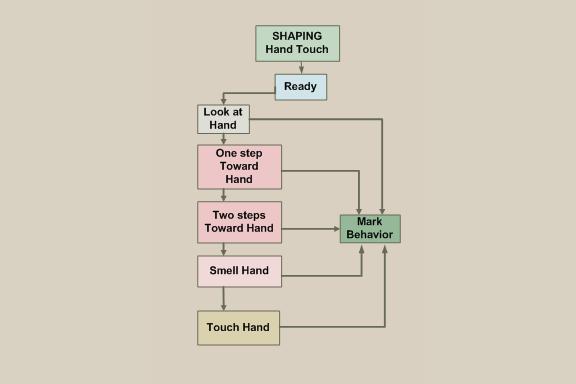
When the dog takes one step toward the stick, mark and reward the step. Make sure there is a pause between the mark and the reward. Then mark and reward at two steps, then at the dog sniffing the end of the stick. Finally, you will want to mark and reward when your dog touches the end of the stick with his nose.
Targeting the end of a stick may seem like a useless behavior but it has many applications. We can use the same concept to teach our dogs to go to their bed or dog crate. It can be one part of a learned chain of behaviors to trim the dog's nails or clean his ears.
We like to expand the targeting into a hand touch command. This becomes a fun game to play with our dogs but also a behavior we ask for to re-direct our dog away from other dogs and people while on walks or when it's getting into something we don't want him to mess with.
Timing of the Reward
For a reward to have the best results, it must come within a 1/2 second of the behavior you want to encourage. Some people say that the reward must come quicker than a second; others say the reward must come within 1 1/2 seconds.
No matter how good you are, you are not going to consistently be able to dispatch a reward to your dog in under half of a second. You may occasionally be able to do it but you will never get it done 100% of the time. And if you haven't figured it out yet, consistency is key when it comes to training dogs (or any animal for that matter). Markers allow you to instantly mark a behavior and when the dog understands that a reward follows the mark, you can take several seconds to reward the mark. This results in the dog learning much faster.
People who don't train with markers don't have that luxury. The longer they delay the reward with the behavior, the lower the chance their dog associates the behavior with the reward. Even with praise, if it is delayed by 2 or 3 seconds after a behavior, there is an excellent chance that the dog will associate the reward with another behavior that is different than what the handler intended.
This is why timing the Mark is so important in dog training and why marker training is so effective.
Through repetition and experience, your dog will quickly realize that when he hears the mark, he knows he is going to get a reward for what he just did. It may take a few seconds, but he knows the reward is coming and he knows what he did to earn it. It becomes crystal clear to the dog.
During your marker training, you do not have to jump to rush and give the reward. When the dog understands that a reward is coming after the mark, the delivery of the reward becomes part of the satisfaction. Compare it to eating out at a nice restaurant. Watching the waiter as he brings you food and puts it on the table is part of the fine dining experience.
This concept becomes even more important when we are working on exercises where our dog is some distance from us. It allows us the time we need to get to the dog and reward him and still have him understand why he is getting the reward.
Learning to Time the Mark
New dog handlers must learn the correct timing of when to mark during training. The easiest way to understand how this works is to think like a dog. In a way, your dog takes a mental picture (snapshot) of exactly what he is doing the instant you mark a behavior. They relate the mark/reward to that mental snapshot they took when they heard the word YES.
A visual method to help you learn timing is to ask a friend to take photos while you train. Have them take a photo of your dog every time you say the word YES. Tell them not to focus on what the dog is doing but only listen to your voice and push the shutter button on the camera when they hear you say YES.
This is an easy way to evaluate what is going through your dog's mind when he hears the mark. The resulting pictures are what the dog thinks he is being rewarded for. You may be surprised about what you learn about your timing.
The correct time to mark is the instant the dog meets the criteria of a particular training step or behavior.
Let's take teaching the “hand touch” as an example. In the “hand touch”, your dog is expected to touch his nose to your hand when you offer it. If you are at the step where the dog is finally touching the hand with his nose, the time you need to mark is the “very instant” the dog's nose touches the hand. Not 3 or 4 seconds after the fact.
If you are training the SIT, the mark should come the instant the dog's butt touches the ground—not 2 seconds later.
If you are training the DOWN, the time to mark is the instant the dog's belly touches the ground—not 5 seconds after he has been down.
If you mark the down several seconds after the dog's belly has touched the ground, the dog thinks he is being rewarded for the duration of staying down and not the actual movement of laying down. When trainers consistently mark the DOWN with poor timing, we see dogs that go down slower and slower because the dogs see the exercise as a "down-stay." They don't see the reward as something they get for quickly dropping to the ground.
Successful trainers understand that "the act of going down" and "duration in the down exercises" are two independent exercises which are trained separately with different words. The act of dropping to the ground is marked with a YES. The act of a “down-stay” is encouraged with the duration command GOOD.
So when it's done correctly and the dogs realize that the trigger to get the reward in the down exercises is to get his belly on the ground, you will see dogs drop like a stone. We will talk about extending the down-stay later when we discuss adding duration to a behavior with the word GOOD.
The Relationship Between the Mark and the Reward
I have already mentioned that it is critical to never move the hand or arm that delivers the reward until after we say YES. I want to revisit that issue now so you understand why this is so important.
Dogs are visual animals. While they may watch you all the time, they don't naturally listen to the words that come out of our mouth. The fact is they don't understand most of what we say.
Your dog will always react to physical cues over verbal cues. When trainers give the verbal cue and physical cue at the same time, the dog will always follow the physical cue. This means when you mark the exercise and move the arm at the same time, the movement of the arm is the cue your dog is following and not your verbal cue.
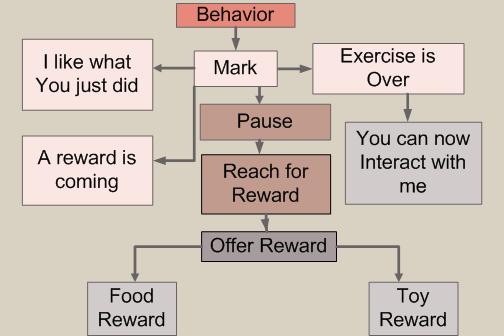
Unfortunately, it's not natural for people to have a pause between the YES and giving the food reward. Almost every new marker trainer reaches for food at the same instant that they say YES. They need to learn the skill of adding a pause in between the YES and the movement of the reward hand. This is a very simple concept to understand and a very difficult discipline to learn. Those trainers who approach this as a learned skill get quicker results.
How Long Should You Train?
I always used to say that training sessions are best kept to very short increments of time at about 2 or 3 minutes. Now with marker training, where dogs are engaged with their handler, training sessions can be longer. How long depends on the dog, the motivation of the dog, and the difficulty of what's being trained.
When training is fun, the reward is high enough in value, and the dog is not tired, the time can be extended. It really comes down to watching your dog and recognizing his concentration levels.
Different dogs have different levels of concentration. As dogs gain drive, their concentration will increase. To learn what is best for your dog, start out by only putting 20 treats in your treat bag. When those treats are gone, the session is over. When in doubt it is always better to leave a session with your dog wanting more.
Many times, new trainers get so into the work that they need the signal of an empty bait bag to remind them that they need to stop. As they gain experience in the work, this won't need to be an issue. They will learn to end a session on a positive high note.
Placement of the Reward
There will be times during training when a reward needs to be delivered to a specific spot (i.e., a hand touch is a good example).
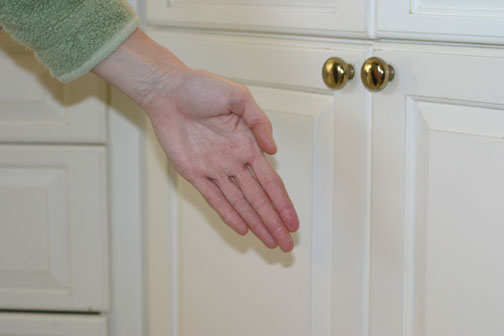
To become an effective marker trainer, you must not only master the art of timing but also the art of where and how to deliver the rewards. New trainers often underestimate how important the delivery and placement of the reward are. Correct placement of a reward can result in new behaviors being learned very quickly.
To best explain reward placement, here is an example:
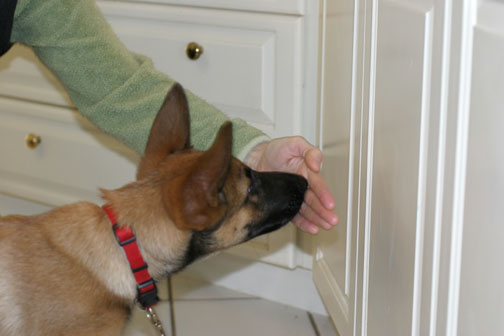
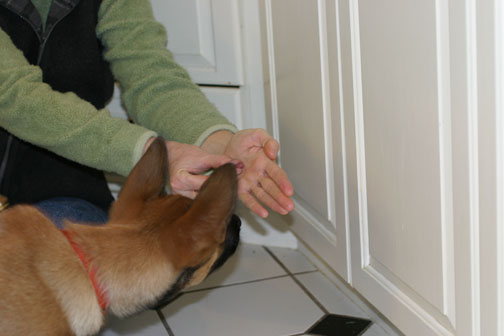
In the first steps of the "hand touch" exercise, we will often mark the dog when he looks at the hand we want him to touch. The correct place to reward the dog is the hand the dog has looked at.
I know that sounds confusing. Let me explain it (or you can watch our DVD in which we cover this entire article and more). You don't just give the dog a food reward. You place the reward on THE HAND that the dog just looked. If the dog puts his nose on the hand, you mark the nose touch and place the food treat on the hand that the nose just touched.
By placing the reward in the palm of the marked hand, and letting the dog take the reward off the palm of that outstretched hand, the dog quickly figures out that there is a relationship between the behavior and the reward.
This is how you execute proper placement of the reward. When you reward at the correct "place", the learning process is accelerated.
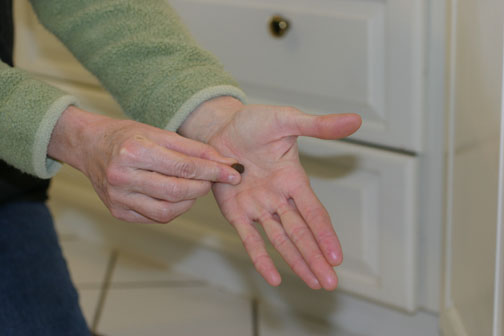
Another example of proper reward placement is seen when training the PLACE command. The PLACE command is used when you want to teach your dog to go lie on his rug (or dog bed, touchpad, etc). Free shaping is used to teach the dog this command.
What is free shaping? Free shaping simply means that we are going to break the command into small, gradual steps that will build up to the actual desired behavior. Each step is marked and a reward is given when successful.
During the PLACE command, the first free shaping step is to mark the dog whenever he looks at the rug. Now where do you think would be the best place to reward the dog?
If you said the 'rug', then you're correct. Place the treat on the rug and your dog will soon quickly learn what PLACE means.
If you are working on an exercise like engagement, the correct placement of the reward after the dog is marked could be to toss the food reward on the ground to make the dog chase it like he would chase a ball. Or it could be to mark the point of focus and then pivot your body and make the dog chase the food hand around you (move his feet) to get the reward. Adding movement to the placement of the reward will build drive.
For a visual demonstration, you view this concept explained in detail from The Power of Training Dogs with Food with Michael Ellis (DVD || Course).
How to Give Your Dog Treats Without Getting Fingers Bitten
Just as proper placement of the reward is important, so too is how the reward is offered to the dog. It is often a mistake to hand a dog with high food drive a piece of food with the tips of our fingers.
Some dogs naturally take food gently. Some dogs can be trained to take food gently. Then there are those dogs that are so driven for food that a finger getting in the way is not much of a concern for them.
The correct way to offer food to a dog is on the open flat palm of the hand.
We hold a food treat in an open hand by pinching the treat between our thumb and the base of our index finger. By holding the treat in this manner its a simple process to release the treat with our thumb so it rolls into the palm of our hand. The dog can then take the food off the palm. When giving a dog a piece of food in this manner, your fingers won't get in the way.
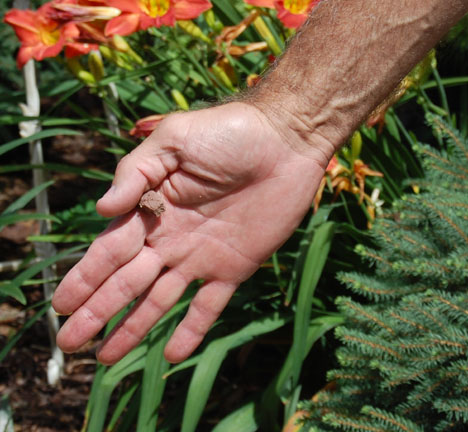
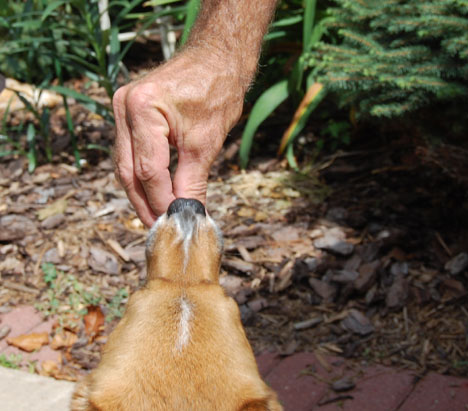
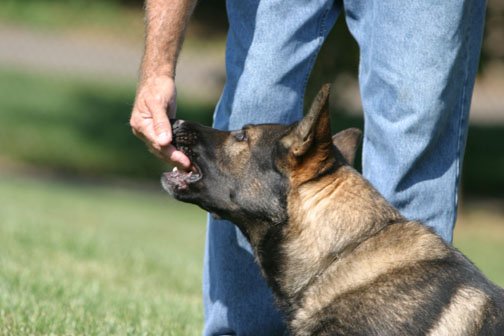
Food can be stored in a bait bag which we keep on our belt in the middle of our back. It can also be kept in the pocket of a training vest or jacket. Or we can pre-load our hand with a food reward. This means we will have food in hand before the exercise begins.
Some dogs are quick to learn when food is preloaded in your hand. Some dogs will try to MUG your food hand.
When that happens, simply close your hand into a fist and hold it flat against the front of your leg. When the dog continues to mug the hand, we say nothing and do nothing but stand there. The dog will eventually give up and look up at you. When that happens, mark with YES and reward the dog with a food treat.
This goes a long, long way to teaching the dog that he holds the key to the food reward. He just has to learn how to use the key correctly. They quickly learn that they can get the food if they do something that you want.
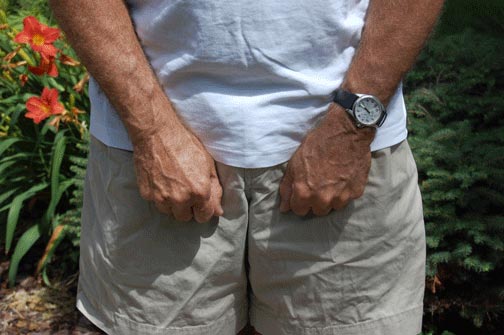
Vary Your Reward Delivery
Food can come from the right hand, the left hand, or occasionally your mouth. When you have a piece of food in your mouth, you simply spit it at the dog to deliver the reward. Rewards from the mouth won't work in all circumstances and they often take a little training with the dog to teach him how to catch them. But they do offer a change for the dog every now and then.
I have already mentioned that we like to use bait bags in the middle of our back. Some people don't care for bait bags. Those are usually people who don't understand how to use them in the marker program.
We don't recommend wearing the bait bag on the front of our body. It becomes too big of a distraction for new dogs.
When the bait bag is in the middle of your back, you don't have that problem. The correct way to retrieve food from the bag is to use both hands to reach for the food at the same time. This allows the reward to come from either hand. This ensures your dog isn't anticipating a treat from a particular hand. The focus is still on the word YES, not on your hand movements.
Make sure to keep your hand away from your bait bag or away from the pocket you carry the treats in. We don't want the hand near the treat to become a distraction or a signal for the dog.
We also don't want the dog anticipating a right- or left-handed delivery. We want value for the word YES, not a specific hand movement. That's why we do random hand deliveries.
With many exercises, we try and deliver the reward in a manner that forces the dog to move his feet to get his reward. Every dog that has prey drive gets more out of moving to catch a reward. Compare a dog that loves to chase a ball versus the same dog that is simply handed a ball. The dog places a lot more value on the ball when he has to chase after it.
The same thing applies to delivering a food reward in a manner that forces the dog to move to get the food. Here are a few reasons why movement is so important when it comes to varying reward delivery:
- It helps teach a dog that the MARK signals the end of the exercise or the behavior.
- When dogs have to move to snatch a reward, it increases the value of the reward to the dog. Compare this to handing a dog a ball or tossing the ball so the dog has to chase it.
- The movement only needs to be one step back and away from the dog: MARK > MOVE > REWARD. As already mentioned, make sure the movement does not come at the same time you MARK the behavior. There must be a gap in time.
To successfully achieve this, the handler moves his delivering hand down much like he is holding a wand (or a small TV remote control, if you are a muggle). The dog will quickly know the hand contains the reward and will follow it.
How Many Rewards to Give? Jack Potting
In this system, you only give the mark one time but there is nothing wrong with giving more than one reward. If a dog does an exceptionally good job, give him several rewards. In fact, you can give several different kinds of food rewards in the same training session. A really good job could result in several of the highest value food rewards. Usually, the more rewards the higher in drive the dog stays.
So remember as long as you don't say the mark more than one time, you can give several really high-value rewards one right after another when he does a lightning-fast down and then stays down. This is called jackpotting.
It's also important to end a training session on a high point. Some people will jackpot the last mark before the DONE or BREAK command.
Dogs with Low Food Drive
Some dogs have very low food drive. Food drive can be increased by using very high-value treats and only feeding after you train. Even a dog with good food drive will value food rewards more when it won't be fed until after your first training session for the day.
When you are doing a lot of training with young or small dogs, you can redesign your feeding program and use all-natural food rolls for the dog's entire daily diet. Determine what volume you should feed for the entire day and then divide that amount into the number of training sessions you plan on having. In that way, he gets all his food during training sessions.
I also believe that dogs can learn to acquire food drive. There is nothing wrong with "fasting" a dog for a day or even two days (never 3 days). I guarantee your dog will have food drive for meat treats after he has not eaten for a day or so. If you randomly fast low food drive dogs, their food drive will increase.
I have also seen high prey drive dogs with low food drive develop a level of food drive by playing tug with a sock or toy that has food in it or a toy that has been saturated with the odor of the food.
Splitting and Shaping in Marker Training
In the marker system, there are two concepts important in training exercises. You can shape or split these exercises into small component parts, then train those individual parts. Once the parts are trained, you link (or chain) them together to form the final exercise.
When an exercise is shaped, the dog is marked and rewarded for behaviors that approximate the final goal behavior. These approximations can be very small steps. For example, just looking at something could result in a mark and reward.
We don't look at marker training as either you “shape” all exercise or “split” all exercises. Marker training is not an either-or process. The people who are good at shaping are usually great at splitting.
It is a fact that people either shape and/or split an exercise or they manipulate and/or correct a dog into performing an exercise. Those in the latter category are old-school dog training.
With shaping, the dog is rewarded for progressively more detailed behavior. For example: in shaping the hand touch exercise, the dog would first be marked and rewarded for simply looking at the hand. Once he was consistently looking and being marked and rewarded, he would then not be marked and rewarded until he took one step towards the hand. Then not marked and rewarded until he took 3 steps toward the hand. And finally, not marked or rewarded until his nose touched the hand.
Simple behaviors are easy to shape but when exercises get more complicated, they need to be broken (or split) into small pieces. These pieces can be trained separately. In addition to being split, these exercises can also be shaped.
When an exercise is split, the trainer either lures a dog or shapes a dog to perform the component part of the exercise. The split pieces of an exercise always need to be small enough that each piece has a reasonable chance of the dog being successful when we ask them to do it.
As a dog gains confidence and becomes better at offering the pieces of a split exercise, you will start to link or chain the parts together before you mark and reward.
Learning to split an exercise is an art form. It is a factor of experience, training, and skill. How to split is often not an obvious choice, at least not as obvious as we would think. But with this said, splitting is the essence of dog training. To become proficient at splitting, a trainer must become a master of observing what his dog is doing, what his dog has done in the past, and what his goals are.
Variable Levels of Rewards when Linking Exercises
There is a point to mention before linking two components of an exercise. The trainer should put his current portion of a split exercise on what is called a “Variable Level of Reward” before linking two component parts of the work.
There are a couple of reasons for this. If we don't put the component on a variable reward the dog could have problems when he expects to get rewarded for a behavior and the reward doesn't come. Secondly, if an exercise has been split into 10 component parts, we can't reward each of the 10 components every time we ask for the behavior.
During your training process if your dog starts to have problems and doesn't show progress you need to rethink your training plan and find an easier way. Maybe you need to start from the beginning and reward the smallest of behaviors again. Maybe you need to find an entirely new plan. With this said this is an important part of every system of dog training.
Luring in Marker Training
Luring takes place when we show our dog a food reward before an exercise and then use that food to lure or guide the dog's movements (as he follows the food in our hand) through an exercise. In my opinion, there are clear cases to use lures.
Clicker purists will disagree with using luring. They call it a bribe. We would have to agree to disagree on this issue. In my opinion, certain exercises result in faster learning when the dog is lured through the learning process. The key to luring is to understand how to train a lure and then how to fade the lure.
When a trainer is establishing his foundation in markers, he needs to actually teach a dog to follow a lure. This is done after "charging the mark". To accomplish this, let the dog smell the food in your hand without actually getting it. Then move the hand away from the dog. As the dog follows the hand, you simply mark the follow and open the hand to release the food. It doesn't take long for the dog to understand a lure.
Luring is great for teaching touchpads and positions (sit, stand, and down).
It should be noted that when handlers use luring too long, it can often be difficult to fade the lure from training. Trainers need to understand that dogs ALWAYS follow a physical lure over verbal command. So when we use a lure, we need to have an exit strategy for stopping its use. The quicker the lure is faded, the better.
Lures are faded by adding the command for the behavior. The process starts when we feel the dog has reached fluency with the gesture for the lure. At that point, we will give a command, offer the lure gesture, then mark and reward the behavior. The command must come immediately before the lure.
We do this 10 - 20 - 50 times (as many as we think we need). We then test the process by giving the command and not offering the lure gesture. If the dog performs the behavior, it has learned the command.
If the dog hesitates and does not offer the behavior, we simply say "NOPE", reposition the dog to where he was before the command was given, and repeat the command-gesture again until we think he is ready for another test.
What trainers should not do when the command fails is add the lure after they have found out that the dog is not going to follow the lure. This is the natural instinct for new trainers but it is the exact wrong thing to do. This only trains the dog to wait for a gesture.
So if the dog doesn't perform the behavior, you repeat the command and add the gesture that the dog knows then mark and reward the behavior. Do this another 10 or 20 times and test the command again.
A point to mention when training the lure: it's recommended to begin your lure training by luring your dog away from you. It's easy to get a dog to come to you. It's harder to get a dog to go away from you. So, lure away to a touchpad out in front of you.
Gestures or Signals to Use In Luring
The goal of luring should be to create a non-food supporting signal that helps our dog perform a behavior. Gestures are used to help a dog perform a behavior before the handler names the exercise by adding a command.
Here is something new trainers should think about: There is a fine but distinct line between a signal and a lure. If a handler wants his dog to go to his rug and points at the rug from behind the dog, that's a signal. If the handler gets one foot in front of your dog to encourage him to his bed, he is luring the dog to the bed with his body.
But if the handler stays one foot behind the dog and encourages the dog to his bed, he is offering signals to help him make the decision to go to his bed, a subtle but important distinction. One that requires thought on the part of the trainer.
Body Signals (Gestures) and Voice Signals
Signals or gestures are a very important part of dog training. There are both body signals and/or voice signals.
An example of a voice signal would be telling your dog that you are going to start training today. You do this by saying ARE YOU READY every time you go out to train. This is not a command, it is simply a voice signal that tells the dog we are going to start training.
Some purists will say that body signals can be called lures. For me, this is splitting hairs. For the purpose of clear communication in this article, I will define a signal as the use of your body when you're not using food or a toy to lure a dog into performing a behavior.
An example of an advanced body signal is seen during heeling. Handlers learn to turn their head several steps before making a turn. They look in the direction they are about to turn. In formal competition, heeling dogs are often trained to look at the side of the handler's face. They quickly learn that when they see "their handlers head turn signal", they need to get prepared to stay with you in the turn.
Trainers need to think about unintentionally adding a signal to their training because this can create problems. An example of this just came up in our home. Cindy is training her young Malinois to STAND from a sit. This exercise is needed for Mondio Ring Sport training.
When her Mal sat in front, she would signal the dog to STAND by stepping in closer to the dog as she put both hands up and under his chin. It didn't take long for the dog to catch on and learn the signal to stand.
The problem developed when we realized the dog reacted to the signal of her stepping forward and not the hands going under the chin. During the sit-stay, when she walked to her Mal, it would stand. It took work to change the dog's thinking on this.
Lumping an Exercise
For the majority of my 50-year career of owning and training dogs, I have been a lumper and I am not proud of it.
A lumper is someone who does not split an exercise into enough component parts. A trainer can easily become a lumper if they get ahead of themselves and don't properly split an exercise. When someone lumps several component parts of an exercise together and then tries to train all these parts at one time, he is lumping the exercise.
When I first started to train dogs to heel, I simply put a choke chain on the dog and gave a heel command. If the dog got out in front, I did an about-turn and said HEEL and corrected the dog back into position. If the dog went wide, I said HEEL and did a quick turn, and corrected the dog into position. I lumped all the component parts of the heeling exercise into one training exercise. The bottom line is the learning phase was not pretty.
I feel sorry for my old dogs I often wonder how much more they would have enjoyed training had I known marker training. I think how confused they must have been and what it did to our relationship.
Unfortunately, there are still many obedience classes that still teach this way today. Be weary of trainers who use this method. Splitting and shaping exercises is the best way to keep your dog engaged with even better problem-solving skills. They're smarter and happier too.
Train Your Dog to Understand a Gesture Before Using Commands
In marker training, commands are not added until the dog knows and understands the exercise. Commands are not added until the dog will perform the exercise 8 out of 10 times that the handler gives a signal (or gesture).
Unfortunately, people are verbal and dogs are visual. When it comes to commands, this means people often name an exercise or use a command to try and induce a behavior before the dog knows the behavior well enough to associate the behavior with a command.
Our dogs hear us talk all day long. The vast majority of what we say is just background babble to the dog. The words mean nothing to the dog. The volume or tone of the words we use may mean something but the actual word means nothing. When people name a command before the dog associates that command with a behavior, the command becomes part of the background babble. It's the same as him not hearing you.
Why Should We Use a Signal/Gesture Before a Command?
I have already explained that through repetition, a dog begins to look at a marker as a secondary reward. When he hears his handler say "YES", he feels good. He gets excited. He knows the exercise is over and he is going to get a reward. He has linked the marker with the reward.
We want the same thing to happen with a command. We want the dog to hear the command and immediately feel good because he knows he only has to do this silly little behavior (which he really doesn't mind doing) and he will get his high-value reward.
We want the dog to look at a command as part of the linked chain that leads to a reward. We want the dog to look at a command as part of his trigger mechanism to get his reward.
This can only happen if the dog knows and understands the behavior he must perform when you ask him to do something. This behavior must be a "no-brainer" if the dog is going to look at commands in this manner.
How Do We Train without a Command?
In marker training, we never give commands until the dog fully understands the signal (or gesture) for a behavior along with the behavior.
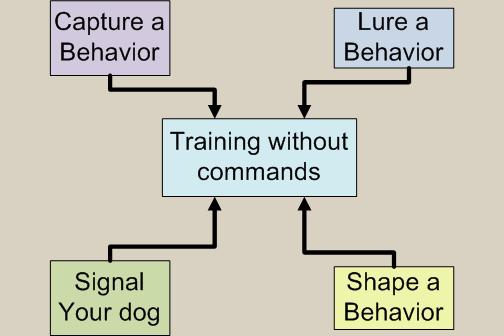
When new trainers start this work, they often ask, "If I am not telling the dog what I want him to do, how does he know what behavior I want to work on when I take him out today?" There are two ways to train without commands:
- Trainers can capture a behavior through what's called free shaping. This simply means you wait for the dog to offer a behavior and mark it.
- Or trainers can lure and help a dog learn a behavior with food and signals.
Capturing a behavior can take a long time. We have used it with our horses and it's a very effective training method but it does take time and patience. People who free shape really split exercises down into many small pieces. Once the dog learns the behavior, he is very solid in his performance.
We prefer to help our dog by luring with signals (or gestures) for what we want him to do. This is a very important step in the marker training system. To really appreciate its full implication, trainers need to also understand the relationship between the command and the reward in this system. I discuss that in detail further on in the article.
Training with lures makes the process go much quicker.
When and How to Add a Command
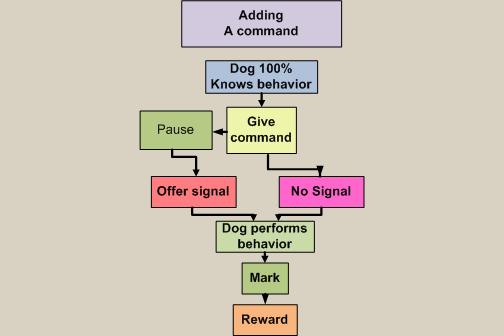
We train the dog to perform a behavior with signals (or gestures) before the command is added. When the dog will perform the behavior 8 out of 10 times with the gesture, you can start to add the command before the signal. The key here is that there must be a time split between the command or signal.
When it comes time to name a behavior (add a command), we always give the command before we add a signal or gesture for the behavior.
It is important to give the command a fraction of a second before adding the gesture to help the dog. This break in time is important. Remember that dogs will always follow a physical signal over a voice signal. When they are given at the same time, the dog will be following the physical signal and not learn the voice command. When these handlers want to drop the gesture, the dogs will not perform. Those dogs have only learned to follow the physical signal and not the voice command.
The timing of commands to signals is very much like the timing for marking a behavior and then delivering the reward. The command and the signal cannot happen at the same instant or the dog will always work off the physical signal and not the voice command.
Anticipating a Command
When dogs begin to approach the point where we add a command, we will see them start to anticipate a behavior. Anticipation in the learning process is a good thing. Anticipation tells us the dog is thinking, he is actively trying to participate in the work. Even if the dog anticipates with incorrect behavior, it tells us he is trying to work with us and he wants to do what he thinks we want. So don't discourage it too quickly.
Old school dog trainers give corrections for anticipation. They expect perfection and unreasonably so. Think about this from the dog's standpoint. He gets corrected for trying to do what "HE THINKS YOU WANT HIM TO DO". He then thinks "Hey, I am trying to do this. What the heck? I don't understand what you want and you're jerking me around! This sucks. I am going to stop trying and wait until you show me exactly what you want!"
Stimulus Control in Marker Training
Stimulus control is the finishing tool that completes the training process for a command.
As you go through training, you will reach a point where your dog has learned several behaviors. He looks at them as his little bag of tricks that he uses to make you give him his rewards.
During the learning process of a new behavior, you will often see a dog reach into that trick bag and offer all of his known behaviors in his effort to get you to give his reward. That is OK during the learning phase but when the dog gains proficiency, this needs to end.
At some point, the dog should only perform the behavior he is asked to perform. He should also NOT offer this behavior when he is asked to do something else. Getting the dog to do this is called "stimulus control".
Stimulus control should be added when a dog performs a behavior on command 8 out of 10 times without a signal or lure. Let me repeat "WITHOUT A SIGNAL OR LURE." New trainers miss that very important part of stimulus control. They jump the gun and start adding stimulus control while they are still using signals to help the dog Then when they drop the signal, they confuse the dog.
It's also unrealistic to wait for a dog to perform the exercises 100% of the time. Waiting until a dog performs 10 out of 10 times results in dogs that get bored with training.
A lack of stimulus control is one of the biggest problems many motivational trainers face. New trainers grasp the concept of markers. They enjoy the reward process, but they struggle with the refined process of stimulus control.
In this stage of training, when the dog is asked to perform a known behavior and he reaches into his trick bag to offer a different known set of behaviors, you simply say NO and turn your back. Turning away for 5 seconds sends a clear message to the dog that he is not doing what you want.
When you turn back and ask for the behavior again, you will see if he then offers the correct behavior or an unwanted behavior. If it's not what you asked, you repeat the process and again say NO and turn your back. It may become necessary to put the dog in his crate for a few minutes and then get him out and try again.
It's not a bad idea to introduce the DONE or BREAK command at this point. This tells your dog that you're done training for a few minutes. With experience, this makes it clear to the dog that training is over for a while.
An important part of stimulus control is to also take this behavior out of the dog's trick bag. This is called "extinguishing a behavior." By that, I mean the dog must understand that this behavior is not allowed to be offered when we introduce new signals and commands.
If we have taken the command SIT through stimulus control and the dog offers a SIT when you are training the DOWN, we immediately say NO and turn our back.
Stimulus control is extremely important. Without it, trainers will not see consistency in a command until they take their dogs through stimulus control. So if your goal is to enter a dog sport, you will have to become a master of this concept. What's interesting is that dogs are smarter than we often give them credit for. They learn the concept of stimulus control after you have taken them through the process a few times. They recognize what you are doing and pick up on it quicker and quicker each time.
In old school training, stimulus control is done with a choke collar or prong collar. If the dog performs an unwanted behavior, it is corrected until it complies with the correct behavior. This is why the dogs stop offering behaviors they think their handler wants. It's why they are not good problem solvers and it's why they are reluctant participants in the training process.
The Problem with Adding Commands Too Soon
The first and most obvious problem of adding a command before the dog knows the behavior is that we run the risk of confusing our dog or turning the command into background noise.
Our goal is to make the command part of the chain of events that leads to a reward. To accomplish this, the training needs to be black and white. Adding a command before the dog understands a behavior is not black and white.
When we initially give a command, we follow it with the signal we used to get the dog to perform the behavior. That signal is looked at as help. In training, we help the dog with signals until we reach a point where we can stop using the signal and only use the command.
When we name an exercise, we need to be prepared to do something to help the dog if it doesn't perform the behavior.
What To Do If Your Dog Won't Follow a Command
You have your own toolbox of possible options to consider when this happens:
- Ignore "offered behaviors" until he gets it right.
- Help the dog by offering a signal or signals.
- Say "NOPE" in an upbeat voice (not a mad voice).
- Check if the reward you are offering is of high enough value to motivate the dog.
- If the dog won't work off of a signal, we could be lumping the training steps to the point that the dog doesn't understand the behavior we want. We need re-evaluate and split these training steps further more. Otherwise, we can use a screwup cookie.
- If we know for sure that the dog knows the command, we can put him back in his dog crate or kennel for a timeout. Crates are better for timeouts. Do this consistently and your dog will start to understand that a timeout means something. I used to think this didn't work but I was wrong. With many dogs, it becomes a motivator. It frustrates the dog and frustration builds drive. If you have a second dog, get that dog out and work it in front of the crated dog. Use a little jealousy if you have to.
- The last resort, if we know that the dog absolutely knows the command is simply refusing to do it, is to correct the dog.
The bottom line is when the dog doesn't perform a behavior, you need to evaluate why this happened. There is no set rule of what to do every time. It will always vary according the circumstance.
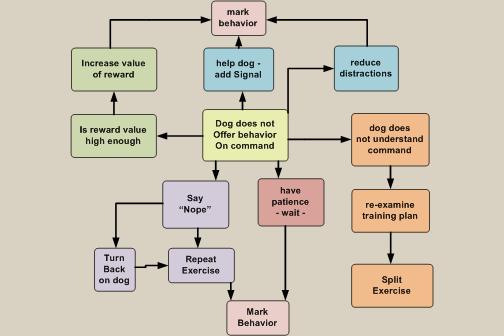
Naming Component Parts of an Exercise
Something that new trainers can think about when they split an exercise is to name the component parts of the exercise.
An example of this can be seen in the HEEL exercise. One of the component parts of the heel command is to teach the behavior of the dog looking up at your face. Once the dog has learned the 'look up at your face' behavior, you can name it "LOOK".
Then when you link all the components of heeling and the dog gets a little distracted and is not paying attention, you simply say "LOOK." This identifies an exact behavior to a dog. If the dog doesn't comply, you simply say "Nope - LOOK" and start all over again.
In other words, this allows you to pinpoint with a great deal of accuracy what is expected in training.
Adding Duration to Exercises by Using "GOOD"
Up to this point, we have not expected a dog to add duration of time to any exercises. This means we don't expect a dog to perform a sit-stay or down-stay.
As far as we are concerned, we are telling the dog YES for doing a particular action. For example, the SIT exercise is marked with a YES as soon as the dog's butt touches the ground. Or in the case of the DOWN exercise, when the dog's belly simply touches the ground. We say YES, we are releasing the dog and he is free to come over and get his reward.
We shouldn't add duration to any exercise until a dog is consistently performing that exercise. When the time comes to extend an exercise, we simply delay the mark. We remain calm and say GOOD in a soothing tone. When the exercise is over, we mark the moment with YES and have a party.
GOOD is never used as a release to end an exercise!
During the period when we begin extending an exercise, we can say "GOOD" multiple times and jackpot the rewards, one right after another. This helps a dog to understand what you expect. Unlike YES (which is only said one time), the duration command can be said over and over depending on what the dog is doing.
Much like how we charge the mark, we can also charge GOOD as the dog grows up. You can do this by saying GOOD whenever you put him or when you feed him. The dog begins associating the word GOOD with a good feeling. This results in a dog who feels good whenever you say GOOD.
When you train duration, be sure to extend the time only by a few seconds and randomly. For example, a training session can look like this:
- Say the command. Extend the time by only 3 seconds (you can sprinkle in a GOOD). As soon as those 3 seconds are up, release the dog by saying YES and reward.
- Now we say the command again. This time, we will wait 5 seconds. Add a few GOODs during that time. Once those 5 seconds are up, release the dog by saying YES and reward.
- This third time around, we will say the command again but will wait 2 seconds instead. Release with YES and reward.
- Say the command again but this time, we're going to wait 10 seconds while continuously telling the dog GOOD. As soon as those 10 seconds are up, say YES to release the dog and reward it.
Do this multiple times. Ensure that each duration is random so that your dog doesn't get used to releasing at just a set amount of time. You want your dog to release from his position only after you say YES.
If you are training puppies, we don't recommend going beyond 15-20 seconds. You can gradually build it up as they grow older.
Random Rewards in Marker Training: When To Stop Using Rewards for a Command
"When do I stop using a food reward for a command?" This is an excellent question and an important part of marker training.
The goal for every dog trainer is to reach a point of variable reinforcement. This means that we want the dog to anticipate a treat everytime, but not have to expect it. We want the dog to be motivated enough to perform the behavior but to also not shut down when doesn't receive a treat after the YES mark.
It is unrealistic to think that trainers will give a food reward every time they ask their dog to perform a behavior for the rest of the dog's life. For one thing, people can't walk around with a bait bag for the rest of their lives. (Although my Corgi that's lying at my feet right now thinks that would be the best thing that ever happened to her.)
When we start marker training, we reward for the smallest of efforts. We reward for looking at a hand in a hand touch. When the dog knows and understands a behavior and will perform the behavior correctly 8 out of 10 times after a signal or a command, the handler can begin to reward randomly.
A behavior needs to be put on a random reward schedule before that behavior is linked to a second split behavior. What does this mean? If a dog expects a reward every time it performs a behavior, and then you totally stop rewarding for that behavior, the dog could shut down. So to get around this, we need to start establishing random rewards.
This is why charging the mark is so important. We want the dog to continuously understand that YES will warrant him something good. But we also need to make sure that he isn't linking his successful behavior to just getting treats. Random rewards help fix this problem.
My brother, a psychologist in Canada, wrote an article related to this called "Using Intermittent Rewards in Training - The Concept of Differential Reinforcement". You may want to visit this article.
As a handler and the dog gain fluency in an exercise, they can go longer and longer in between rewards. As you become more experienced, you will start to understand what works and doesn't work for your dog.
It's also ideal that random rewards should be put in place when handlers begin to link or chain behaviors together to form a finished exercise. The next section gets into that.
Using "GOOD" to Link Components of an Exercise
The beauty of the word GOOD is that it also lets you tell your dog that he just successfully completed a portion of a linked exercise. It tells him that he is doing a good job and is going to get a reward if he continues to do what you expect.
Good can also be used to link component parts of an exercise. It goes like this:
- The dog is asked to perform the first linked behavior.
- The dog performs the behavior.
- The dog is told GOOD.
- The dog is then asked to perform the next behavior in the chain.
When used in this manner, the word GOOD becomes a powerful tool to communicate with your dog. The beauty is that it can be used at a distance to tell the dog he is doing a good job.
Using Food with "GOOD"
Let's use the example of a DOWN-STAY in which the final YES mark is rewarded with a game of tug.
When a dog is asked to DOWN, it is expected to stay down until released. After a handler gives the down command and the dog complies, the handler can say GOOD and offer multiple food rewards.
By jackpotting a food reward along with multiple GOOD commands, we encourage the dog to stay down. The exercise is not yet over because he has not marked the exercise as being finished. The dog remains down until the handler is satisfied with compliance and gives the YES mark and presents the tug toy and a session of tug.
Allowing Your Dog to Make Mistakes Creates Dogs that are Problem-Solvers
One of the harder skills new trainers must learn is that there will be times when you have to allow your dog time to offer behaviors and sometimes you have to allow your dog to make a mistake. Dogs become problem-solvers when allowed to work through problems.
Many people look at confusion in their dogs as a problem. These are often people who come from old school dog training where they always want their dog to perform the exercise the correct way every time.
When a dog looks confused or makes a mistake, the natural instinct is to step in and rescue the dog, to try and lure it through an exercise. When in reality, the dog should be given time to try and problem solve. That's how dogs learn.
When this work is done correctly, your dog will see value in performing. It is your job to allow your dog to make choices and if you have built enough value for the behavior the dog will want to perform correctly.
Negative Markers
When a dog learns a behavior to the point where do it on command, the handler can start to use a negative marker if the dog does not perform the behavior.
A negative marker is NOPE or NO. It is important to understand that this is not a correction. It's said in a tone that implies, "Look, you can do a better job. Let's do it again."
Handlers should never sound mad when they say NO. Sounding mad turns a negative marker into a correction and that's not what we want. NO is simply a word that tells the dog that he has not performed a behavior correctly and he has to do it again.
The beauty of using NO or NOPE is that we can use it to identify the exact instant the dog makes a mistake. Unlike a physical correction, which often takes drive out of the dog, a negative marker often has the opposite effect. It builds drive.
Now here is something to think about. With positive markers, the reward must come within a short period of time after the mark. How long is a factor of the dog, its training, and experience. But dogs should get a reward within several seconds of the mark if the reward is to be associated with the behavior and mark.
Only Say "NO" One Time
If your dog makes a mistake and you say NO one time, immediately have the dog repeat the exercise or put the dog away.
A negative marker can be looked at in the same manner as a positive marker (YES). The dog takes a mental snapshot in his mind of exactly what it was doing when it got the negative makers. If the trainer is consistent and only says NO one time, the dogs catch on quickly.
When a trainer repeats NO several times, this only confuses the dog because he must determine which mental snapshot you are referring to.
So just as you don't say "YES YES YES" when you mark a behavior, you don't say "NO NO NO" when you give a negative reinforcer.
In addition, you don't wait before making the dog repeat the behavior. You do it immediately. Waiting too long will result in the dog's mind wandering off and he will not associate the negative behavior with repeating the exercise.
If a dog continues to make mistakes and does not seem to be concentrating and you're certain the dog understands the cue, then rather than repeat the exercise, the dog is given a timeout and put in his crate for a few minutes (or even end the training session).
Putting a dog in a crate is a mental break for a dog. While some dogs may look at a timeout as punishment, others need that break to allow them to refocus.
Screwup Cookies
The beauty of marker work is that it's pretty hard to hurt your dog if you make a mistake. Missing a mark is not like giving a prong collar correction at the wrong time. If you give a soft dog a prong collar correction, he will shut down and quit trying. But if you miss a mark on the same soft dog, you haven't hurt the dog's temperament. In marker training, he may be confused but you haven't shut him down.
Earlier in this article, I talked about "screwup cookies." Ann Braue introduced me to "screwup cookies" and I love the concept.
There may come a time when your dog simply doesn't offer the behavior you want no matter how long you wait.
This usually indicates one of the following:
- The dog got tired and just slowed up or stopped trying.
- The dog does not have that good of a relationship with the owner.
- The exercise was not SPLIT into small enough pieces for the dog to understand what you wanted (you lumped the exercise).
- The reward is not a high enough value.
- The dog is not hungry enough.
- You have not shown enough patience and allowed the dog time to work out the problem.
When you're training and your dog doesn't give you the behavior you want, you need to get out of the training session in a manner that still allows the dog to feel like he is still learning. You always need to make the dog feel like he is a learner.
Just because the dog fell short of your goals does not mean that you should jeopardize your relationship. Relationships should always come first over goals.
One option that allows this to happen is to use a "screw up cookie." Here is how it works: The dog stops working. You realize the problem as one of the above. Rather than giving a correction or walking away, you simply use a screwup cookie.
Using a screwup cookie means asking the dog to do something very simple that we are 100% sure he enjoys doing (i.e., a hand touch). When you use a "screwup cookie", you should use it two, three, or 4 times in a row.
Screwup cookies not only get you out of a problem, they redirect the dog's mind away from a frustrating incident. They redirect the dog onto a task that leads to a reward and then allows you to stop your training and put your dog away on a positive note. Once that's done, you can go sit down and figure out what went wrong.
Corrections and Marker Training
In my opinion, there is no such thing as an all-motivational system of dog training. Just as there is no such thing as an all-force (or compulsion) system of dog training.
If you want to become an effective dog trainer, you will have to learn how and when to employ corrections in your training.
Purists will argue with me when I say there are applications for using corrections in the marker training system. Most of the time, these are people who either lack experience, only work with a very compliant non-dominant type of dog, do not handle their dog in highly distracting environments, are not involved with very high drive dogs in demanding dog sports, or they are not involved with competitive dog sports that require precise exercises.
One thing to keep in mind when thinking about corrections is the use of the leash. When people first start this work, they should NEVER use the leash as a tool to correct until after the dog has progressed through to touchpads and learning positions. The only use for the leash is to keep the dog with the handler. In other words, to stop the dog from leaving.
I recommend that initial training be done in a harness. This eliminates the handler making the mistake of giving leash correction.
In more advanced training such as heeling, the dog will be trained to give to leash pressure. There is a very specific way to teach a dog to give to pressure. We demonstrate this in Focused Heeling with Michael Ellis. The dog's ability to give to pressure is not a correction-based skill. However, it can be confusing to a dog that had earlier been trained with collar corrections. Hence, do your initial training with a harness.
The application of corrections in marker training should never be taken lightly. When corrections are used incorrectly, there is always the risk of changing the relationship between the dog and handler. Especially on soft dogs.
Corrections should only be used in later training when you are 100% sure the dog understands the behavior you want and he is refusing to offer this behavior. This is past the point in training where commands have been added to the behavior. We need to see the dog consistently performing exercises without handler signals.
If we determine that the dog knows what we are asking and he is being disobedient, then he either needs a negative reinforcer (NO), he needs to be put away, or he needs to get a correction. The correction on young dog does not necessarily mean to take the dog's head off with a level 10 correction. More often than not, it's a slight tap of the leash that means "Look, you know better. Pay attention."
In most sport dog training, corrections are a finishing tool. They are used to proof a dog to show him that he must work with us in every location, under every distraction, every time. The more work a handler does on training engagement in the face of environmental stressors, the less problems they have. We have an entire chapter about this in The Power of Training Dogs with Food DVD.
The level of correction used is a factor of the dog's temperament (a hard dog vs. a soft dog), the drive level of the dog, the distractions he is faced with, and what kind of infraction the dog made. Obviously, unwarranted human aggression would receive a stronger correction than not getting completely into HEEL position when asked.
A rule of thumb on obedience corrections is that we still want the dog to be able to take his food rewards and play with us after a correction. If the dog will not do either of those things, we have corrected too hard. That information needs to be tucked in your mind to remember the next time you train.
Many times, new dog trainers get ahead of themselves. They don't have the patience to let a young dog grow up. Trainers need to recognize the fact that corrections are self-reinforcing for the handler. This means they fulfill the desire to make the dog comply. When in fact, there are often better ways to make a dog want to comply.
Corrections - Extinguishing a Behavior - Dominant Dogs
There is a difference between disobedient behavior and inappropriate behavior. Inappropriate behavior usually needs to be extinguished, meaning we don't want the dog to offer up this kind of behavior ever.
There are some things that dogs do that are self-rewarding, like chasing rabbits or squirrels. No amount of redirection or marker training is going to change my dog's desire to chase squirrels. You can't take the fun out of the chase. Even though they seldom ever catch a squirrel, they derive pleasure from the chase itself. Therefore, the solution is that the fun needs to be taken out of the chase.
Dogs need to be corrected for self-rewarding behaviors. There are many ways to accomplish this but, in my opinion, the best solution is with a remote collar. I teach how to properly use a remote collar as there are far too many people who misuse them. Before you start training with a remote or electric collar, I highly recommend that you go through my Remote Collar Training for the Pet Owner either as a DVD or through our online course.
The beauty of the marker system is that because the training is so black and white, the level of correction used to get compliance is much less than what's needed in the old school methods of training. There's less conflict with the handler.
Corrections vs. Compulsion
There is also a difference between trainers who train with compulsion (i.e., forced tracking) and trainers who use corrections. Corrections involve fixing a mistake. Compulsion means the dog offers the behavior to avoid a correction (yank and crank training).
While this may seem like mincing words, there is in fact, a profound difference. People who plan on training dog sports and doing so with a level of consistency are going to have to introduce obedience correction in their training. The beauty of marker training is that the level of corrections is usually much lower than in other forms of training, especially forced compulsion training.
Anyone who has trained dogs as long as I have has trained with compulsion. When I started training, there were no motivational dog training methods. Frankly, I think back and feel sorry for my old dogs. Many were so good and I was so unfair. It's sad. They deserved so much more than I gave them. Maybe in some small way, this article and my marker training teachings are a way of saying I am sorry.
How Long Do You Use Food Rewards?
Many inexperienced trainers are hesitant about marker training primarily because they believe that at some point, you eventually have to stop using food. When people say this, it only confirms they do not understand the system or the power of marker training.
Intermittent food rewards can be used throughout the life of the dog. At the beginning of this article, I wrote that dogs can be rewarded with a food reward, a toy reward, or handler praise. It's a handler's prerogative to determine what his dog needs at any one point in time. But to insinuate that you would stop using food is foolish.
Use food rewards for the rest of the dog's life. Just use it intermittently (randomly) so that the dog can anticipate the reward but not have to expect it every single time.
Do You Ever Stop Marker Training?
There are several parts to this question.
Marker training is a method of communication with your dog. It's not just used to teach new behaviors and exercises. Once dogs understand the 5 core words of the marker training system, they will always be used throughout the life of the dog to communicate with the dog.
Don't Be Afraid to Scrap Your Training Plan
The best way to approach handler mistakes is to first accept the fact that mistakes are a normal part of dog training.
Mistakes in training need to be looked at as learning experiences on the path to training your dog. They don't always necessarily need to be a bad thing.
The best trainers always look for points in training where they hit a wall and the dog just doesn't seem to understand what you are trying to teach him. This usually means you're getting ahead of yourself in training steps. You need to back up the work and split the exercise into smaller pieces.
Inexperienced trainers on the other hand always blame the dog and say that "the dog knew better."
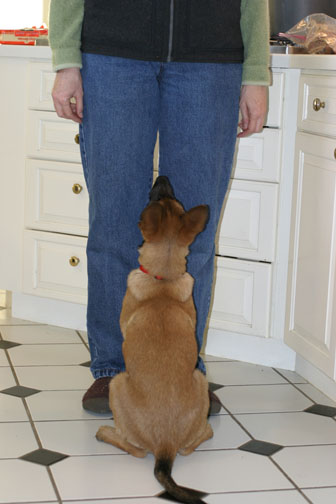
Retraining Dominant Dogs - The Importance of Pack Structure
In my opinion, marker training is the perfect system to start training adult dogs. It is especially effective for dominant dogs or for people who adopt rescue dogs because it is stress-free.
Marker training is the perfect way to interact with dominant dogs in a positive manner that will not cause a conflict. It's a way to show a dominant dog that you can be interesting and fun.
A perfect example of the power of marker training is teaching a dog to DOWN. The down exercise is a difficult exercise for a dominant dog. They resent being forced into different positions. When a dog downs in front of you, it's an example of submission, not something a dominant dog cares to do. In fact, many owners of dominant dogs get bitten when they try and force their down into a DOWN position.
But by training the DOWN with a high-value food reward and shaping the exercise, we can easily train a very dominant dog that there are benefits when he gets in the DOWN position.
Don't misunderstand what I am saying here. Marker training doesn't eliminate dominance in dogs. It's only a method to interact with a dominant dog with very little risk of getting bitten. Because there is no conflict, there isn't a reason for a dominant dog to feel like you are challenging his rank within your pack. In the early stages of marker training, there are no corrections so the dominant dog does not feel threatened.
With that said, marker training does have a way to show a dog that you do have rules. This can easily be done by giving no mark (silence) or negative reinforces (NO or NOPE).
Owners of dominant dogs should take their dog through our pack structure program before they reach the point of administering corrections during marker training. If your dog is a very dominant and aggressive dog, I suggest also going through the DVD I produced titled Dealing with Dominant and Aggressive Dogs.
Rescue Dogs and Marker Training
Many dogs that have been turned into rescue organizations have some form of behavioral problem. If these dogs have had any training, it has been old school "yank and crank" methods that have used avoidance methods to train their dogs. In most cases, this has not worked which is why the dogs were turned into the shelters. The dogs, therefore, come with emotional baggage.
Rescue dogs often require patience when new owners try to work with markers. Because of their previous avoidance training, they are afraid to try new things. This is because they have learned that if they make a mistake, they get a correction. They will often just stand and look at you because they are waiting for you to show them what you want. They are afraid to experiment.
The new owners need to be patient. They need to mark the slightest movements. These dogs really need to have behaviors split into tiny little parts. When they stop and stare, it's not because they are stubborn. It's because they are stuck. They either don't understand what they are expected to do and are concerned about a correction. We recommend you use a screwup cookie when this happens.
When the lightbulb goes off in the dog's head that they are being rewarded for trying, their true personality will come shining through. With effort, you can bring true joy to these dogs' lives.
What Exercises Can Markers Be Used For?
There is no limit to what exercises or commands can be trained with when it comes to marker training. You are only limited by your imagination.
You can use marker training for things as simple as giving you eye contact on voice command (a very important thing for people who compete in dog sports) to something as complicated as teaching a police service dog or a Schutzhund dog correct positioning to bark at a suspect or bark at a helper.
Whatever the scenario, marker training is one of the most effective training techniques I have come across in my 50 years of training. Your dog will learn to be a problem-solver, have fun, and at the same time, follow your commands.
If you would like to get more in-depth with marker training, you can view The Power of Training Dogs with Markers and The Power of Training Dogs with Food with Michael Ellis.
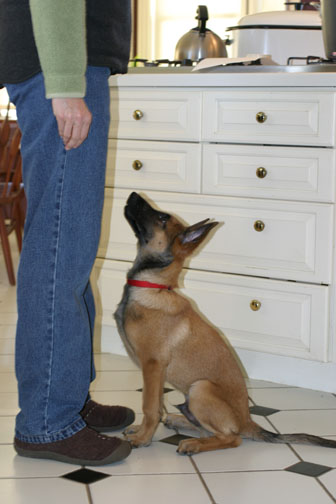
People I Owe a Special Thanks To:
I would like to close this training article with a sincere thanks to Cindy Rhodes, Michael Ellis, and Ann Braue for what I have learned from them about marker training.
Cindy has been great. We have lived together for years and I am continually impressed with her skills as a trainer. The results she has had in her training have been my inspiration to study and learn marker training.
Ann Braue is one of the top Agility competitors in the world. Over the years she is consistently on USA's world agility team. Ann's website is AnnBraue.com. Cindy and I are lucky to live 20 miles from Ann's training center in Eau Claire, WI. I have attended a number of her seminars. Anne gives seminars throughout the country. If you ever have an opportunity to go to one of these seminars, you will walk away a better dog trainer.
Michael Ellis is one of the most gifted dog trainers I have ever met. He is also one of the first biting sport competitors to embrace marker training. While there are many good dog trainers around the world, there are very, very few who are as gifted at teaching people how to train dogs. Cindy and I have attended more Michael Ellis seminars than I can remember. We have hosted Michael here at Leerburg and have produced several DVDs and online courses together. Michael has opened his Michael Ellis School for Dog Trainers in California. If your goal is to make a career out of dog training, you will not find a better school anywhere.
And finally, I would like to thank my customers for purchasing our Leerburg products. If it were not for those who support us, we would not be able to do what we love, which is to train our dogs and horses.
Equipment Used in Marker Training
You don't need a lot of equipment to start marker training your dog. At the very least, all you need is your voice and some treats. But if you want to advance your skills, equipment plays an important part to your training. Here are the items you'll need to advance your marker training skills:
Most Popular Articles
-
01
-
02
-
03
-
04
-
05
Related Products
-
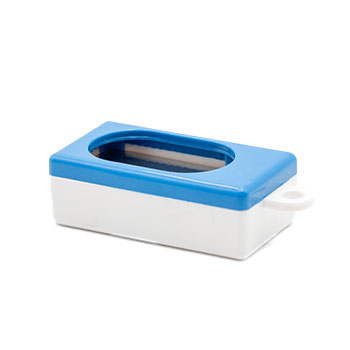 $2.00 - $40.00
 -

$70.00$35.00
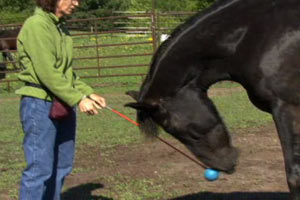
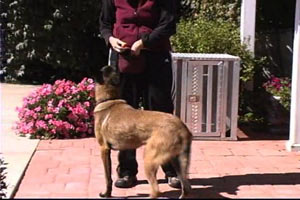



8 Comments
Ask Leerburg
Sorry, adding comments is currently disabled.