Search Our Site
Leerburg 2008 Catalog Weekly Newsletter Request a Catalog Download Catalog Table of Contents Dog Training Videos New Releases DVD DVD Box Specials FREE Streaming Video Dog Training Equipment Dog Training Equipment Dog Training Books K9 Healthcare Products Web Forum Discussion Discussion Forum How to Register Dog Training eBooks Dog Training Podcasts Dog Training Articles Articles Question & Answers Leerburg Kennel Our Kennel Current Litters Customer Testimonials Stud Dogs Adult Dogs for Sale Our Kaiserhaus Malinois Dog Training Categories Dog Training Dog Obedience Training Aggression Problems Dominance Problems Dog Fight Problems Puppy Training HouseTraining Problems Feeding Dogs Breeding Dogs Electric Collar Training Schutzhund Training Police K9 Training Leerburg's Top DVDs Your Puppy 8 Weeks DVD Basic Dog Obedience DVD Electric Collar Training DVD Dominant Dogs DVD Raising a Working Pup DVD Bite Training Puppies DVD All 120 Dog Training DVDs How to Order View Shopping Cart Foreign Orders Shipping Charges See Our Horses Request a Catalog Contact Us

Dog Fights

More emails and comments on dog fights.

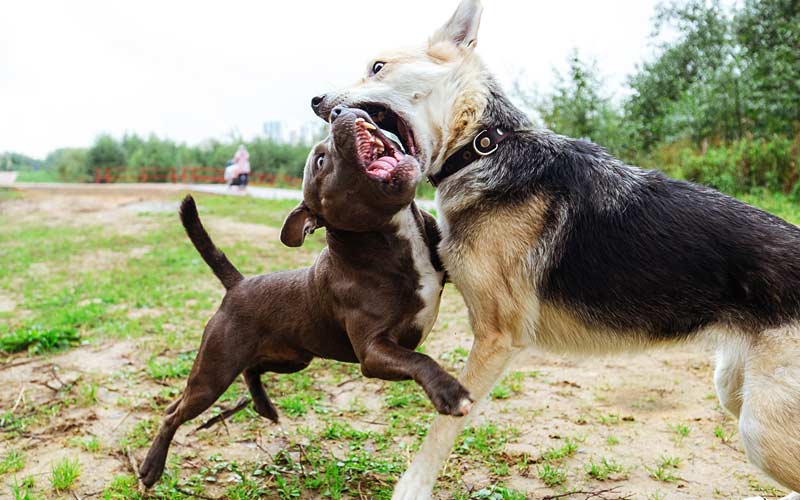
Dog Fight


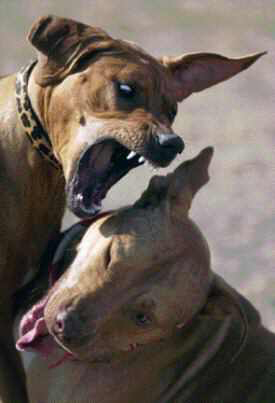
If you have come to this page more than likely you have issues with aggressive dogs. A number of pages on my web site (including this one) contain emails about dog fights. I have placed my personal comments under many of these emails.

In addition we offer training resources. I have produced DVD titled:

DEALING WITH DOMINAT AND AGGRESSIVE DOGS This DVD demonstrates how to break up a dog fight if you are alone.

Dealing with
Dominant
& Aggressive Dogs


$49.00+s&h
Dealing with Dominant & Aggressive Dogs DVD


I have done a 71 Minutes podcast titled "Breaking Up a Dog Fights without Getting Hurt"

DOWNLOAD $3.00 - Dog Fight Podcast in MP3 format


$1.00+s&h

71 Minute Audio CD $8.00 - Breaking Up Dog Fights Without Getting Hurt


$8.00+s&h

Dog fights are violent, loud and dangerous events. I get emails every day on dog fights. As I wrote this description I got 2 emails. In email the family had two dogs . Their female GSD had just killed their dachshund. In the second email this family's dog had just been in a fight with a neighbors dog and done $1,400 damage.

In the mid 1990's I wrote an article on How to Break Up A Dog Fight - that article is still on my web site. This 52 Minute CD is an update of that article. The information in the podcast and on the CD has more details on making the decision of even trying to step in to break up a fight, it discusses many methods used to break up fights and it tells how to break up a fight when you are alone. There is an also extensive section on preventing dogs fights.

Thc CD will play in any CD player.


Our GSD KILLED our Daschund last night:

Something very terrible happened last night. Our 2 year old Female German Shepherd killed our 4 year old miniature daschund. The GS has always been a aggressive dog but a very good dog. Mellow, and lots of fun. Why would she do this? We are so hurt and don't know what to do. My husband said we MUST get rid of her as she can't be trusted. My 11 year old son got in the middle of this trying to pull the smaller dog away and got bit and had to have stitches. I am going to try find a home for her with no other pets and no children, although she has always been very good to my son. I don't think she would really ever harm him, but at this point I just can't be sure. I would love to keep her, I am so torn. The entire thing is just a sad deal.

Any advice?

Karalee


How to Break Up a Dog Fight

How to Break Up a Dog Fight eBook

eBook


Hi Ed,

I enjoy reading your articles on dog training and aggression on your web site. I am having trouble locating a solution to my problem.

Here is my situation:

I have a wife, an 18m old son, and two female dogs(boxer/mix and choc. lab).
The lab has an aggression problem with other dogs when out for walks. The other morning, my wife was walking her with a halti collar (I know you don't recommend it), and a smaller white terrier started approaching her (not on a leash). To make a long story short, the pressure of her pulling released the snap on the halti and she attacked the terrier. The owner of the dog and my wife, separated the two dogs and my wife then attached the leash to her regular nylon color. These people live four houses down from us and when my wife reached our next door neighbors house the terrier had run out toward our lab. Again, the strength of her pulling released the snap on the collar, and they got into again. My take is that we are both responsible for the fight because our lab was not properly trained and because their dog was not on a leash. So therefore, we have decided to pay for half of the medical bills to their dog($1400).

My first question is can she be trained using the methods you describe for bringing a new dog into the home, when I have a wife, a 18m old son, and another dog in the house?

My second question is am I correct that we should pay half for their medical bills? Seriously, I tried to find an answer on your web site. but since this is on odd situation I couldn't find a direct response.

My wife and I were about to settle on getting rid of her but when I read your articles I felt that I can change her.

Thanks so much for your time posting those articles I now have something to refer to!!

Dominic


Dealing with the Dominant Dog

Dealing with the Dominant Dog eBook

eBook


Dog Fight
Photo by Jinn Sabarika ~ www.spiralingdreams.com

COMMENT:

Well, I just have to say thank you for writing and sharing this article. I am sorry to say I found it a day too late, as I sit here writing to you with both hands bandaged. I was trying to save my sheltie from a 90lb. Golden Retriever, who I was fostering. She was a sweet Golden, owner surrendered at 7 yrs. old because she attacked a friend's Lab. She showed no signs of aggression at my home for almost a week, except for fighting back when the other dogs got her for getting too close to their food. Then last night, she was looking at something in the dark and the Sheltie went to investigate, and she full on attacked her. I did everything you said not to do. I tried for the collars, but couldn't get it. Then I tried to grab the Golden and tried to get her to let go. The Golden jumped again and landed on top of me with the Sheltie in a death grip. I reached right in and tried to pry the Golden's mouth off, meanwhile, getting the crap bit out of my hands. I am sure it was my own dog, the sheltie, and she had no idea who she was biting. It was dark and I was out there alone screaming, bleeding, and losing the battle I was trying to stop. My husband heard the screams and came out and saved us. Neither dog had a single puncture wound. They were, however, sore from the beatings that my husband inflicted. He thought both dogs were attacking me! It was a bad experience. So looking for information on dog bites and what to do, I found your article. I have saved it, and will share it with the other fosters in my rescue if you don't mind. Wish I had found it before. Hopefully I will get it to someone else and save them from having the same experience. Thank you very much.

Debbie, North Carolina


Dog Bite

A dog bite received when the owner tried to break up a dog fight between her own dogs.


QUESTION:

I'm from Australia and I came across your site while searching for how to break up dog fights in a safe manner. We have a 14month old male Pit Bull x American Staffy (Tyler) and a 16month old male Boxer x Staffy (Chino). We got both dogs at 8 weeks of age and they have lived and played together happily for nearly 12months with only minor dominance problems and a few small half-hearted fights which end before they really begin. These fights are usually initiated by Tyler - obviously the dominant one. However, in the past two months Tyler has attacked Chino twice and instigated a huge fight each time. Chino tries to get away but Tyler won't let up, so Chino ends up fighting to protect himself. Strangely, both times Chino has done more damage to Tyler than Tyler has done to him. Luckily injuries from both fights have been minor for both dogs, mostly scratches on the head and ears, which is amazing considering the viciousness and loudness of the fights. The evening before the second fight, Chino had injured his leg while playing, tearing the muscle away from the bone. He was therefore limping quite badly and was unable to get away from Tyler's attack. We are concerned that the fighting between the two dogs will get worse and after reading some of the other stories on the site, quite bluntly we don't want to come home to a mutilated or dead dog.

However for the majority of time we have no issues. When separated, for example when walked separately or if one dog is taken to the vet, the dogs pine for each other and are very excited to be reunited. They sleep together at night and through the day, and quite often Tyler sleeps with his head on Chino's body. We have spoken to a couple of vets, who aren't concerned with this behavior, believing it to be a normal occurrence between dogs who are reaching maturity and establishing their position in the pack (family). Chino appears to have been quite accepting of his role as the submissive dog, and is quite content to stand back and wait his turn, allowing Tyler to receive first pats, attention, treats etc.

I'm just curious as to what your opinion is on this, and whether you agree with the vets, or think the issue is more serious. I realize that your answer can't be overly specific due to the limited info supplied in my email, but any advice on training and avoiding fights etc would be appreciated.

Thanks, Mel.

ANSWER:

If you don't change the way that you live with these dogs, your problems have not even begun yet. What you are doing is so wrong it borders on dangerous. Either separate these dogs permanently or find a new home for one.

You need to read my articles on Dealing with the Dominant Dog, and Groundwork to Becoming Pack Leader. You should also read the Questions and Answers on Dominance and Aggression. I am confident that you have not done that yet.

I have owned extremely tough dogs for 35 years. There is an excuse for one fight. There is NEVER an excuse for 2.


Ground Work to Becoming a Pack Leader

Ground Work to Becoming a Pack Leader

eBook


QUESTION:

Mr. Frawley:

Warning: this is a long e-mail with lots of history. I hope you can help me with some advice. We have made up our mind that one of our two dogs must go, so that is settled. What is not settled is which one to keep. I'll give you the background, with the disclaimer that we were totally clueless and did everything wrong. Nearly 5 years ago, we adopted a 10-month old shitsu/terrier mix named "Mollie" from the SPCA. She had already been owned by two different people before we got her, and they warned us that she had some issues, but if we worked with hard with her, she would be a wonderful dog in a year or so, after she got to trust that we would not abandon her. The people who owned her before said they could not train her or potty train her. Other than a few puddles the first few days, we had no trouble potty training her. She had issues with abandonment, though, and would hide whenever she sensed we were going to leave the house. She also would stand on the bed (I know--bad move) and just stare at us, giving little gutteral barks and demanding attention. She was terrified of brooms. She seemed to alternate in her demeanor between being very passive and being aggressive--mostly aggressive for attention. We worked with her and a trainer, and with lots of work (and not letting her sleep on the bed anymore) we were able to break her of some of her strange behaviors. She never was crate-trainable, but all in all, she improved considerably and began to trust us. She walked well, sat, down-stayed, etc. She from the beginning was very sweet, and became sweeter and sweeter. She never barked (in fact we wondered if she had a voice, except for her ability to growl when playing tug of war with a toy--I know, another no-no). There were some bad behaviors that continued--she would sometimes try to force us to pet her or pay attention to her, wanted to be held a lot, would sometimes frantically jump at us or nip at our feet when we came home, etc. But we told ourselves that she had come miles and miles from where she started, and we could not expect her to be a totally normal dog.

Then one morning at 6:00am a frantic woman from down the hall banged on our apartment door. She had just been mugged at her car in the parking lot and needed help. We let her in, and my wife was holding Mollie as the woman told her what happened. My wife's heart began to race, and Mollie sensed her fear, and for the first time ever, began growling at the intruder, even barking a bit. This was the first time Mollie had ever done this. She had never before even barked to go outside, let alone at noises she heard or visitors. Since that morning, every sound she heard, every visitor, every passerby, Mollie has barked at and flung herself against the doors and windows in aggression. We also noticed that Mollie had a tendency to give "corrective" little nips when we would touch her or manipulate her in ways she did not like, and she once nipped lightly at a strange looking old lady who passed by our door just as we were leaving the apartment for a walk. After we had had Mollie a little over 2 years, we adopted a young cat. They hated each other the first two days, but then became friends who played and even sometimes slept together.

Then we moved to a single family home with a yard. Mollie took to it well, and calmed down a bit. She still barked at passersby and visitors, and still had the jumping and nipping issues, but seemed happier and calmer. So, we decided to get a second dog. The doctors had told us we could not have children, so our family would be animals! In the summer of 2003, we brought home a puppy named "Lucy". Lucy's mom is a big short haired hound dog, but she looks like a terrier mix with black poodle fur, so not sure what her dad was--maybe a mini poodle or something? Lucy grew up to be a 25 pounder (Mollie is 16 pounds) and much better behaved than Mollie, because we had her from a young age and were able to work on her. She does not demand attention, shows no aggression towards us or any visitors, minds well, is crate trained, etc. We made very few mistakes raising her, but we made all sorts of mistakes introducing her to Mollie. When Lucy was a pup we would scold Mollie heartily whenever she would attempt to correct Lucy with corrective bites or growls. We thought we were doing the right thing, but realized later that Mollie was trying to assert her dominance over Lucy. Because we scared Mollie so much yelling at her when she did this, she became sort of meek/passive-aggressive around Lucy. Then Lucy grew older and bigger than Mollie. Mollie was a daddy's girl but Lucy was a Momma's girl. She loved my wife and hardly noticed me. We started to notice as Lucy grew up that she showed some jealousy. She would stand between Mollie and my wife to keep her from getting attention. She began to also growl at her. She then started getting between her and growling and nipping or biting Mollie if she tried to come up to either of us. Mollie would sometimes go away and hide from her, and other times she would just stand her ground. At around 9 months old, Lucy was doing this very close to Mollie and Mollie would not leave. Her lip curled and she started a growl. Then they both rocketed into a vicious fight at our feet, and it was very hard to get them apart. This was the start of the nightmare. As Lucy got older, we had a few more of these incidents, until one in January of '04 that sent Mollie to the animal hospital for stitches. Every time it was hard to tell who started the fight, but Lucy was certainly the one who could have ended it if we had not intervened by dumping ice buckets on her or spraying her with a hose. We worked with both animals to try to make them mind better and be less distracted, and we got to be able to tell when they were getting in that mode where a fight might erupt and so were able to keep them apart at those times. Lucy got older, calmed down, and the fights ceased. Only occasional nips would occur. All in all, they were best buddies. We sighed with relief, but not complete relief. We could not help but worry--it seemed like they had never really worked out the pecking order. Lucy was certainly an alpha between the two of them, but it did not seem like Mollie had really accepted that. Also, Lucy continued (and still does) to constantly assert her dominance over Mollie--nipping at her to keep her from us, never letting her go through doorways ahead of her, etc.

Then 11 months ago, our baby girl was born (the doctors were wrong!). Neither dog has showed any aggression to her. Mollie tolerates her touching her a bit more than Lucy. Lucy just mainly tries to avoid her, but has shown a bit of an increased interest and less fear lately. If she starts to bother either of them, they just walk away, though I sometimes worry that Mollie may try one of her corrective nips. She has not yet nipped our daughter, but has looked like she was on the verge a couple times. Obviously, we are very careful, always watch them with her and her with them, and minimize contact. The only real change we have noticed is that Mollie sleeps under the bed a lot during the day (she never did that before) and we have started to see some occasional pee stains on the carpet. We have never caught Mollie doing it, but we think she's the one who started it, given her personality and past history. We did catch Lucy peeing a few weeks ago, but we are pretty sure it's because she smells Mollie's spots (but we may be wrong). Obviously with a baby in the house, neither dog (nor the cat) is getting as much attention as before, but they seem to have adjusted well.

Now we come to the reason for my e-mail. Just yesterday both the dogs were in the back yard and we were inside. I heard every dog in the neighborhood start to bark and whine, and heard Mollie's yelps. I ran outside and saw Lucy on Mollie, pinning her down and repeatedly biting and growling her and shaking her in her jaws. At this point, Mollie was not fighting back--only yelping in pain and trying to get free. I sprayed water on them and Lucy was startled long enough to let Mollie loose. I had to grab Mollie fast, as Lucy, now recovered, was trying to go after her again. I have no idea who started it, but Lucy was determined to end it. Mollie had to have stitches in 4 different places and a drainage tube on her leg to avoid infection in a particularly deep bite. She is re coving in a private room away from Lucy. Lucy has no marks on her other than a slightly reddened eye. This tells us that Mollie was much more passive in this fight than previous fights. In previous fights, while Mollie got more injured, she fought back and gave some teeth to Lucy--more than just self defense.

With a kid in the house we just do not have the time or money to deal with these issues, and are worried for our child's safety should another fight like this break out in front of her. Our first thought was that Lucy should be the one to go--she is the one who is aggressive toward Mollie and hurt her so bad. If she is capable of doing that to Mollie in a fit of rage, what could she do to Sarah? And Mollie didn't even fight back really.

Then we started comparing their behavior with humans. The only bad behaviors Lucy has she learned from Mollie: She barks at strangers if Mollie does, and she jumps up on people sometimes, though not nearly as much as Mollie. She does not growl at people, lets you take a toy away, lets you manipulate her to the point of hurting her without protest, sits and stays real well, etc. Mollie nips, barks at everyone other than us (even at us if she wants attention), jumps up on you, growls if you try to take a toy away, nips your feet and jumps up when you come home, etc. Both listen well and do the sit and down-stay real well. Both are loving and sweet. Both seem to do OK with the baby so far. Further complicating our decision was that when my wife picked up Mollie from the vet, a trainer/behaviorist talked to her about our problem, and said that she thought we should not get rid of Lucy, that Mollie was the one who we needed to work with on training. She said that it takes both dogs to start a fight and that Lucy was dominant and Mollie had not accepted this and was doing something to make Lucy fight with her. She of course thought we should keep both and enroll us/mollie in training with a behaviorist.

We have been down this road, and as hard as it is, we have decided that we cannot handle having two dogs in the house now that we have a baby. The question is, which one is the best bet to keep? Is aggression aggression, or is there a difference between Lucy's deadly aggression towards another dog and Mollie's mild passive aggression (if that's what it is) towards humans? Is it too late for Mollie to learn to be a better behaved dog? Is Lucy the one to keep since she minds so well, or is she a ticking time bomb? I need your advice. Sorry for the long e-mail, but I wanted to give you as much background as possible. Thanks in advance for your help.

Sincerely,

Shawn

P.S. - FYI, both dogs get along well with the cat. Each of them asserts dominance in their own way sometimes, though. Lucy will chase her out of rooms sometimes (seems to be for fun) and Mollie likes to occasionally hump the cat (which I find very odd, since they are all females). Mollie is 5 years old and Lucy is 2.5 years old.

ANSWER:

I think that you fall into a category of nice people who, because they don’t understand pack behavior, have failed their dogs. Don’t feel bad there are many, many people who do this.

I could probably write a chapter in a book on what has been done wrong and what should be done. I just don’t have the time. I will provide you with some reading material and you can then make up your own mind.

I recommend that start by going to my web site and read the article I wrote on my philosophy of dog training. I think you will get some good ideas there.

I recommend reading the article I wrote on corrections.

The fact is these dogs are not well trained. If they were you would be able to stop them from jumping up on people – you cant do this so this translates into an untrained dog. If these were my dogs I would be using dog crates for both dogs. The older dog has you conned into thinking you should not put her in a crate. If she could talk I would guarantee that she would opt for the crate over being sent to a new home.

Keep these dogs separated – all the time. Its not difficult. We have 5 dog crates in our home – only two dogs get along and those two are out at one time. In your case only one can be out at one time.

Read the article titled Dealing with Dominant Dogs. You will see a lot of your issues in this article.

Read the article I wrote on Preventing Dog Bites in Children.

You may want to read the article I wrote on GROUND WORK BEFORE OBEDIENCE TRAINING. I guarantee this is what I would be doing with both of these dogs – along with working them on a prong collar and taking them both through my Basic Dog Obedience program. (read the description and what people have said about the tape)

Because of the aggression in the younger dog I would follow that training with a remote training collar – probably an Innotek ADV 300 (read about it on my web site. I have a DVD titled E-collar training for pet owners.

Bottom line is even if you find a home for one of these dogs you are going to have to change the way you live with dogs or you will continue to have problems.

I have a saying that I tell people – it goes like this "Everyone has an opinion on how to train a dog – just ask you barber, your mailman and your neighbor” The problem is very few people have the experience to back up their opinions. This results in a lot of bad information being passed out So people like yourself need to figure out who has the experience to warrant listening to.

You have already been exposed to this problem in that the people you got training information did not deal with pack behavior.

So with this said – if you care you can solve your problems. Training is not that time consuming – 3 minutes at one time 3 to 5 times a day is not that time consuming.


Preventing Dog Bites in Children

Preventing Dog Bites in Children eBook

eBook


Dog Fight
Photo by Jinn Sabarika ~ www.spiralingdreams.com


I have read the dominance article and all of the questions and answers about dog fights on your web site. I found a lot of useful information but I need help on a couple of questions.

My situation is that I am trying to start a small breeding program but I want my dogs to be family pets also because I want them to have happy lives not just stuck in small pens all alone. I have 2 female Smooth Fox Terriers and one male. I also have 2 female Whippets and plan to get a male soon. The first dog I got was a female Fox Terrier. She is 5 years old now. I bred her and kept a female puppy. Then I got a 7-month old female Whippet, and later, a 10-wk. old female Whippet.

The mother Fox Terrier was the alpha dog. When her girl pup was about 7 months old and I was away for the evening, the mother and daughter Terriers attacked the older Whippet and tore big gashes all over her. She had to stay in the hospital for a week. She has recovered now and gets along great with the mother Terrier. But the daughter Terrier will attack the Whippet if she gets a chance and I now keep them separated at all times.

Then, when the younger Whippet became about 7 months old, she got in a fight with the mother Terrier. I broke up the fight with the help of my daughter with no serious injuries but the Whippet now thinks she's the alpha dog. I keep her separated from the mother Terrier during the day when I'm gone but let them in the house together in the evening while I'm home. The Whippet stands over the Terrier and growls. The Terrier growls too and they have gotten in one other smaller fight. The Whippet is very persistent in her domination behavior and does it repeatedly through the evening.

None of the dogs are dominant toward me or anyone else. They all sleep in crates in my room and stay outdoors in large fenced yards during the day-the Whippets in front and Fox Terriers in back. They often run up and down the fence line barking at each other. The Fox Terriers take it very seriously while the Whippets think it's just a fun game.

My questions are these:

1. What can I do to help the dogs settle into their pack roles and stop fighting?

2. Should I scold the Whippet when she shows dominant behavior toward the mother Terrier or will that just make things worse?

3. How can I get the daughter Terrier and the older Whippet back together?

4. Should I make a "no-dog" area between the front and back yards so they can't run along the fence line?

5. I have even wondered about wrapping the dogs' legs and necks, etc. so they wouldn't get hurt and just letting two of them fight until they settle who is boss. Would that ever be an option?

5. Are my dogs happier being free even though they live with the threat of fights and even though they may have to stay outside when others come inside?

I'm realizing that my dream of me and my dogs being one big happy family is not as easy as it seemed. Thank you so much for your help.

Mardel


Ed Frawley's Philosophy on Dog Training

Ed Frawley's Philosophy on Dog Training eBook

eBook


Hello ED,

My name is Raechel Thompson and I came upon this site today after trying to break up yet another dog fight in the house. After reading all the information on properly breaking up a dog fight I realize I did everything wrong. Which would be why I have a nice size bite on my arm. My question is about the two dogs. I recently got a 5 month old male black lab who for the most part in very gentle besides the puppy energy. My roommate has a 2yr old female Border Collie who is not fully trained. She is a very shy dog and will lay on her back when you walk up to her. neither dog is aggressive by themselves and are fine together everyday. However this is the second fight in a week. The female Border Collie starts it. I was reading through the scenarios on why dogs fight and it said it wasn't common for a male and female to fight much less for the female to start it. The lab is still a puppy (a 35lb puppy) and, after seeing these two fights and pulling her off of him, is not very good at defending himself. I saw that muzzles were recommended for introducing a new dog into the home. Is this always a good idea? Are there any cons to using them? How often should they be used?

Any help would be appreciated

Thanks
Raechel

A picture of Rachel's arm bite that she got trying to break up her dog fight.

That's a quarter on her arm so you see how big this bite was.


QUESTION:

Ed,
I wrote this after reading about the Merseyside child killed by a dog recently. What a Christmas tragedy! Maybe you can publish it somewhere on your web page.
Note:
I prefer the described dogfight-procedure to grabbing hind legs because the heads of the dogs remain under control throughout.
By the time you get to the scene, one of the dogs usually already has a firm grip on the other. Pulling them apart by their hind legs worsens the severity of the wound.
The timing of a simultaneous leg-grab is difficult en the odds of being bitten are higher because the teeth of both dogs are snapping freely.
You can also easily end op with two dogs dangling from one set of hind legs, which also worsens the severity of the wound.
Please let me know what you think.
------------------------
What can bystanders do to rescue a child or person being attacked?
If a the dog has a firm grip it will not let go easily and will probably be shaking the victim or trying to drag the victim.
Here's what to do:
METHOD 1
If the dog is wearing a collar, grab the collar, pull tight and twist, thus choking the dog. It will let go as soon as he has difficulty breathing. Don't release the choke hold or collar too soon: the dog might attack you next.
METHOD 2
If the collar is too broad or stiff or too tight for twist choking (it often is), place your hand from behind over the snout of the dog while holding the collar tightly in the other.
Push the upper lip on both sides firmly over the teeth of the upper jaw: there will be a good-sized gap. The dog will instantly let go when he feels his inner lip pressing against his teeth (it feels like he's biting his own inner lip). The release is instant en almost no force is required because the inner lip is extremely sensitive).
Your fingers will not be crushed: it's protected by the sensitive inner lip ''sandwich".
Jerk your hand away as soon as the dog opens his mouth and stay in control of the collar. If there is no collar use the scruff of the neck.
You can practice "open wide please" with your own dog(s). You will need the trick eventually, for instance to remove a bone caught in the bridge between the upper teeth or to separate your own dogs if two of them should tackle each other.
BTW:
Pulling a bone stuck in the bridge between the teeth forward will only wedge it in firmer. Push it towards the throat with your finger.
FIGHTING DOGS
Kicking in an effort to separate them must never be tried. Dogs feel little or no pain when in a fighting frenzy and you will in effect be joining the fight -- and they always bite faster than you can kick.
Never try to separate fighting dogs on your own: you WILL be bitten, even if it your own dogs. Two people are needed and action should only be taken after one dog has a firm hold on the other.
One person grabs the underdog firmly by the collar or scruff of the neck. The other person grabs the collar of the other dog and then executes either the collar choke or "open wide" procedure.
Then hold on to both dogs to prevent a new fight starting and release them elsewhere.

Ed's Response:

Thanks for writing but I have to seriously disagree with what your advice. This is very dangerous work and what you say to do makes it far more dangerous. I have trained police service dogs for over 30 years. Trying to grab a big dog by the collar and twist the collar or grabbing a large dog or pit pull in this manner is going to result in a handler attack more times than not.

While your advice is well intentioned it reflects a lack of experience. While it may work on the occasional dog there are more strong dogs that it will not work on.


QUESTION:

Hello,

I went to your web site today and found your address. Hopefully you may have advice for our dog. My husband and I usually walk our 3 dogs in the morning. Today he was unable to walk so I took them out. On the way back home I came across a dead gopher. The oldest dog, female Izzie (age 9) was on the leash and she wanted the gopher. I kicked the gopher off the road and Sara (age 7) went towards the gopher. Izzie flipped out and started fighting with Sara. I could not get them to stop fighting. Izzie pulled off her collar and continued fighting. I eventually wrestled her to the ground and tried to calm her down with talk but she got up again and jumped on Sara.

I finally got them apart ....long after I should have. Neither was listening or obeying commands. Both sustained bites on faces, and bodies. I put them into separate yards and have scolded Izzie each time I see her this morning. Now then...What do I do with these dogs?

Sara has always been the least dominant dog and she got the worst of it. Any suggestions would be appreciated. I know this would not have happened if my husband were there.

Thank you for any help you may provide.

Karen

ANSWER:

If this had happened to me I would back up the way these dogs lived with me. Obviously some mistakes were made and I can't tell you what they are from a short email.

These dogs should not be going on walks together or in my opinion they should not even be loose in the house together. One should be crated while the other is out. If they do walk together they should have appropriate muzzles. (NOT CLOTH MUZZLES THEY CAN SUFFOCATE A DOG).

I believe that the DVD I recently finished could really help you. It’s titled DEALING WITH DOMINANT AND AGGRESSIVE DOGS and was a 5 year project.

This DVD is 3 ½ hours long. You can go to the web page and read the outline of what’s included on the video. My DVDs are not meant to be watched one time. The fact is anyone who needs this information needs to watch it several times because every time they watch it they will pick up something new.

There are a lot of training articles and free eBooks on my web site. Read them. You may find others you need more help that just that DVD. I don’t know what your level of obedience training is.

But with this all said, if you choose to ignore this advice I would recommend my free eBook on HOW TO BREAK UP A DOG FIGHT WITHOUT GETTING HURT.


Comment:

Hi Ed:

This is a puncture wound I suffered while trying (stupidly) to break up a fight between my 7-month-old English Bulldog bitch and my 14-month-old English Bulldog bitch.  The fighting just started about two weeks prior.  Up until that point, they were fine.  As of this writing, I am almost two weeks into recovering from the bite.  It may not look like much but the puncture wound became infected and has required two rounds of antibiotics, 3 injections of antibiotics and a tetanus shot. This week I see a hand surgeon to operate due to the sheath that covers my tendon being nicked and causing not only LOTS of pain, but tracing problems.  To date I am about $500.00 spent in co-pays and meds.  I have certainly learned my lesson.

Caroline
San Jose. CA

Hand Bite Hand Bite Hand Bite

Question:

Hi Ed! We have three setters, all spayed senior females: An irish setter named Casey, a red and white named Laci, and a gordon named Bonnie.

Anyways, we read your 'wheelbarrow spin/leash around the loins when they're fighting' tip and I wanted to say that sounds like a really great idea! When Casey and Laci get into a rumble (Usually over Casey's food bowl that was forgotten to be picked up) the scene usually plays out like this: Laci checks Casey's bowl after Laci and Bonnie (They eat out in their separated crates on the porch) are let into the house in the middle of dinner when Casey in usually finished with her food (We all eat at the same time) Bonnie wanders off to lay down/hang out in my parents bedroom.

Casey goes to see what Laci's doing. Laci shows what we call 'lip' (Lips raised to show teeth) Fight breaks out, I yell 'fight!' Laci is usually the dominant member of the three so she's on top. Bonnie stays out of the fight, She's our oldest and has a hip problem so she usually stays where she is.
My dad stands up, I move out of the way of the dogs fronts and most 'dangerous' spot. My mom gets behind me ready to lend a hand. Casey doesn't fight back and lays there waiting for it to be over. I grab Laci's collar, coming in directly above her and pull straight back so she has no front footing to get to Casey. I move her to my side where my mom drags her out onto the porch and leaves her out there, closing the sliding glass door. My dad picks up the dog bowl and moves it up out of the dogs sights. Casey, seeing that danger has passed, gets up. We check to see if there was any blood shed. By then Laci is uninterested in fighting and is let back in and checked for (usually no) damage. She hightails it out of the area because she knows she's in trouble. That's the end of it.

Well, we saw your article and are going to have a leash on hand to pull Laci off of Casey next time, instead of using my hand on her collar! Thanks for  saving my hand from possible bite wounds!

-Juli

Answer:

I think it might be easier to keep the two offending dogs separated since it appears that the fights break out in a predictable manner. 

You know what the triggers are, so I would make sure the environment is controlled from now on and hopefully the fights won’t be an issue.

Knowing how to break up a fight is important, in any case, but managing the dogs properly is better and safer for everyone.

Pack structure and how to live with a dog in your home are the first issues to deal with whenever you have problems with existing dogs.  We are taking orders for a new DVD that extensively covers the way Ed and I live with dogs in our home.

Please click in this link for a description of what is covered in this DVD.  http://leerburg.com/308.htm


Question:

Mr. Frawley,

Thank you for taking the time to read my email. I am seeking your advice for the continued steps in training and/or new tips for my 18 month old neutered male German Shepherd.

I have purchased three of your videos: Establishing Pack Structure, Basic Dog Obedience, and Dealing with Dominant & Aggressive Dogs. Love them. We are  guided by dog behaviorist/trainer Dr. Carmen Childs, VA, to incorporate these training techniques.

I'll try to describe this as briefly as possible. We purchased our puppy,Tiki, from a reputable breeder, who primarily breeds for good temperment. Carmen knows the lines and was most impressed with another of her dogs that was in her class. The breeder suggested waiting for neuter until 12-18 months for physical development, etc., Carmen very much against this. We made the best decision possible at the time and chose to wait and watch his behavior. He was neutered at 12 months with strong encouragement by Carmen, as Tiki was not able to be in obedience class, esp with other dominant males, he reacted to their aggression, hair up, staring, unable to focus on training, growling. So, we left group class and initiated your pack structure training.  Huge improvement in about 2 months.

Now, we have done lots with him, ie crate lock down and establishing pack structure as guided by your videos, and one-to-one classses with Carmen. We have no people aggression, and he gets along very well with our second dog. Our walks in the neighborhood are the biggest challenge. Tiki become zoned in on other dogs, hair up, and whines, looses control somewhat. He does not lunges or growl, but I do keep him at a distance, and attempt refocus by turning and walking in other direction and making him look at me.

Individual training with Carmen now consists of walking on leash, and then she  brings in one of her stable dogs, to slowly intruduce my dog to a positive, nonthreatening experience.

My question/concern is, when or how will I be able to get Tiki back in a class for further obedience training, hopefully, get his CGC, and move on to hopefully tracking training with him. He's extremely intelligent, and great pet as well. What has been your experience with this situation, given the very limited amount of information I provided.

Thank you for your time,

Deborah

Answer:

Deborah,

I don’t agree with the approach you are taking with this dog. You may want to re-think your plan.

It is obvious that other dogs upset this dog. As a pack leader it’s your job to protect your pack members from things that upset them. It’s also your job to establish your pack leader rules. (I.E. no unwarranted dog aggression).

So how do you go about this?

  1. 1-    Read my eBook on WHO PETS MY DOG – it’s on my web site. The concepts in this article also apply to dogs. Your dog need to understand that you are not going to allow other dogs near it. Over time he needs to know that you will not push non-pack member dogs on him because you step in front and block the encounter. To the extent of driving a stray dog away.

    Unfortunately because of the things that have been done you may be past the point where the dog is able to appreciate this concept.
  2. 2-    The dog aggression like this is best solves with a remote collar and HIGH LEVEL stimulation. The stimulation is applied the instant the dog sees another dog  - not when it works itself up to tizzy. That’s often too late. The very instant he looks at the dog you stimulate him and you don’t do it with low level.

    With time and experience you will find you can back off the level you start with.

    If you were to make the mistake and start low and work to high level you run the risk of teaching a dog to fight through the stimulation.

    My DVD Remote Collar Training For the Pet Owner http://leerburg.com/318.htm teaches people who to do normal off leash training with remote collars. It teaches low level stimulation. You can still use this information for your normal work. I us a DOGTRA 1700ncp http://leerburg.com/1700ncp.htm  on my 18 month old GSD
  3. 3-    Redirecting the dog to you, turning and walking away are things that do work with some dogs. But there are also many dogs that these techniques are simply not going to change anything. Your dog falls into this category.

I cannot tell you if this dog will every be able to pass a CGC test. I don’t know the dog well enough. It will depend on your consistency and the effectiveness of your training.

By the way – I assume you know you were mislead by the breeder on neutering. It should have been done at a younger age. But that’s water over the dam now.


Question:

Your advice sounds good but what happens when the attacking dog (with some pit in him) just won't let go....you can drag them apart and take the other dogs ear with you. PLus, in the heat of the fight, like the one I saw yesterday, the owners are most likely to panic and not work as a team. In this case, what do you suggest?

Answer:

You then call the police – or you shoot the pit

No one said this was easy or it worked in every circumstance.


Testimonial:

Dear Ed,

You have my sincere admiration and respect. Your no nonsense, common sense approach to dog training is refreshing and effective.

I just finished reading your article on breaking up dog fights without getting hurt and was humbled by your method of picking up each dogs hind legs. I couldn't believe I hadn't thought of trying that! After breaking up more fights over the past 40 years than I can count, I sincerely thought I had learned the most effective and safest way to do this. Most were between my own dogs and each time I learned another way of what NOT to do. After reading the emails you've received and seeing the photos I realize that I've been extremely lucky also. The 2 times I've received bites were in situations where I was alone and didn't keep my cool. My only goal at the time was to save the weaker dog from being seriously injured by the stronger one which put me in the wrong place, at the wrong time, without concern for my own safety. I'm fortunate to have learned the importance of being the pack leader early on but in these particular situations my emotions got the better of me. The anger and sheer outrage that came over me the time two of my younger dogs, literally, "tag-teamed" the older one, caused me to position myself over him and punch each one in the face when they made a grab for him. Unfortunately, the old boy wasn't totally defenseless and decided to snap at the same time I threw a punch and caught my hand instead of his attackers face. The other time my 3 yr old female rottie, (who was always in her own separate yard) managed to get into my 10 yr old female labs yard and ripped her head open down to the skull. Getting in the middle of that fight got me a deep puncture wound to my shin with enough psi's to leave a permanent dent in it, not to mention the $1300 dent in my wallet for the vet bill.

Most of the time though, there have been friends present that were capable of following my lead when I told them to take hold of a tail on my count of three and then pull steadily backwards. Much like your leg-lifting method but not nearly as safe, (or as effective when one dog is a rottie, sans tail!) If another situation ever presents itself, I will work smarter, not harder and use one of your methods.

Thanks so much for sharing your wisdom and reminding me that I am not too old to learn some new tricks!

Best Regards,
Melissa


Leerburg Dog Training eBooks

Leerburg eBooks


Leerburg

Leerburg Podcasts

Dog Training Podcasts

When purchasing any product from Leerburg Enterprises, Inc. it is understood that any and all products sold by Leerburg Enterprises, Inc. are sold in Dunn County Wisconsin, USA. Any and all legal action taken against Leerburg Enterprises, Inc. concerning the purchase or use of these products must take place in Dunn County, Wisconsin. If customers do not agree with this policy they should not purchase Leerburg Ent. Inc. products.

Dog Training is never without risk of injury. Do not use any of the products sold by Leerburg Enterprises, Inc. without consulting a local professional. The training methods shown in the Leerburg Ent. Inc. DVD’s are meant to be used with a local instructor or trainer. Leerburg Enterprises, Inc. cannot be held responsible for accidents or injuries to humans and/or animals.

Copyright 2008 Leerburg® Enterprises, Inc. All rights reserved. US Copyright Link. By accessing any information within Leerburg.com, you agree to abide by the Leerburg.com Privacy Policy and Terms of Use.