Search Our Site
Leerburg 2008 Catalog Request a Catalog Download Catalog Table of Contents Dog Training Videos New Releases DVD DVD Box Specials FREE Streaming Video Dog Training Equipment Dog Training Equipment Dog Training Books K9 Healthcare Products Web Forum Discussion Discussion Forum How to Register Dog Training eBooks Dog Training Podcasts Dog Training Articles Articles Question & Answers Leerburg Kennel Our Kennel Current Litters Customer Testimonials Stud Dogs Adult Dogs for Sale Our Kaiserhaus Malinois Dog Training Categories Dog Training Dog Obedience Training Aggression Problems Dominance Problems Dog Fight Problems Puppy Training HouseTraining Problems Feeding Dogs Breeding Dogs Electric Collar Training Schutzhund Training Police K9 Training Leerburg's Top DVDs Your Puppy 8 Weeks DVD Basic Dog Obedience DVD Electric Collar Training DVD Dominant Dogs DVD Raising a Working Pup DVD Bite Training Puppies DVD All 120 Dog Training DVDs How to Order View Shopping Cart Foreign Orders Shipping Charges See Our Horses Request a Catalog Contact Us

Dealing with the
Aggressive Dog

By Ed Frawley

Aggressive Dog
There are no problem dogs, only problem owners."


Read this article as a FREE eBook

The Theory Of Corrections in Dog Training


Dealing with
Dominant
& Aggressive Dogs


$49.00+s&h
Dealing with Dominant & Aggressive Dogs


The TV show 20-20 recently aired a segment on aggressive dogs biting people. I learned of this from an e-mail prior to the show. The individual (who did not sign their name) begged me to write a letter to 20-20 complaining about them daring to do a show criticizing dogs biting people. Needless to say I did not respond to the e-mail but I did watch the program. The fact is the show was rather well done and accurate. If I were to criticize anything, I would have liked to see it go into more detail on overly aggressive dogs and how to deal with them.
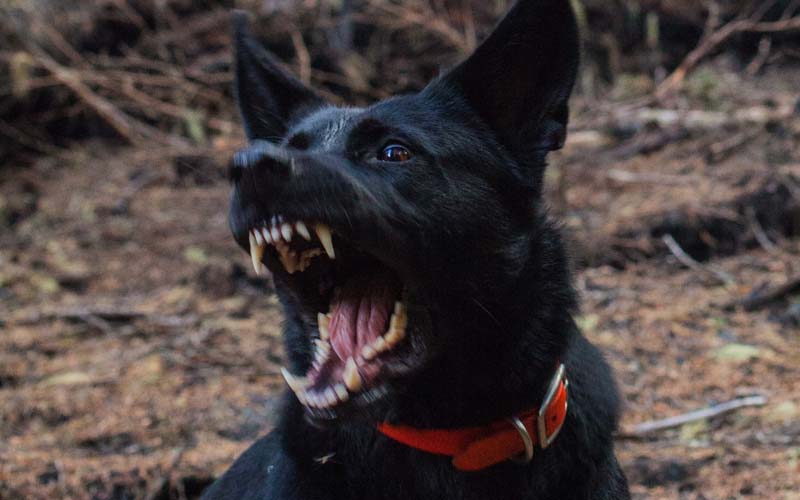
Here are just a few of the facts that were explained by 20-20:

  • 90% of dog bites happen to people who know the dogs
  • Most of the dogs that bite are the family pets
  • 60% to 70% of dog bites are to children or the elderly
  • 40% of the bites to children result in loss of facial tissue (lips, cheek etc.)
  • 1/2 of the claims made on homeowners insurance are dog bites claims
  • Over aggressiveness in dogs has a number of different causes that all can be traced back to
  • 2 different areas: poor breeding or poor socializing.

An over aggressive dog does not just rear its ugly head one day and become a monster. Throughout its life it has displayed warning signs that it's not a normal friendly pet. As a youngster it may have acted like a timid animal that wanted nothing to do with strangers or strange places. Or it could have slowly developed into a bully after growling at people who came near its toys or food dish.

We can't really blame the average pet owner for missing many of the early warning signs. If someone has never raised a dog before, he has enough problems teaching a puppy not to pee on the floor or to come when called. But this same pet owner still has the responsibility to recognize and deal with their adult dog that becomes overly aggressive at inappropriate times.

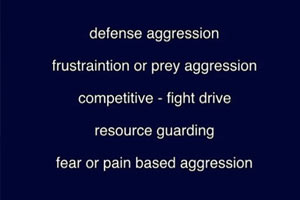
There are a number of different types of aggression that dogs will display. Below I have listed the main areas of aggression. I then explain how to deal with the problems related to each type of aggression. Understanding where aggression has its roots will help people understand the methods used in controlling the problem.

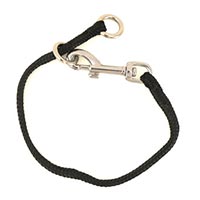
Prong Collars

Prong Collar


Types of Aggression:

  • Dominant Aggression
  • Territorial Aggression
  • Fear Aggression
  • Prey or Predatorial Aggression


Establishing Pack Structure with the Family Pet


$40.00+s&h
Establishing Pack Structure with the Family Pet DVD


Dominant Aggression:

Many people think it's cute when a young puppy growls and snaps at fingers that get to close to the food bowl or toys. They laugh and show their friends how tough this little pup is going to be when it grows up.

What they don't understand is that this dog is showing the early signs of dominance. The truth is that this pup is probably going to grow up to be aggressive to family members in addition to strangers. Early growling can easily develop into an adult that tries to take control of the house. Now, if this is a 8 pound Skipper Key there isn't much chance of that happening, but if its a baby Rottweiler who is going to grow into a 120 pound monster then this is a definite problem.

Dominant Aggression needs to be controlled from the minute it's recognized, (no matter how young or how small the dog is). I have just written an article titled Dealing with the Dominant Dog. People need to read this article if they feel that their dog falls into this category.

Dealing with the Dominant Dog

Dealing with the Dominant Dog eBook

eBook


An interesting point that 20-20 made is that more dog bites come from small dogs than from big dogs. The University of California did a study and found that dogs under 16 pounds are more likely to snap at people. My personal feeling is that "SMALL DOG OWNERS" do not perceive their dogs as being very dangerous. The majority of large dog owners make some attempt at controlling aggression problems, (even if it’s just giving the dog away or having it put to sleep). While the small dog owners often tend to ignore the problem and feel that their little terrier is just being cute when it growls at kids or guests that try and sit on the couch next to it. The fact is small dogs can bite SMALL KIDS in the face.

To get a handle on aggression people need to understand that above all else dogs are pack animals. Above and beyond all other inherited instincts they live a pack life that has been bred into them since the beginning of time. Their very nature demands a pack order and if one is not set up for them, they will take it upon themselves to develop their own pack order by which they live. If they do not look at the owner as the pack leader they will take it upon themselves to become the pack leader. This is why many dogs will accept commands from the man in the house but not the wife - or visa versa. It all comes down to how the dog views a person according to pack order.

The first thing that needs to happen when trying to get control of a dominant dog is to have his pack order changed. He needs to be moved to the bottom of the list in terms of pack order. This is done by controlling every aspect of the dog's life. Dominant dogs do not sleep on the bed or in the bedroom. The best place to sleep goes to the pack leader. Dominant dogs never eat from the table. In fact, they are crated during meal time and are always fed "after dinner," (lower pack members always eat last).

It is absolutely imperative that the dominant dog goes through obedience training and learns to mind. This is a very important part of establishing pack order. The obedience training should not be the straight motivational approach. Motivation is used but it must be tempered with corrections for not minding. I explain exactly how to do this in my video titled Basic Dog Obedience. If the dog’s dominance has developed to a point where it tries to attack the handler when it's corrected, then its time to muzzle the dog and get some professional help.


Basic Dog Obedience


$40.00+s&h
Basic Dog Obedience DVD


Another important point in establishing pack order is to remember the dog only plays with the toys the handler provides and the handler always takes possession of these toys at the end of the play session. The toys are ALWAYS put away and the dog is not allowed to play with them when the handler is not there. To leave them out only further stimulates a possessiveness in the dog for that toy. If the dog gets overly possessive towards a particular toy, then that toy is put away and never played with again.

People in protection dog sports are taught to play tug with their young pups. This is fine as long as the handler always takes the tug away from the dog at the end of the play session. It's also OK to offer a food treat when the tug is taken away, (or another toy like a tennis ball.) One should not allow the dog to win the tug and run off with it so that the dog ends up laying and chewing on it for an extended period of time. This only builds a possessive attitude which can be a problem later on as an adult. If your goal is not protection training a tug may not be a good choice for a toy with a dog that shows too much aggression at an early age.

In the end, the bottom line on establishing pack order is that dogs are always happier not having to be the pack leader. They are calmer and more relaxed when they realize that the pack leader is the one that controls their life.

If you notice that a pup is showing signs of aggression at an early age it is a good idea to have him neutered at about 6 months of age. Early neutering has a significant effect on an aggressive temperament. But if your goal is to raise a protection dog then you will be forced to deal with the aggression problem in other ways. Neutering an adult dog (older than 18 months of age) has little or no effect on an already maturing dog with aggression problems.


Dominant Dog Collar

Dominant Dog Collar


Territorial Based Aggression:

Territorial aggression can be seen as a form of dominance. The dog learns to look at the yard, the car or the house as his. The truly dominant dog may even think he needs to make a statement over who owns what, but in most cases the territorial dog is going to defend his property from strangers.

The perfect example of territorial aggression is demonstrated towards the mailman or meter reader. People think it's the uniform that sets the dogs off towards the friendly letter carrier. That is not the case. What in effect happens is, the mailman approaches and the dog barks. The mailman deposits the mail and leaves. In the dog’s eyes the person left because he (the dog) barked at them. So through repetition he learns that if he barks at these people they will leave. Some dogs learn that if they bark very aggressively people will leave faster.

People that have guard dogs want territorial aggression in their dogs. They want a dog that barks (and sometimes even bites) a stranger that enters their house in the middle of the night. But these same people don't want their dog to attack everyone that gets in their car or every guest that comes over for dinner. No one likes the idea that they have a Cujo that has to be locked in the basement every time one of the kids has a friend over to play. Dogs with problems like this are showing territorial aggression.

Controlling territorial aggression begins with establishing yourself as the pack leader. In the wild it’s the pack leader that tells the rest of the pack where their territory is. Not allowing the dog to look at the back yard as "his back yard" is the first step. Some people think that leaving the dog in the back yard during the day is good for the dog. The fact is that most dogs will lie down and sleep all day waiting for the owner to come home. He's a pack animal and he will wait for members of his pack to return. The dog could just as easily sleep in the house, dog kennel or a dog crate.

If people want a dog to become a protection dog they must train their dog both in obedience and protection work. The dog must learn that there are rules of engagement that are established by the pack leader. A good personal protection dog is actually a dog with good nerves and sound temperament. My police dog is the perfect example. He is very approachable. He can go into school rooms with small children, he is no threat to the UPS men and women that come into the office every day or to any visitor that comes to the kennels. But this same dog has bitten a good many bad guys while working as a police dog. I would not want to be the person that tries to come into my office where he is left at night. Through training he knows that the office at night is a "free fire zone" and anyone that tries to get in at night is fair game.
Of course the most dangerous of all animals in terms of territorial aggression is the wolf-hybrid. The wolf-hybrid has killed or injured more children per capita than any other breed of dog. The majority of their kills are related to territorial aggression towards small children. If you would like to read more about these animals and how they kill our children, read the articles I have written on my web site concerning wolf-hybrids being kid killers.


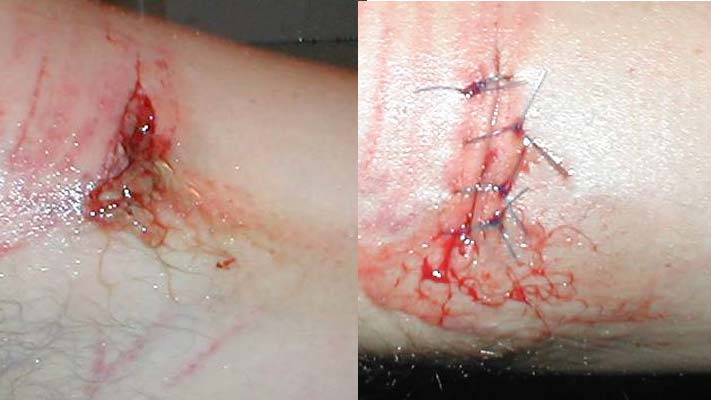
Dog Bite Wound

A wound from a dog bite that resulted from breaking up a dog fight


Dog Bite Wound with Stitches


The same wound after being stiched up. If you don't know how to break up a dog fight you need to read my article on this subject


How to Break Up a Dog Fight

How to Break Up a Dog Fight eBook

eBook


Fear Based Aggression:

We have all heard the term "fear biter." These types of dogs want nothing to do with strange people or strange places. They learn that if a stranger tries to approach and they show a little tooth and growl the stranger will back away and leave them alone. This behavior manifests itself into a dog that will try and bite someone it doesn't know the minute that person turns its back on them. Fear biters prefer to bite from the rear as this presents much less of a threat to them than a frontal attack. So a fear biter is a learned response from a dog with very bad nerves.

Fear biters are almost always dogs that have weak temperaments and poor nerves. They are a product of bad breeding. Many people mistakenly confuse fear biters as dogs that have been abused at an early age. How often have you heard someone say "I got my dog from the shelter and it was really abused by someone before I got it. That's why it acts the way that is does."? The fact is that most of these dogs ended up in the pound or shelter because of the bad temperament they had to begin with. They were not made shy, they were born shy.

With that said, there are dogs that have bad temperaments as a result of poor environments - which basically means poor socializing.

There are a few things that people can try before making the decision to put a dog down or before they give it away:

  • One of the things to do with dogs that are shy of people in given situations is to set up training sessions that build confidence and security. For example if your dog is shy of people on walks, then have a friend meet you on a walk and give the dog a meat treat. If your dog is aggressive towards the neighbor's kids, have them come over when the dog is in the crate and feed the dog meat treats through the door of the crate. If they are afraid to let the dog eat from their fingers then put the meat treats on a tooth pick and stick it through the bars of the cage. Some dogs will quickly learn that kids and strangers are not all bad.

  • If you are unlucky enough to already own a fearful shy pup the main solution begins with socializing the dog. Take it everywhere you go. Make sure to control its environment to the extent that you do not place it in a situation where it is extremely afraid. If it shows concern, pick it up or get down on your knees, pet and calm it down. Show it that there is nothing to be afraid of.

  • Obedience training and socializing are the best solutions for most shy dogs.
    It is very important to be very careful with your pup around older dogs. Not every adult dog you see likes puppies. I have found that pups that are attacked at an early age turn out to be dog aggressive as an adult. These pups quickly learn that if they growl at strange dogs they will be left alone. This action manifests itself into the adult dog that will attack another dog for no apparent reason. These dogs live under the code "attack him before he attacks me" principle. If you have a dog like this you need to read my article titled How to Break Up a Dog Fight - Without Getting Hurt.

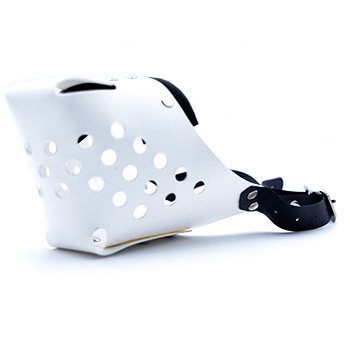
  • Rather than be forced to walk your dog in the middle of the night (when no one is around) you would be better advised to get a muzzle (like one of the inexpensive plastic ones that we sell) and use it during your socializing and obedience lessons. If you plan to use a muzzle in training make sure to get the dog used to wearing it before starting to train with it on. Put the muzzle on just before feeding for an hour or so for a week, or just before going out in the back yard to play. Let the dog think it always gets the muzzle on just before doing something that it likes to do.

The bottom line is that some dogs are so poorly bred that no amount of training or socializing is going to overcome the fears and ghosts in their heads. It's my opinion that these dogs should be put to sleep and the owner should make a bigger effort to pick a pup from sound parents the next time they get a dog.


Muzzles

Dog Muzzles


Prey or Predatorial Aggression:

Dog with a squirrel


Some breeds of dogs are more prone to prey aggression than others. Your herding breeds have a great deal of prey drive. They will instinctively chase something that moves. This can be disastrous if it's an untrained dog that decides its prey is a running child.

Once again the most effective thing to control this form of aggression is obedience training with the emphasis being placed on the recall and the down. Some dogs in high prey may respond better to the "down command,” while others may respond better to the "recall." The bottom line is you need to be able to stop your dog if he is chasing after someone or something.

You can build your control during play exercises by making the dog "lay down" before he is allowed to chase a thrown ball (use a long line or electric collar if necessary). You can teach him the 2 ball game where one toy is tossed and when the dog is 1/2 way to the ball he is called back and sent after a second ball that is tossed as soon as he returns. This is most easily trained with low-level electric training. ( I will write an article on this shortly). You can even down your dog, throw a toy and then go and get it yourself to toss it a second time before he is allowed to get it. This all works towards establishing you as the pack leader and builds control into the dog.

While the wolf-hybrid may be the most dangerous animal out there in terms of aggression towards kids, lets not underestimate the untrained dominant border collie or any other breed. This does not have to be a breed specific concern.

Aggressive Dog

Children and Dogs:

All children should be trained in how to deal with strange dogs. If children understand some basic rules in how to interact with dogs there would be a lot less kids being bitten every year. Here are a few ideas:

  • Always ask permission to pet a dog before attempting to do so.
  • They should never be allowed to tease a strange dog.
  • If a strange dog approaches a child they should:
    • stand still
    • be quiet
    • do not make direct eye contact with the animal (dogs relate direct eye contact to a challenge)


Preventing Dog Bites in Children

Preventing Dog Bites in Children eBook

eBook


Conclusion:

If all dogs were well socialized and had gone through basic obedience lessons (either at home or in classes) there would be a lot less problems with dominant and over aggressive dogs. A little bit of education on the handlers part also goes a long way towards producing an animal that is not a danger to society.

One last important point is this: "handler aggression towards the dog is not going to eliminate aggression in dogs." This never works. In most cases these dogs have found out that the solution to their problem is aggression. If the handler decides he is going to "kick some butt" with this dog, the dog may decide that the handler is the problem and he has learned to solve his problems with aggression.

The remainder of this article has some basic questions on aggressive dogs. I have many many more questions answered in the Q&A section of the web site on aggressive dogs.

Innocent looking dog is really aggressive

"This is a dangerous dog. It may look cute, but it went to 5 different groomers before the owners found someone who trains Schutzhund dogs that understoods dominant dogs"


I have done a 71 Minutes podcast titled "Breaking Up a Dog Fights without Getting Hurt"

DOWNLOAD - Dog Fight Podcast in MP3 format


$1.00+s&h

71 Minute Audio CD $8.00 -
Breaking Up Dog Fights Without Getting Hurt


$8.00+s&h

Dog fights are violent, loud and dangerous events. I get emails every day on dog fights. As I wrote this description I got 2 emails. In email the family had two dogs . Their female GSD had just killed their dachshund. In the second email this family's dog had just been in a fight with a neighbors dog and done $1,400 damage.

In the mid 1990's I wrote an article on How to Break Up A Dog Fight - that article is still on my web site. This 52 Minute CD is an update of that article. The information in the podcast and on the CD has more details on making the decision about even trying to step in to break up a fight, it discusses many methods used to break up fights and it tells how to break up a fight when you are alone. There is also an extensive section on preventing dogs fights.

The CD will play in any CD player.


Question:

We have corresponded a bit about the trial of the Rotweiler, and your excellent explanation of what Schutzhund is and isn't.

I wanted to touch base with you about a situation which has come to light here in Georgia involving one of my clients.

This woman took her lovely 8 month old golden bitch to a trainer at a pet supply store for basic pet training. During this class, she saw dogs hung, and hit in the face with what she described as a fiberglass whip. The trainer asked if anyone had a problem with him doing this, and my client Jenny is the only one who raised her hand. ( I guess the rest thought they would get a whipping if they spoke up). The trainer then explained that this was a method to teach the dog not to be barking aggressively at the trainer. ("He is barking aggressively at me, and this shows him that he is not to do that.") They did not hit her golden, but she was very upset and left. The trainer told her, "You better be careful. Those goldens can be vicious, too."

Ed, one of these dogs was a shepherd, and one was a dachshund! This was a pet class!!!!

This woman did not consult me as her attorney, but as a dog loving friend, (our dogs are play buddies), and I am not doing anything for her as her attorney. But I know that you have a good sense of what is proper and what is not, so I am asking for your opinion. There may be something I am ignorant of, but this sounds abusive to me. I know that a stick is used in Schutzhund for "stroking" (I think that is what it is called), but this incident sounds totally out of line to me.

I have two dobes, one 18 months and one 12 weeks. I can't imagine what kind of damage is being done to people's pets-- such behavior to my dogs would ruin them. I have trained my own dobes for over 15 years, and this just doesn't sound right to me. I have encouraged her to report this, but I did want to ask you about this, use of a stick to hit a dog in the face to cure an aggression problem. (Sounds like it is creating one!!!!)

Am I missing something here, or is this just wrong?

I would greatly appreciate any comments you may have on the subject. I am afraid this guy will try to parallel his idea of training with Schutzhund, and I don't want to have that happen and detract from what is really going on.

Susan Kramer

Answer:

You are not missing anything here. This sounds like a trainer who does not quite have it together. If what you say is accurate, this is abusive training. There are other measures to try before people resort to this kind of (for lack of a better word) training.

In my opinion there is no place in dog training for a stranger to be correcting a dog at this level for doing anything. Why should my dog submit to a stranger that he has no bond for or no reason to mind. This is stupid. It shows a complete lack of understanding of how a dog looks at different situations.

Now, with this said, I do think there are places where a dog needs to be strung up by his own handler, but this is always done as a last resort. The dog has refused to respond to commands to "leave it" in the distraction portion of obedience training when other dogs are present, then he needs good hard, solid corrections. This begins with prong collar corrections, or in the hands of an experienced trainer, and electric collar.

If the dog still refuses to respond then the owner is in a situation where the dog may be dangerous to other dogs. If a dog fight results from this dog attacking another dog, there is a danger that one of the owners could be bit in the process of breaking up the fight. So a decision needs to be made:

  1. Does the owner have the temperament and strength to be able to deal with this dog in the kind of forceful manner that is going to result in behavior modification. Some owners simply can not - or will not correct the dog at a level that is required to make a change. In these cases the dog may need to be put in another home with a stronger handler.

  2. If the owner can make the corrections needed to get the dogs attention, then the dog needs to be strung up. When this is done, it is not accompanied by a lot of screaming and fighting with the dog. The handler must be calm and quiet - just calmly saying "YOU WILL NOT DO THIS - No NO No !!!!!"

  3. Usually these kinds of dogs do not respect the handler rank or pack position. So fighting with the dog only puts it in fight drive and he will fight until he passes out - then wake up and fight again. If everything is calm, then he never goes into fight drive and therefore does not wake up ready to fight again. They wake up understanding that this handler is stronger than me and can kill me at any time he or she wishes. This is the attitude the dog must have to really understand that "NO" means "NO" In actuality, this is nothing more than obedience training.

  4. The same procedure needs to be used on dogs that are aggressive to their handlers. This shows up when the handler gives a correction that the dog does not like.

There is NO PLACE in dog training for a handler to hit a dog with a stick (like you describe in your e-mail about this class instructor). This is abusive training and simply not right.

I need to point out that this method of stringing a dog up is the last resort and not the first training method to try on overly aggressive dogs. People need to run their dogs through the kind of obedience I describe in my Basic Dog Obedience video. Often times this is all that is needed to teach a dog to mind (and in reality that is all that we are trying to do here).


Question:

After reading your page, it is evident you care a lot about dogs and can appreciate their differences from human beings....I hope you can help us!!

My husband and I have a beautiful 3-year-old yellow labrador named Skye. We picked her out of a litter (of 11) pups at about 7 weeks of age. We met the parents on site, which were both beautiful, gentle animals.

After about 3 days, she seemed to become very comfortable with my husband and I. However we noticed that she had an immediate dislike of other people. She was born in Shallote, NC and we happened to be vacationing at the time (so we were at the beach). There were no other people around except for my husband and I, it's a very quiet beach. However, the few people that would see us playing with her would come up and try to pet her. She was extremely timid and shied away from everyone except for my husband and I.

The next week my father in law came down to the beach condo and she acted the same way with him... for a few days, then she became pretty comfortable around him as well. Skye pretty much maintained this odd shy behavior until she became about 8 months old at which time her timidness turned to aggression. She began to bark and growl at people when they would come to our house.

When Skye was about 1 yr. old we got another lab, (chocolate), to keep her company while we worked during the days. She is and has been perfectly fine with him along with other puppies and dogs. (She shows no aggression towards animals).

Recently we took another vacation and thought it was time (probably past time) to have a dog professional work with Skye to see if he could determine what the stimulus for the aggression was. Skye had never stayed in a kennel before (we usually have my husband's father feed her because she's comfortable with that). In preparation we had our vet do a couple of different blood panels to see if she had any abnormalities in her blood chemistry, everything came back normal.

When we arrived today we were told that Skye was "too aggressive to train" and they recommended putting her to sleep. We discussed the possibilities of the cause and the trainer really had no answers. He along with four other colleagues(2 females/2 males) attempted to work with Skye during a week long period to no avail. She would not even allow them into her 15' dog run.

When we walked back to get her (with the trainer) she was in a state of angst I have never seen in animal. I was very fearful myself and at the same time felt tremendous pity for her as it was obvious she was terrified. As soon as the trainer left the kennel area, she calmed, walked over to the fence, licked us and began to wag her tail.

The trainer explained to us today that he really has no suggestions for a dog as aggressive as Skye. She has never been abused or mistreated in anyway, although it's evident that she is scared to death of people in general.

Can you offer me any advise or professionals you are aware of that can help her? We love her dearly and do not want to lose her. However, we live in a large, young neighborhood with many small children. We keep Skye and Rain(our other lab) enclosed in a 6' privacy fence. However, it is possible that someone might come over the fence to retrieve a lost ball or something.

Do we have any options outside of putting her down? By the way, Rain portrays opposite behavior to people, (he could literally lick someone to death).

Sincerely,
Nickie Yaun

Answer:

There are a number of issues here. You have failed your dog in that you have not provided pack strucutre training and correct obedience training. You also don't understand your responsibility of being a pack leader.

When dogs have weak nerves the handlers job is to protect them from strangers (NO ONE PETS THESE DOGS) and you should train this dog that unwarranted aggression is unacceptable - ALWAYS UNACCEPTIBLE !!

Every time the dog shows unwarranted aggression it needs a correction - the level of correction should be firm enough that the next time the dog thinks about being aggressive it remembers the last correction.

If these dogs are comfortable in the fact that their owner is not going to allow strangers near them they become more confident. They dont feel the need to be aggressive because they know the owner is going to take care of business.

Get my DVD ESTABLISHING PACK STRUCTURE WITH THE FAMILY DOG and Basic Dog Obedience - some people may need Dealing with Dominant and Aggressive Dog.

If you have a concern about people coming into your back yard you should build a secure dog kennel with a top. I have an article on my web site on how to do this and make it look nice. You may also want to have the dog wear a muzzle while its loose in the yard - we sell very nice wire basket muzzles that dogs can drink through.


Question:

I have a male German Shepherd pup that is 11 months old now. He was neutered when he was 9 1/2 months old. When I purchased him he was 8 weeks old. At that time I socialized him by bringing him to my sons school & allowing the other children to play & hold him. When he reached 18 weeks I took him to an obedience class that had 10 other dogs in it. At first he would hide behind me a little but eventually came out from behind. He didn't like the instructor because she was more dominant than him. The instructor thought that he might be a fear biter, but said that we should give him a chance and he might out grow it. When strangers come over to him he will keep his ground and not do anything unless they reach over to pet him. When that happens he will snap and bark and act like he's going to take their hand off.

As far as our family, he's great! He shows no aggression towards any of us or my 9-year-old son (who can do anything short of riding him). One day a friend of my son's was at the front door and when he saw the dog he got scared and started to run away. The dog chased him & nipped his backside with no damage (thank goodness), I took this as his prey instinct and vowed to keep better control of him at the door. We had some friends over for dinner one evening and he was kept on a leash with no problems until my friend went to pet him. At that time he barked and snapped at him, yet the wife went over to him and reaching underhanded fed the dog with no problems. Is there something that triggers him when someone reaches overhand compared to underhand?

When we walk or I ride my bicycle with him he shows no aggression towards any other animals or people around us. We spoke to our vet and discussed putting the dog on Prozac after seeing 3 different articles on television including one on Animal Planet and public television. The vet opted not to start the dog on the medication but spoke to a few other vets in the area looking for a behaviorist. He found a woman who trains German Shepherds and Belgian Malinios' for police departments and schutzhund. She had us bring the dog over for examination and she said that he was okay and just needed to be better trained. After 5 classes we went on vacation and kenneled the dog with this woman. She said that he would not let her or anyone else in the kennel. He would back up to the furthest end, kind of hunch his back and growl and bark at her. He would just let her in far enough to leave food or water and would not eat until she left. She said that given the chance he would attack her. During this second round of obedience classes he would bark once at another dog and after a small correction he will not do it again during the rest of the class. He will now sit lined up with the other dogs and stay on a sit stay, let me walk away and not move until the recall.

My instructor found your web site & copied your article on aggressive dogs, gave it to me and suggested I email you (hence this letter). In reading the article the dog doesn't really behave totally in any of the four types of aggression, he might have just a little in each one. Is this inherent to German Shepherds? Do you have any suggestions on what I can do to stop this behavior towards strangers? I would appreciate any help you can give.

Thank you,
Steven Horowitz

Answer:

You have described enough for me to recommend that you put this dog to sleep. Neither you or this woman are going to change the way that this dog is acting and he is going to end up biting someone and then you will either face a law suit or worse.

This dog has very poor nerves. He is a fear biter - that's what fear biters are, (dogs with weak nerves). Read my articles on the drives of protection training.

Your dog did not bite the child in the butt because it had good prey drive, it did it because it has weak nerves and attacked the child because he did not want him to come back, (he showed his weakness through aggression), which is what he does in every other aspect of his life when around strange places or strange people.

The reason that the dog tolerates your son is because he is part of the family pack - but your son's friends are in danger. If you choose to allow this to happen and one of them get bit - then you are directly responsible for the dog bite (not the dog).

If you want to find a place for this dog - he belongs in a area where he is an alarm dog - someplace that he is expected to bark and scare people off (he will never attack someone unless he is cornered and goes into "fight or flight").


Theory of Corrections

in Dog Training

Theory of Corrections in Dog Training eBook

eBook


Question:

You have a wonderful web site. I have a question; I just bought a new house a year ago and own two pit bulls; one female of 4 years and a male of three years.

For the first few months, my neighbors children stayed away from our fenced yard, but now the boys climbed on top of the fence to look in my back yard when my male pit was out (he weighs about 85 pounds) my dog ran towards them and growled and barked. When I told my dog firmly no he ran to the patio. I never have the dogs out back for any length of time alone and during the day keep the large male in a cage and my smaller female in the house. I also have a completely enclosed back yard with locked gates, posted dog warnings, and my house is alarmed. What concerns me is that the children might come over the fence when I am gardening or have let the dogs out for a moment to do their dog business. They have never been around children and they will bark at children too, not just adults. My female appears not to like children much as once a young girl started to pet her and my dog growled and acted unfriendly so since then I do not let children come close. Neither dogs have bitten a person or done damage to themselves - they bark at strangers from the house, and when I take them for a walk they will ignore people for the most part unless a person appears threatening-then they growl at which point I correct them to stop and we walk on. What type of territorial behavior might I expect if the boys do enter my yard? And I think if I am in the back yard at the time, that might be worse.

Thanks for any help you may give me.

Linda

Answer:

I cannot answer the question on what to expect. I do not know your dogs.

I would expose the dogs to children when they are on leash, one at a time, and not on your property. I would set it up that the children have pieces of food to give the dogs. They should not try and give the food from their hand but rather toss it to the dogs feet and let the dog pick it up from the ground.

If the dog growls or shows any aggression to the kids I would correct the dog very hard. The dogs must completely understand that children are not to be growled at or threatened in any way. But if you do your job correctly the dogs will look at kids as hot dog machines and you will not have a problem.

Under the circumstance, you should not allow your dogs to be outside when you are not there to supervise. It is a mistake to let them be un-attended in the yard.

You also need to make sure your dogs are 110% obedience trained. If you would like to learn more about the principles of obedience training a dog, read the description for my Basic Dog Obedience video. You will probably find that you have not had the full picture on the steps of training a dog must go through before it can be considered fully trained. You can also read why I am not a fan of taking an untrained dog to obedience classes.


Question:

Hello,

I have recently purchased your basic training video and I am waiting for it to arrive in the mail. In the meantime, I have a 4 month old beagle/chow mix. She has a major problem if she finds something on the floor, a wrapper, crayon (my 2 year olds), crumbs, etc. that when I try to go near her to get it away from her, she charges me, or anyone who tries to take it away from her with her teeth showing, growling, and trying to bite anything she can get her teeth on. Yesterday, she had me backed into a corner trying to litterally attack me. I took her to a behaviorist today, and she put a prong collar on her and corrected her. My puppy fought for 15 minutes straight trying to attack the trainer, while she was correcting my dog. After she settled down, the trainer noticed she was bleeding. My dog had ripped out 4 of her top baby teeth while biting the chain. I am very frightened for my sons safety as well as mine and my husbands safety. Is this dog trainable, or will it grow up to be a very aggressive and mean dog?? With her behavior this severe, and her being only 4 months old, should I keep her, give her away, or put her down?? I adopted her from the pound when she was 11 weeks old.

Thanks!!

Leslie

Answer:

You absolutely need to find a new home for this dog. Even if it means taking it to the Humane Society. This dog is going to attack your baby and you do not have the skill to deal with this kind of aggression. It's only going to get worse. When this dog is an adult it could kill your child.


Question:

Hi Ed,

I'm having some dominance agression problems with my dog. She's a 42 pound 9 year old cocker spaniel/lab mix who has always shown signs of aggression and has snapped at me when I try to take food from her. I got her when I was just 19 and I see now that I did not train her correctly: I roughoused with her, let her sleep with me, did all those things I know now that I shouldn't have done. I wonder if it's too late now....

Pepper has been in many fights, especially with other females, and has showed signs of aggression towards people as well: service people, mail carriers, etc. Last year she either bit or scratched a friend's 18 month old baby (he was tugging on her and was unattended at the time) but thankfully my friend has dogs and was so understanding.

Now that she has arthritis in her hind legs, Pepper's aggression seems to be more pronounced. She takes meds for the arthritis but I wonder if the pain is making her meaner. When I walk her, she tries to lunge at cars, bikes, people jogging or walking by, whatever. I never know when she's going to react so I keep a tight leash on her. She's almost uncontrollable if we see another dog. I make her sit and pet her and talk gently into her ear as another dog passes us by but she still goes crazy.

It's getting to the point that I'm just tired of all of this, and also afraid that she may hurt someone, or be hurt in a fight. Just last week we were at a kid's soccer game and she lunged (leashed) at a kid who walked by bouncing a ball. I felt terrible and the kid's father wasn't too pleased either.

I adopted a kitten a couple of months ago and Pepper gets along great with her, most of the time. She seems gentle with Chile but does snarl and growl when the kitten gets close to her food or bothers her when she's resting. Pepper has some doggie friends but it takes her a long time to make buddies, as she'll attack during the first meetings.

I keep her leashed at all times now, just to be safe. But she's restless and I'm afraid to walkher for fear she may lunge at someone.

Lately I've considered putting her down....she's had a long, happy life with me and I know her arthritis will only get worse with time. But that's such a terrible decision to make.I would appreciate any advice you could give me.

Thanks,

Nena

Answer:

I have to tell you that you have created this dog by enabling it through bad decisions in how you live with this dog. You have done so many things wrong and continued to do them for the life of the dog that I don’t know what to say.

I don’t consider a 9 year old dog that old. You can help the dog with Glucosamine. You can still solve this dog's dominance issues with correct training. No dog is too old to train. Bottom line is that unless YOU make the decision to change how you live with dogs you will never change this problem and your next dog will have the same problem.

You screwed this dog up by enabling it. Coming to me and asking if its OK to kill the dog for your mistakes is not going to get any sympathy from me.


Ed Frawley's Philosophy on Dog Training

Ed Frawley's Philosophy on Dog Training eBook

eBook


Question About An Aggressive Dog:

I have read several of your articles and am interested in purchasing some of the training videos. But before I make that committment, I would like to share my delimma and hope that you would provide me some guidance.

I have a 7 month old female red doberman named Raika. She was spayed just before Thanksgiving. We have been attending obedience classes on a weekly basis, and I work with her on the commands. This is a Pet Ware House type class; however, which as you mention on your website is a "feel good" type of situation. This is why I am considering your videos.

Raika is well socialized with other dogs, both larger and smaller. Besides class, there are several other dog owners in the neighborhood whom we have "dates" with to allow the dogs off the leash to play. She has been around several small children and never seemed to have a problem with them other than jumping on them and knocking them down which of course caused them to cry. This is getting better with consistent training.

But an incident which just occurred has me wondering whether I have "ruined" my dog. After dark, a neighbor who owns a 3 year old black female lab and I let the dogs off the leashes to play (although in hindsight this was an EXTREMELY bad idea and will never occur again). We had checked around the common area, and there were no additional people present, it was after dark and cold, so we though the dogs would be fine. However, a couple of very small children approximately 4 or 5 years of age approached the common area from behind some other homes, unsupervised. They were laughing and making high pitched noises. Raika immediately ran towards them with a deep barking. She ignored all of my commands to come. The other dog also ran up to the children; however, it was clear that Raika was the instigator.

Of course, the children ran screaming, and the dogs ran after them. The dogs did not touch any of the children. The children's father (i assume), heard the kids screaming and ran up to Raika waiving his arms and yelling back at her and me, threatening to shoot us, kill us (you get the picture). Raika immediately ran towards me. I immediately corrected her and all play immediately ceased, and she was confined.

I am still extremely upset. This is entirely my fault. I am embarrased and angry with myself that I would cause someone to be so fearful for his children that he would issue such foul and severe threats.

I guess my main question is whether or not Raika is savagable. Have I "ruined her" to the point of no return. I deeply love her, but also realize that I don't want to be a horrible dog owner with a dangerous animal.

Even though my husband bought Raika for me as a birthday present, she is more attached to him. He is able to spend more time with her on a daily basis. I, however, take Raika to her classes, and we both practice the commands with her. She minds us both pretty well. Although she has recently developed a bad habit of when she wants your attention to play with a toy or just attention, and doesn't get it -- she will nip.

I do not allow this, and will sharply smack her, so she doesn't do it with me. However, she does this to my husband and teenage daughter.

I would appreciate any advice as I am at a loss for what to do. I hate the thought of putting her down because of my own failure, but a child's safety is much more important.

Christina

Answer:

This is an owner mistake problem and not a dog problem. So the question is are you salvageable? Only you can answer that question.

You have made mistakes. You do things I would never do with my dogs.

Here is some reading material. Read it and make up your own mind:

I recommend that you go to my web site and read the article I wrote on my philosophy of dog training. I think you will get some good ideas there.

You may want to read the article I wrote titled The Ground Work to Becoming a Pack Leader. This is the protocol we use in our home when we raise a puppy for ourselves. It is also the part of the protocol we use to solving behavioral problems such as dominance and/or house breaking problems.

I recommend that you visit my web site and read a training article I recently wrote titled THE THEORY OF CORRECTIONS IN DOG TRAINING.

The reason I wrote this article was to help people understand how to motivate their dogs in training. Most people either use the wrong kind of correction or over correct dogs in training. I am not a fan of “force training” (although I most definitely believe that every dog needs to go through a correction phase). By exploring corrections in training you will become a better dog trainer.

I raise my dogs to respect a family pack and a pack leader (me). You are not doing this.

Here are some of my training DVD’s that I have done. You can determine which you need.

Basic Dog Obedience

How to Deal with Dominant and Aggressive Dogs

Electric Collar Training for the Pet Owner

It is NEVER a dog problem – not EVER – it is always an owner problem. You can't be expected to genetically know what to do, but you can be expected to educate yourself.

Good luck with your dog. You are making mistakes that a million other people have made before you – my site is 10,000 pages when it is printed out – take advantage of the material.

I have a saying that I like to tell people. It goes like this ” Everyone has an opinion on how to train a dog – just ask your barber, your mailman and your neighbor”

The problem is very few people have the experience to back up their opinions. This results in a lot of bad information being passed out on how to deal with behavioral problems.

Pet owners like yourself need to figure out who has the experience to warrant being listened to. Dog training for me is not a hobby. It’s a way of life. I have been training dogs for over 40 years. I have bred over 350 litters of working bloodline German Shepherds, I was a police K9 handler on a drug task force for 10 years and I have produced over 100 videos on dog training. Many of them directed towards professional dog trainers.

The web board has over 90,000 posts with 7500 or more members. I don’t have time to answer a lot of personal emails but with this said I will almost guarantee you that your problems have been answered someplace on my web site. It’s the largest dog training web site on the Internet.


Ground Work to Becoming a Pack Leader

Ground Work to Becoming a Pack Leader eBook

eBook


Question About Dog Aggressive Toward Humans:

Mr. Frawley,

I'm thinking of getting your DVD on Aggressive Dog training. In the beginning I checked his pedigree on both sides and his Fear Aggression as well as the all the other aggressions are quite Genetic. He certainly wasn't bred for good temperament. When we couldn't get near his Mother because of her barking and we were told she had recently bit someone I should have left.

He's had basic training, which I'm sure my Adult Daughter has not followed thru completely and I am sure He thinks he's the Alpha, in fact, I know he thinks he's the Alpha. Just reading your articles on using NO and a correction and Yes with the Markers make a lot of sense to me. We are using your Dominant Dog collar. He's very good in his Agility Class which he has been in for over a year and loves the dog owners and the dogs. However, I cannot get my own family, Son & Grandkids, in the house or anyone else for that matter.

Do you feel that following your video will be able to over come some of these behaviors based on a great deal of it being Genetic? I've got my daughter trying to get out and in the house first and it's a battle who gets in first. I'd enjoy hearing from you.

Beverly

Answer:

It does not really matter if this is genetic or not at this point. When a dog is this aggressive you have to act.

If it were my dog I would do the following things (you may have done them):

1- I would be using a dog crate

2- I would run the dog through my Basic Dog Obedience Program

3- I would then run the dog through the DOMINANT and AGGRESSIVE DOG Program

4- Once that was done I would finish the training with a remote collar – I use a Dogtra 1700 on my personal dog

This may seem like a lot but in the end the dog would be trained and controllable in all situations. I would control the environment the dog is allowed to be in by using the dog crate and I would NEVER take the dog outside without a remote collar on.

In the end the dog will be more relaxed because it will understand EXACTLY what is expected and it will accept that.


Remote Collar Training for the Pet Owner


$40.00+s&h
Remote Collar Training DVD


Question on Dog Aggressiveness Toward Strangers:

We have a 16 month old German Shep. Our problem is that he has gotten really bad about people he doesn't know well coming into the house. He gets very aggressive and barks at them like he is going to eat them. He will not calm down or respond to any command. I have to put him in his cage and sometimes he continues to bark. Usaully after they are there awhile and he has calmed down I can let him out and he is fine. He has also always seemed to not like men very much. He use to be very good with strange women and children but lately I don't trust any strangers approaching him. There have been a few occasions lately when on walks I will stop and talk to someone he will sit and be fine but if they reach out to him he will growl. I understand they can be slow to warm to strangers but is there something I can do to stop this behavior because it is getting worse. I want him to be protective but he has been getting way too protective and I worry if I don't find a way to correct it he is going to bite someone. I appreciate any advise you can send.

Thanks Trish

Answer:

There are several things you need to do – number one is educate yourself so you are prepared to fix this problem (and it is fixable if you're willing to make the changes and do the work in training).

Your dog is maturing (I discuss this in my article on Dealing with Dominant Dogs) and you need to become a student of pack structure – which you don’t understand now.

I recommend that you go to my web site and read the article I wrote on my philosophy of dog training. I think you will get some good ideas there http://leerburg.com/philosohy.htm

This dog is not trained to distraction. That’s obvious from your email. He does not mind when distracted. Get my DVD on Basic Dog Obedience.

I will tell you that obedience training is only about 25% of the solution but it’s a part that HAS TO BE THERE OR NOTHING ELSE WORKS.

Then you need to do the work in my DVD DEALING WITH DOMINAnT AND AGGRESSIVE DOGS.

The bottom line is you have more to learn than your dog. These problems can be fixed by you if you are prepared to do the work.

I also strongly suggest you NOT LET THE DOG out of the crate when people come. Not unless you are prepared to deal with a dog bite. You only need one to be placed in a situation where the dog will be put to sleep and you are dealing with lawyers. If that happens this is not a dog problem it’s a people problem because it's irresponsible to assume this dog will not bite at this point in its life.

I strongly suggest that you do what I talk about here.


Electronic Collars

Electric Collars


Question:

Hello,

I am hoping you can help me. 3 years ago,i was given a dog. He was 8 weeks old at the time. Just recently i found out he is a Catalan Sheepdog. I had read that this dog is the only herding dog that can herd a flock without a shephard present. I don't have sheep and only got my dog as a pet. Here is what is happening:

When my husband,children and i go out side with him in the back yard,he runs circles around us barking until we gather in a tight ball....we ususally all,including the dog,go inside after this because i have no idea what he wants from us. Well,i always thought it was cute,but we had a friend over and we all went outside to the back yard...we began to walk around and he started to bark and grab (not bite hard) at the friends clothes...i told her to come closer to us...when she did he began to circle us.

On another occassion,my daughter,who is 12 years old,had a friend over of the same age...her friend forgot something in a back room and began to jog down the hallway...my dog barked and grabbed on to the friends clothes as to control the friend...i think the dog did not like that the friend was jogging or something.

My dog is friendly and has never shown his teeth to anyone,so i was never concerned with him being around people or children. So i don't know what to think when he is grabbing people clothes....he doesn't grab at the families clothes.

I guess what i am asking:

Is it normal for a sheep dog to do this? Will he have the potential to bite? I have told him to stop,sit,lay...but he doesn't always stop. I don't want to punish him because i don't know enough about herd dogs...i don't want to damage him...if this is what he is programmed to do. So any suggestions on how i can handle this that would be healthy for my dog,it would be greatly appreciated.

Regards,

Lisa

Answer:

I am sorry to say but this is an owner problem and not a dog problem.

You are always going to be exposed to people who offer advice on how to fix your dog's behavioral issues.

The problem is that most of these people don’t have the experience to offer sound advice. This results in a lot of bad information being passed out on how to deal with behavioral problems.

Pet owners like yourself need to figure out who has the experience to warrant being listened to.

Dog training is not my hobby, it’s a way of life. I have been training dogs for over 45 years. I have bred over 350 litters of working bloodline German Shepherds, I was a police K9 handler on a drug task force for 10 years and I have produced over 120 videos on dog training. Many of them directed towards professional dog trainers.

If my web site were printed out it would be over 10,000 pages. It is the largest dog training web site on the Internet. I have written 300 training article which are included on my site, I also have a dog training web discussion board which has 97,000 posts and growing every day. The board has 8,400 plus registered members and there is always over 100 people on the board at any time of the day.

Learn to use my web site search function.

When you are talking about this dog being the only dog that can herd without a shepherd present, it is flat wrong. The person who told you this falls into the category of passing out false and stupid information.

Now – your problem is that you do not understand pack structure and you have created this problem by submitting to this dog – when you go back inside. The fact is you and your family are not leaders you are acting like lower ranking pack members and his behavior is going to get worse.

I recommend that you get the 4 ½ hour DVD I did on my Basic Obedience program.

You will probably find that you have not had the full picture on the training steps for training your dog. A dog must go through training steps before it can be considered fully trained.

When you read the description of the DVD on my web site you will find out why I am not a fan of taking an untrained dog to obedience classes. No professional dog trainer would ever take his dog to an obedience class with 15 or 20 untrained dogs and try and train it there. Dogs cannot learn when faced with this kind of distraction.

If you read the testimonials on my DVD you will see that my customers feel the same way.

I also recommend that you read the article I recently wrote titled THE THEORY OF CORRECTIONS IN DOG TRAINING.

While obedience training is not the solution to all behavioral issues, it most definatly is part of the solution for every single behavioral problem.

I recommend that you get the DVD I recently finished (it was a 5 year project) titled DEALING WITH DOMINANT AND AGGRESSIVE DOGS.


Question on One Dog Killing Another:

I am writing on behalf of a coworker. As i work with several rescue groups, and often foster, people seem to think I am an authority, which I am not. I am very concerned with the situation he has described, and will direct him to your site. The scenario is that he has /had three dogs.....2 male english bull dogs, and a female boxer. none of them are altered. Last week he came home to find that one of the males had killed the other and literally ripped it to shreds. Now I realize and have told him that he has made numerous mistakes by letting these dogs loose together unattended and unaltered ect. Now the remaining male is fighting with the female also. Am I correct in thinking that the male who has killed once already needs to be destroyed or this problem will only escalte. (as if its not bad enough already). He does not want to do this, but I cannot imagine placing a dog like this in a new home. I would greatly appreciate your advice. I have never advocated destoying a pet before, but feel that this dog has crossed the line, (yes I know the owner is the one truly at fault here) and am skeptical that belated training can fix this problem. You are obviously far more knowledgeable than myself in this area, and I will pass your response along.

Thank you for your time and sharing such valuable knowledge.

Robin

Answer:

No I don’t think it needs to be destroyed. It need to have its living environment completely controlled with the use of dog crates. In other words this dog should never come in loose contact with another dog.

It should also be trained with a remote collar so the dog's obedience is 100% correct 100% of the time.

Here are 3 DVDS to recommend to this man:

Basic Dog Obedience

Dealing with Dominant and Aggressive Dogs

Remote Collar Training for pet Owners. I use a Dogtra 1700 Electric Collar on my personal dog.

This situation should have been avoidable and it was his lack of education on pack structure that caused this problem. It is very common the only difference is that his lack of education resulted in the dogs death.

In your line of work you need the information in these tapes too.


Question:

Dear Ed,

I have a 9 year old Belgian Malinois. About a year ago while walking the dog on a 5 ft leash, a smaller dog on a long training lead came after my dog. Knowing that my dog would hurt the other dog I held my dog back, with it's front legs off the ground. The other dog gave my dog a a bite on the chin, before I pushed the smaller dog away with my leg. The same situation took place about 4 months later. Of course now my dog has no tolerence for other dogs now. Is there anything I can do to correct this problem. Also what should I have done in the first place? Do I let my dog fight the other dog?

Answer:

You should have drop kicked the smaller dog before it got to your dog. Screw the owner that can't control his dog. You would have gained stature in the eyes of your dog for being the pack leader you need to be. Your dog EXPECTED you to do something and you did nothing but restrain him – many people do this.

I would train my dog with a remote collar. And get a Dogtra 1700 -- that's what I use on my dog.

Then carry a walking stick and CRACK any little SOB that comes near your dog. If they call the cops tell the police it tried to bite you.


QUESTION:

I've read almost every single email on your website regarding dominant dogs and children, but I still want to ask about my situation. We have a 9 1/2 year old German Shepherd/Lab mix. We started having dominance issues when he was probably 2 years old. I readily admit that we didn't have a clue how to train him and we've done probably every wrong training method there is out there. A cop friend of ours took him for a week and trained him, but the problem was that we weren't trained. I also readily admit that we didn't spend enough time with him training after that. It gradually got to the point that we didn't take him to dog parks, we didn't take him to groomers, we didn't take him to get shots (I would buy them and administer them). We avoided any interaction with other people. Fortunately, we somehow were able to establish dominance and I truly believe that he would give his life protecting us. The problem is that he believes that everything he sees is his territory including the sky. Blimps are seen as intruders not to mention the postal workers or delivery guys. I have been in denial, but have slowly come to understand how dangerous dogs can be. About two years ago, a delivery man was installing a dryer and left the door open. My dog tried to lunge into the room. Luckily, he was able to slam the door shut. Since then, we have been even more careful not to allow him around people. We had a baby 16 months ago and have been very concerned about their interaction. We tried the "get him used to the baby's smell" method (apparently, yet another mistake). We never leave them alone and he's never growled or lunged at my son. But he definitely sees him as competition. He eats all of his food whenever my son is around. He also jumps up when I'm carrying my son. I believe that he grabs onto his shoes since I can feel his leg being pulled down. In addition, his back end automatically does the "humping action" whenever my son is around. Today, however, he did something that I didn't expect. A delivery man came to our door. He has been here before, apparently, and my dog has been "sweet" to him. He talked to my dog, put his fisted hand up to the fence for him to sniff, received a lick from my dog, uncurled his fingers, and proceeded to get a very nasty bite. There was no warning. He went straight from lick to bite. He has never broken the skin before although he did bite at my neighbor when he was startled (no excuse). I know that we have done almost everything incorrectly out of ignorance. I also know that my dog would likely be a different dog if we had done things correctly. And that's why it's very hard for me to accept the fact that my dog could pay the price with his life. But the bottom line is that I could never trust him around my son (no matter how much training was involved). And since I only have so much time to spread around, I know that any time I have will be spent playing with my son. And my dog will suffer even more.

If you think there is any solution to the above situation, I would love to hear it. And I agree with everything you might have to say about our stupidity in raising this dog.

Sincerely,

Julie

ANSWER:

Well the first thing you need to do is review the article I wrote on preventing dog bites in children.

Then I would recommend two training DVDS:

1- Dealing with Dominant and Aggressive Dogs

2- Remote Collar Training for the Pet Owner

This dog needs to get a grip or be put to sleep. It’s just about that simple. In my opinion it needs to be run through a serious obedience program by you. It needs to be worked with a remote collar this means for the rest of its life.

When in the house it should either be in a dog crate or in your sight. It should NEVER be out of your sight in the house. Not ever.

I have owned very very dangerous dogs my entire life (I am 59). I have 5 dogs at my kennel right now that would make your dog look like nothing. I don’t have accidents because I control every second of their lives by making sure the environment the dogs are in is controlled.

When owners start to get sloppy on pack structure issues and training that’s when BAD THINGS HAPPEN. Allowing this dog to jump up on you when you hold the baby is a HUGE HUGE HUGE DANGEROUS MISTAKE !!!!! No dog should tell you when they want attention like this. If one of my dogs did this it would get a correction that was hard enough that it would still be thinking about it a week from now.

Read the eBooks I wrote on:

The Theory of Corrections in Dog Training

Establishing Pack Structure with Adult Dogs

Dealing With Dominant Dogs

For the sake of you child I hope you take these things seriously.


Leerburg® Dog

Training eBooks

Leerburg eBooks


Leerburg

Leerburg Podcasts

Dog Training Podcasts

When purchasing any product from Leerburg Enterprises, Inc. it is understood that any and all products sold by Leerburg Enterprises, Inc. are sold in Dunn County Wisconsin, USA. Any and all legal action taken against Leerburg Enterprises, Inc. concerning the purchase or use of these products must take place in Dunn County, Wisconsin. If customers do not agree with this policy they should not purchase Leerburg Ent. Inc. products.

Dog Training is never without risk of injury. Do not use any of the products sold by Leerburg Enterprises, Inc. without consulting a local professional. The training methods shown in the Leerburg Ent. Inc. DVD’s are meant to be used with a local instructor or trainer. Leerburg Enterprises, Inc. cannot be held responsible for accidents or injuries to humans and/or animals.

Copyright 2008 Leerburg® Enterprises, Inc. All rights reserved. US Copyright Link. By accessing any information within Leerburg.com, you agree to abide by the Leerburg.com Privacy Policy and Terms of Use.