



Dealing with the Dominant Dog


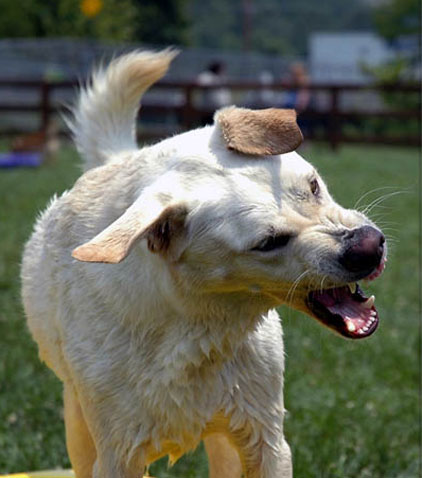
This article was written for dog owners who believe they have a problem with aggression or poor behavior with their family dog.
We get a lot of emails from people who believe they have dominant dogs. Very few dogs are truly dominant. We feel the vast majority of the people who email us don't have dominant dogs but rather they have dogs that have never learned rules. For lack of a better description, I call them dogs that have never learned "pack structure rules".
With that said, a dog without rules bites his owner just as hard and does just as much damage as a dominant dog who bites his owner. The difference is that it's easier to rehabilitate a dog without rules than it is to rehabilitate a truly dominant dog.
This article will talk about mistakes people make in living with dogs that lead to bad or aggressive behavior. I first wrote the article in the 1990s and have updated it several times since.
I will begin by saying, the internet is filled with well-meaning people who offer opinions on dog training. Those opinions are all based on that person's experience and that person's training with their dogs. Unfortunately, the advice that the vast majority of these people offer on dog aggression is at best, inaccurate and at worst, dangerous.
For that reason, I will mention a little of my background. While I have owned dogs since the 1950s, I've trained my first German Shepherd in 1962. In 1974, I attended my first Schutzhund seminar and in 1978, my first police service dog training seminar. I also started breeding German Shepherds that were selection tested for police service work. From 1990 to 2000, I worked as a K9 handler in our local Sheriff's department. During all these years, it has been my passion to study the art of breeding and training working dogs.
When I ask people about their dog bite scars, I get the same answer: “I made a mistake with that dog.” The fact is, getting dog bit always comes down to misreading the signals a dog gives and/or making mistakes in how we handle our dogs.
One of the biggest mistakes dog owners make is failing to recognize signs, signals, or warnings that dogs offer before they bite. Pet owners don't understand how strong pack instinct is in their family dog. This lack of understanding is what gets them into trouble.
Dogs, by nature, are social animals. Their instinct makes them want to be part of a social group. This is the same for horses, chickens, and many other species. Each social group is a hierarchy of members.
There is a saying in the dog world that there are no equals within a group of dogs. Every social group will have its own pecking order. Lower-ranking members always defer to higher-ranking members. If the group doesn't have a clear leader, one member will always step forward to become the leader even if it's not genetically predisposed to leadership. What's interesting is that many times, a dog that finds itself at the top of the social group doesn't feel comfortable in that position.
Rank is almost always communicated through subtle behaviors that each member of the pack understands and respects. Over time leaders will always establish their own set of rules that all members of the pack are expected to live by. There are well-understood consequences for breaking rules.
Dog owners can and must learn to become leaders even if they are not predisposed to leadership. They need to think about establishing their own set of rules that their dog is expected to live by. These rules can be no biting the leader, no inappropriate aggression to visitors, no jumping up on people, stay away from small children, etc.
Owners must also learn to be 100% consistent in enforcing those rules. When a dog believes that every single time it breaks a rule there will be some form of consequence, that dog is less likely to break a rule. Once that threshold is reached (where the dog accepts and lives within the framework of the leader's rules), that dog becomes an easy dog to live with.
For that to happen, dog owners and their dogs must come to an understanding that every single time the dog breaks a rule, there will be some form of consequence. This doesn't necessarily mean the dog gets a strong physical correction every time. Some dogs, with soft temperaments, may only need a verbal warning while other dogs need a leash correction for the same infraction. Learning to evaluate temperaments falls under the category of "the art of dog training".
Just as important, owners must be consistent. They can't pick and choose when to apply a consequence. If they do this, they end up with a dog that will pick and choose when to obey a rule. Inconsistency always leads to some level of behavioral issues.
The Evolution of Handler Mistakes
The evolution of handler mistakes often begins with a misunderstanding. Local obedience instructors lead pet owners to believe they will end up with a well-mannered dog if they sign up for class. Pet owners are told their dogs only need to learn to sit, down, come, and walk on a leash. These classes often fail to teach owners that dogs must also learn to be polite around strangers, to leave small children alone, to stay off furniture or beds unless invited up, to not jump up on people or take food off the counter, or act irrationally when the doorbell rings, etc. In other words, the owners don't learn that their dog needs rules to live by. In fact, owners also need to learn the important concept of consistency along with the concept of varying levels of consequences.
Growling is Not Always a Bad Thing
Social rank is a big thing to a pack animal. Leaders eat what they want and get the better sleeping quarters. Lower-ranking members would not challenge the leader for food or act aggressively towards a higher pack member by trying to move the leader out of his bed.
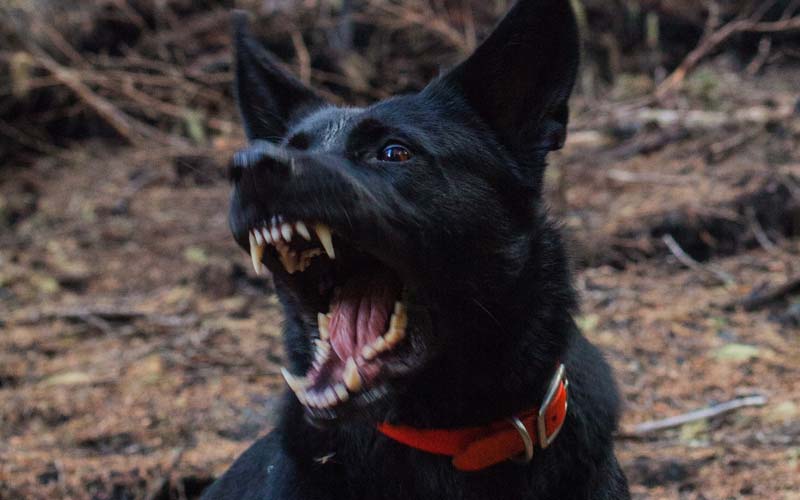
If your dog growls at you when you go near his food bowl or if the dog is lying in your bed and growls when you get into bed or if it growls when you take toys away, that dog is either fearful because of how it was treated in the past or it does not respect your position as a higher social rank.
If a dog has not been mistreated by family members but growls at the wife or children, it sees itself as a higher rank. Growling is the dog's warning or challenge. It's often accompanied by other subtle body postures that most owners miss. Some people think growling is a bad thing. I don't. Growling is a signal that there is a problem of some kind and I need to find the solution.
Look at it like this: Some dogs don't growl. They simply strike (bite) with very little warning. Would you rather have a dog that growls or a dog that strikes? In my opinion, people who administer unfair corrections for growling are making a mistake. They are setting themselves up to get dog bit. What they should be doing is thinking about why the dog is growling and then come up with a solution to stop it in the future.
Is the dog is growling over food? Then it should be fed in a crate. Is it growling when you take toys away? Then it should not have toys. Is it growling when you come to bed? Then it needs to be on-leash in the house and it should go in a crate at bedtime. Does it growl at guests? Then put it in a crate when guests come over. A little common sense goes a long way in figuring out a solution. And each of these solutions doesn't involve fighting with the dog. They are just examples of controlling the environment that the dog is allowed to live in.
When Does Dominance or Dog Aggression start?
It is an extremely rare situation for a puppy younger than 10 months of age to show signs of dominant handler aggression. In my 35 years of breeding working bloodline German Shepherds, I cannot remember seeing one case and I've bred some dogs that grew up to become tough police service dogs. The fact is when a puppy is raised correctly, the issue of rank is established early and then it's over and the dog never challenges the handler's authority.
Unfortunately, new puppy owners who lack experience often mistakenly confuse prey drive with dominance. These are two totally unrelated and different things.
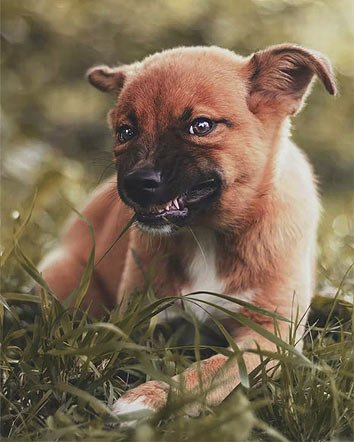
When a pup chews on your hands or your pant leg (even if it's verbalized by growling), it's only displaying play/prey drive. Puppies play with their littermates by using their mouth. They bite each other, they jump on each other, and they growl at each other.
When they then move away from their litter and into a human family, they can only assume that this is how they should play with their new human pack members. It becomes the owner's job to teach the pup manners and human rules. The best way to control puppies that bite is to redirect the puppy by using food or toys. When a pup is biting hands, you simply refocus the pup onto a high-value food treat or a high-value toy. Too often this does not happen, and the puppy's cuteness overshadows leadership.
This often leads to the emails we get from frustrated puppy owners who mistakenly think they have a dominant puppy when in fact, all they have is a very nice pup with a lot of drive that has not had its drive managed correctly.
Unfortunately, new dog owners don't learn how to redirect their pup or how to control the environment they allow their puppy to be in. By that, I mean it should be common sense to not allow mouthy puppies around very small children. It always saddens me when I see this happen. I look at it like that poor puppy was not dealt a fair hand of cards.
Dominance Shows When a Dog Enters Maturity (15 to 36 Months)
If a dog is going to show serious dominance or handler aggression problems, it doesn't begin to appear until the dog enters maturity. This takes place between 15 and 36 months of age. The most common being around 18 months.
As some dogs mature, their instincts tell them to assume a rank within the pack. Youngsters are willing to be followers, but if they don't receive the proper training, or if that training was lacking, or if it is allowed to display rank behavior (i.e., guarding toys, laying on the bed or on the furniture whenever it wants, etc.), the drive to assume higher pack position takes over.
Obedience Training is Only One Piece of the Puzzle
It's a given that obedience training helps every dog. No one would argue that point. But unfortunately, even consistent obedience training is not enough to rehabilitate a dominant dog. A truly dominant dog needs more than that.
Teaching a dominant dog that it will get a food reward is not difficult. In fact, reward-based training is perfect for these kinds of dogs because it's non-confrontational. The consequence for not minding is the absence of a food reward. There is no physical correction which could lead to a fight.
This method is way better than showing a dominant dog that it will get a leash correction for not minding, especially with a mature tough adult.
Anyone who questions how serious this can be should look at the photos of dog bites that people have sent me. A word of warning, these photos are very graphic. Dog bites are extremely dangerous and should be taken seriously.
So my point here is that our dogs need obedience training. However, once the dog has become dominant and aggressive, it will need more than just obedience.
Poor Obedience Training is Part of the Cause of Dominance Problems
When you think in terms of rank and pack behavior, it's easy to understand how ineffective obedience training results in dominance issues with maturing dogs.
The correct way to obedience train a dog involves several stages of training:
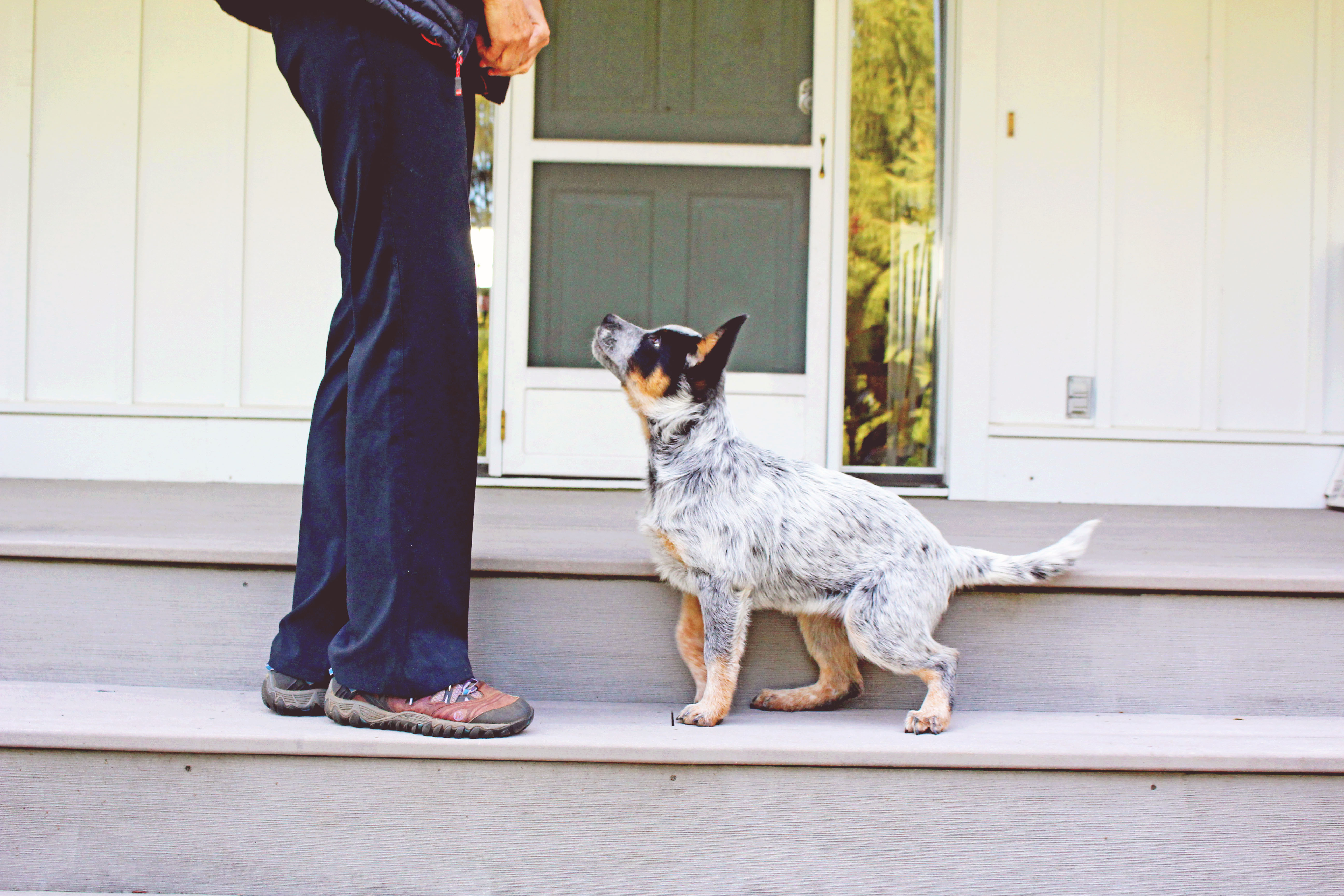
- In the Learning Phase, the dog is taught the meaning of a command in a distraction-free environment (i.e., your kitchen) through motivational methods. This means we guide and help the dog through different exercises by giving them food or toy rewards when they do what we want. It's our job to determine what motivator works best for our individual dog.
- Once the dog has learned the command in the first location, we then "generalize" the behavior by teaching that behavior in more and more environments and under more and more distractions.
- In the Correction Phase, we teach a dog that it will be corrected if it does not follow a command that it has learned during the Learning Phase. We never correct a dog unless we are 100% sure it knows and understands what we are asking him to do. To get 100% consistency of behavior, we must have a correction phase of some sort. While corrections for many dogs may simply mean withholding the reward, for others, it's going to mean a physical correction of some kind.
In the end, our dogs must learn to mind in every situation.
Many obedience classes do a decent job teaching owners the Learning Phase. Unfortunately, many classes leave out the correction portion of training. That's OK with puppy classes because puppies should not receive physical corrections. But adult dogs need to go through a correction phase of training.
Almost all the large pet warehouse classes skip the correction phase. In doing so, these types of classes are one of the leading causes of dominant dog problems.
When Your Dog Won't Mind
When the Alpha wolf issues an order, pack members listen and mind or they don't survive. When dogs choose not to mind their owner, they are in effect, saying they do not respect that person giving the commands. In other words, they don't respect the consequences they have experienced in the past when they ignored a command.
To solve that problem, corrections need to be consistent and at a level that the dog remembers the next time it thinks about not following commands. Dogs are extremely observant. It does not take them long to determine that the trainer must be listened to. It also doesn't take them very long to recognize an inconsistent handler. The fact is a dog that doesn't follow directions doesn't respect that handler giving those directions.
When that happens, dogs begin to think they can ignore commands they don't like. With some dogs (thankfully not all), this can lead to a dog that challenges an owner or family member because they don't want to do what is being asked. They have not learned to respect the correction.
This is the exact point where some dogs will start to show their teeth, growl at the owner, nip at the hand that tries to take a toy away, etc.
Had this same dog gone through training for correction and distraction at a younger age, the odds are that this situation would never have evolved. Dogs that have not gone through correct training end up being dogs that seem to live peacefully with their family up to 12 to 18 months of age and then suddenly change into Cujo.
When dogs reach breeding age, their hormones start to flow. Suddenly, rank within the pack becomes a big thing to them. They have learned that they don't have to follow direction from pack members they don't respect because there has never been any serious consequences. When many dogs lack a strong pack leader, they will step up and try and become a leader. They instinctually know that corrections on lower pack members have to be enforced.
Did You Wait Too Long to Obedience Train?
When owners acquire a dominant adult dog or when they've waited too long before a dog matures to start training, they often have problems. Some dogs think "Why should I mind this person? They have no right correcting me because I am stronger than they are and I don't have to do what they say."
In other words, by waiting to train a dog or by ineffectively training a dog, the owner empowers the dog and creates a situation where they must use more force than necessary had the dog been younger.
Controlling Every Aspect of Your Dog's Life Helps Control Dominance
Once a dog has become dominant, the question becomes, "How do we fix it?" If the situation is a large aggressive dog and a small handler, the solution certainly isn't strong leash or e-collar corrections. It's also not an alpha roll. I know of a woman who got 100 stitches in the face trying to alpha roll a 90-pound German Shepard.
The beginning is to control the dog's environment. Don't put a dog into a situation where some of the following things can happen:
- Sleeping in bed with the owner
- Pushing people to pet him
- Not allowing the husband into the bedroom after being gone on a trip
- Growling near food or toys
- Not allowing you to take toys away by showing aggression (not just playing keep away)
- Being extremely dog aggressive
- Resisting laying down when told to DOWN
- Showing aggression to certain family friends and not others
With a little forethought, many of these scenarios don't ever have to happen.
Your Bedroom and Your Bed
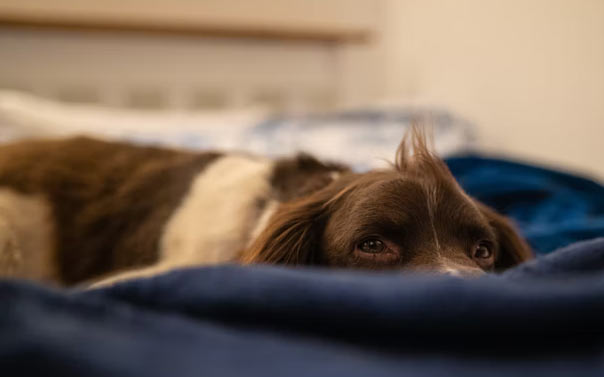
Controlling dominance begins at home. The first thing we need to do is to take total control of the dog in terms of where he is allowed to sleep, eat, and play. The dominant dog should never be allowed to sleep in the bedroom. The best place to sleep is always reserved for the pack leader (you). Make your dog sleep in a dog crate in a room other than the bedroom. Of course, if your dog lives in a kennel outback, this is not going to apply.
When people bring an 8-week old pup home, there is nothing wrong with putting the dog crate in the bedroom for a week or so to allow the pup to adjust to his new home. But as soon as the dog is crate-trained (does not scream in the crate), the dog crate should be moved around to get him used to sleeping in new places.
I would never allow a dog that I thought could be even a little dominant to sleep in the bedroom until I am 100% sure the dog knows exactly who the pack leader was. I used to say, "I never allow dogs on the best." However, we recently rescued a 10-year-old fully house-trained Shih-Tzu who sleeps in our bed while our Ring Malinois sleeps on the floor next to the bed.
All in all, dogs should only be allowed on furniture when they are invited up. They must agree to get down when the handler tells them to. If there is any resistance, they should not allowed on the furniture.
Toys are YOUR Toys, Not the Dog's Toys
As puppies grow up, they should not be allowed to become possessive of their toys. Your attitude needs to be that ALL TOYS ARE YOUR TOYS and you allow the pup to play with YOUR TOY.
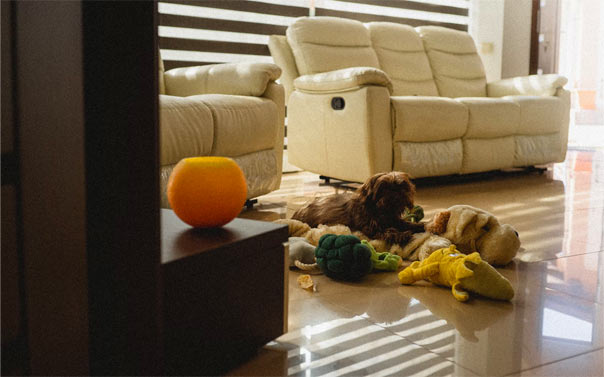
There used to be a saying that "new pet owners should not play tug-of-war games with their pup." This way of thinking was born from the idea that "tug games are an integral part of protection training but they have no place in raising a family pet”. Many people believe that playing tug with a dog creates dominance problems.
That kind of thinking was and still is dead wrong. When tug games are done correctly, they become a very important part of raising a puppy. Tug games help establish a value that the puppy places on the tug toy. We then use that toy as a reward during many aspects of training.
The key is to teach the pup that the tug toys are your toys and that at the end of the play session, you put the toys away. We teach new dog owners exactly how to introduce and use tug toys in the DVD I produced with Michael Ellis titled The Power of Playing Tug with Your Dog.
Adult Dogs and Toys
Years ago, when I first wrote this article, it contained a number of ways to get a toy away from a dominant dog. That was a mistake. Dominant dogs don't need any toys. If the dog is truly dominant and the owner thinks he needs to work with tug toys, then he needs to find a local professional who really understands the application of force on a dangerous dog.
Dinner Time
A dog with dominance issues is never allowed to be in the kitchen or dining room while the family eats. If the dog is a house dog, put the dog away during dinner hours. Again, it's a simple solution to control the dog's environment.
The worst thing that can happen is to feed a dominant dog from the table. Again, the pack leader always eats first and gets the best pieces of food. If your dog is a house dog, put him in the dog crate or another room at mealtime.
Feeding the dog from the table will only worsen your problems.
Aggression Around the Food Bowl
Being aggressive around the food bowl is a common problem with some dog owners. It also has a very simple solution. Feed the dog in a dog crate and keep the crate in a secluded location.
I look at the food issue differently than many people. A lot of trainers will tell you to practice taking your puppy's food away at a young age. I prefer to look at it in a different light. I don't want my dog to be aggressive around his food bowl.
Many people make mistakes by taking their dog's food way too much. Why not look at it from the dog's point of view:
You are starving and your parents give you a plate of mashed potatoes and turkey. As you are eating, your father reaches over and takes your food away for NO APPARENT reason. You never said anything wrong or did anything to be punished by losing your food. After a while, your father puts the plate back but then takes it away again. This creates confusion in your mind because you look at it as if you were being punished. If your father does this all the time when you are a kid, it will eventually make you mad enough that you will put your foot down and say, “ENOUGH OF THIS CRAP. STOP IT!”
I feel a better way to build trust in my pups is to teach them that I am a good guy and that I am always fair. I will train them that they must SIT before I put the food bowl in the crate or on the floor. When people only have one dog and there are no dominance issues (and no small children crawling around), they can ask the dog to sit and then put the food bowl down outside of a crate as long as they don't play the game of taking it away. Now with this said, our dogs have 15 minutes to eat. If they leave the bowl and their is still food in it, we take the food bowl away and he gets nothing else until the next regular feeding.
When and How to Pet and Praise the Dominant Dog
Having a good bond with a dominant dog is critical. These dogs live and die by pack order. The only way to maintain control is to maintain a good relationship. But this must be done on your terms.
A dog that comes to you and tries to force you into petting him when you are reading the paper or working on the computer is displaying a form of dominant behavior. Do not allow this to happen. Make the dog go lay down. In fact, controlling his behavior through the use of a long down on a throw rug (we use the imitation lambskin bed & the dogs love them) is one of the very best ways of establishing yourself as the leader.
Almost all dogs want to be petted. But there is a difference between a happy, friendly dog that just wants a pet, and a dominant dog that wants to force his attention on you when you are busy doing something else. Understanding the difference between these situations may come down to experience. If your dog doesn't display any other symptoms of dominance except wanting to be petted, you don't have much of a problem. The solution is to always make a dog do something before you pet him. Give him a SIT command or give him a DOWN command then pet him.
What Do You Do at Doors and Stairs?
Years ago, everyone would say, "Never allow your dog to go through a door or down the stairs before you.” This was said to highlight the fact that some things will mean very little to us as humans but will mean a whole lot more to a dog with tendencies toward dominance. In my opinion, too much emphasis was put on this one behavior. I personally don't think it matters much in terms of aggression and dominance.
But if you are intent on this, the solution is easy. Simply ask the dog to sit at the door every time you take it outside, just like how you make it sit every time you put the food bowl down to feed it.
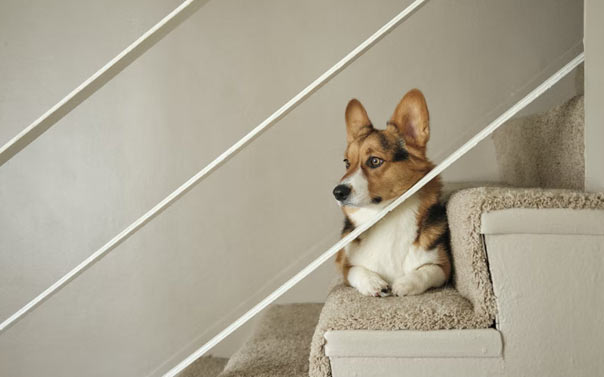
I don't like a dog that charges past me when I go downstairs. For one thing, it's dangerous. I have two new knees and don't like the idea of being knocked off balance. So if one of my dogs tries to rush past me to go downstairs, I use my knee to block it. I teach the dog the WAIT command on our walks. I then use this command at doors and steps.
If I have to have the dog wear a prong collar and a leash or a dragline in the house, I will do it. A dragline is a short leash that does not have a handle. The dog can drag it around and it will not get caught on furniture the way a normal leash with a handle does.
Showing Aggression Towards Family Friends
A dog that shows aggression toward certain visitors to the house is asserting a form of dominance. People with small dogs think this may be cute while others are pleased that their dog is being protective. Both are wrong. This behavior needs to be controlled. The dog needs to be taught that this behavior is unacceptable.
The best solution is to put the dog in his crate or put him in a different room when guests come over. When you show him that you control his environment all the time, you are establishing yourself as the leader. In a pack, the pack leader is the one that determines who fights and when. If we allow our dogs to determine who to attack on their own, we are allowing his dominance to take hold.
People that protection train dogs (in Schutzhund or police work) may be thinking that this is bogus because these dogs go out and work on their own. The fact is that Schutzhund dogs, personal protection dogs, and/or police service dogs do not work on their own. Through training, the handler establishes the rules of engagement. The dog learns when it is and is not acceptable to bite. Protection training helps establish pack order as long as everything else in the dog's life related to dominance is done properly.
We get a lot of emails from people asking how they can teach their dog that their child can be their dog's pack leader. The answer is YOU CAN"T. There is no way on earth to teach a dominant adult male dog that a 4 or 5-year-old child is the dog's pack leader.
What your goal should be is to teach the dog that one of your pack leader rules is to not show aggression to children and if need be, to stay away from the children. This becomes an obedience issue. With this said, the children must also learn to stay away from the dog. I find it interesting how often I see people who have dominant dogs and children that I would consider out of control.
Aggression Towards Other Dogs
Dominant dogs should not be allowed to interact with strange dogs. They should not go to dog parks. If a dog displays dog aggression when its on leash and just sees another dog, there are specific protocols one must go through for training. These are covered in the article I recently posted titled The Evolution of Using Remote Collars for Dog Aggression. This article is on our website and also available as a podcast.
Alpha Rolls Are Dangerous
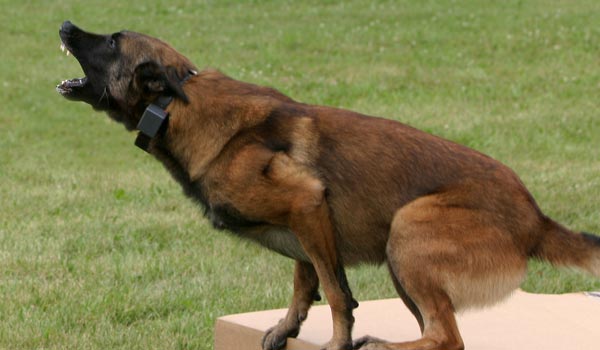
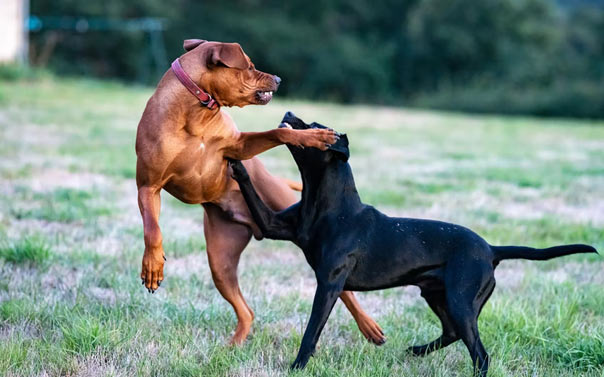
If I had tried to alpha roll one of my older stud dogs without him wearing a muzzle, it would have attacked me while I was on the ground. As I already said, I know of a small female handler that tried to alpha roll an adult male German Shepherd. She ended up with over 100 stitches in her face.
For those that don't understand what an alpha roll is, let me explain because we see trainers like Cesar Milan alpha roll dogs on TV. When a dog shows signs of dominance, trainers will tell new handlers to take his dog and force it down on its back on the ground and stare into the dog's eyes until the dog submits, relaxes, and looks away.
The unfortunate thing is we see a very popular dog trainer on TV (Cesar Milan) doing this all the time. He gets away with it because he has the experience to know what dog he can do it to and how to deal with a dog that turns and tries to attack him. The problem is, he ends up showing an edited clip where he got by with it as if it would work for every dog. What we don't see are all the novice dog trainers who end up in the ER because they try and do what he did with a dog they underestimated.
I am not a fan of alpha rolls. Don't do them. Don't even try to do them. They are very dangerous.
ONLY PICK A FIGHT YOU CAN WIN
Always remember that if you are going to pick a fight with a dominant dog, you had better pick one you know you can win.
My feeling is that in most cases, with extremely strong and tough dominant dogs, I accomplish as much through subtle body language and voice commands. In other words, rather than create a situation where I have to string a dog up on a leash (and damage the bond with the dog), I will avoid the situation altogether.
For years, I used to import selection-tested police service dogs from Europe. These were young adult male dogs that were ready to go into training to become police service dogs. Many of these dogs had dominance issues. I was never in a hurry to create a friendly bond with these dogs. Rather, I was more interested in teaching them that I controlled every second of their life and that I was fair and respectful in how I treated them.
These dogs were on leash 100% of the time when they came out of their kennel. In the beginning, I didn't try to play with them. I wanted to give the impression that I was not interested in being their friend. I was interested in making sure they were well-fed, and that they had exercise, but I didn't try and play. In other words, I acted aloof. I waited until the dogs accepted me and I could see that they wanted more than I was offering. This takes experience but it works.
When the time came for training, I focused on engagement work. Engagement means the dog wants to be with you and wants what you have. If they chose not to engage, they went right back into their kennel. By using food, there was never a fight over toys. Toys always came later. Through time, fair treatment and engagement work comes a bond.
The bottom line is that a dog may have to spend a long time (weeks) in a dog crate or dog kennel for this process to work. But with time, they will begin to see that you control his life and pack leaders control lower-ranking pack members. By controlling the dog's environment, putting the dog away when it acted inappropriately, and taking the time it takes to establish leadership, most of a dog's dominance issues can be controlled. However, it's important to note that dominance issues will never completely go away. Some people mistakenly think their dominant dog is now fixed and no longer dominant. This is wrong! These dogs are always dominant. It is through consistent handling that they just learn the handler is their leader.
I created an online course Dealing with Dominant and Aggressive Dogs that may be useful to you. If you are intent on training your dominant and aggressive dog, I recommend you go through the course and take notes.
Review
So as I close this article there are a couple of things that need to be remembered:
- Only pick a fight that you can win
- Whenever possible, use your head and think about a problem's cause and a solution
- In most cases, you lose more than you gain in a fight with your dog, even if you win.
If a handler forces a situation to the point where the dog attacks, then that handler has made a mistake, not the dog. He has misread the situation and now has a bigger problem. The goal is to see the potential for a fight before it happens and avoid it without losing face with the dog.
Always remember that once your dog relinquishes the pack order to you, he will be a much happier dog. It's like a great burden is lifted off their shoulders. As I work through the various problems on dominance with a dog, I always remember that in the end, this dog is going to be a much happier dog.
If you have a serious aggression problem with your dog, there are three DVDs that you need to fully address the issue.
- Dealing with Dominant and Aggressive Dogs Online Course
- Establishing Pack Structure with the Family Pet DVD - also available for online streaming
- Basic Dog Obedience DVD - also available for online streaming


Most Popular Articles
-
01
-
02
-
03
-
04
-
05
Related Products
-
 $38.00 - $46.20
 -
$14.99 - $18.50
$14.99

Ask Leerburg.